“Smaller, cuter, weirder, fluttery”: Filtered for the #Breezepunk Future

I’m stealing Matt Webb’s “filtered for” format here – for a bunch of more or less loosely connected items that I want to post, associate and log as much for myself as to share.

And – I’ll admit – to remove the friction from posting something without having a strong thread or thesis to connect them.

I’ve pre-ordered “No miracles needed” by Mark Jacobson – which I’m looking forward to reading in February. Found out about it through this Guardian post a week or so ago.

The good news below from Simon Evans seems to support Prof Jacobson’s hypothesis…

Breezepunk has been knocking around in my head since Tobias mentioned it on this podcast…

Here’s the transcript of the video (transcribed by machine, of course) of Tobias describing the invention by scientists/engineers at Nanyang Polytechnic in Singapore – of a very small scale, low power way of harnessing wind energy:

“I found this sort of approach really interesting but mostly I like the small scale of it yes I like the fact that it’s you know it’s something that you could imagine just proliferating as a standard component that’s attached to sort of Street Furniture or things around the house or whatever it is you might put them on your windowsill because they’re quite small and they just generate like enough power to make a sensor work or a light or something and yeah it’s this this alternative future to the big powerful set piece green Energy Future that’s obviously being pushed and should continue to be pushed because that’s competing against the big Power and the fossil fuel future but I like this idea of like the smaller cuter weirder fluttery imagine it’s quite fluttery yeah so yeah so this is this is Breeze Punk everybody…”

I like the idea of it being a standard component – a lego. A breezeblock?

Breezepunk breezeblock?

My sketching went from something initially much more like a bug hotel or one of those bricks that bees are meant to nest in, there’s something like a fractal Unite D’Habitation happening in the final sketch.

I also like #Breezepunk a lot – very Chobani Cinematic Universe.

I would like it to become… a thing. I suppose that’s why I’m writing this.

Used to be how you made things become things.

It’s probably not how you do it now, you need a much larger coordinated cultural footprint across various short-form streaming formats to make a dent in the embedding space of the LLMs.

Mind you, that’s not the same as making it ‘real’ or even ‘realish’ now is it.

A bit vogue-ish perhaps, to prove a point I asked ChatGPT what it knew about Breezepunk.

It took a while, but… it tried to turn into the altogether less satisfying “windpunk”…

I like making the cursor blink on ChatGPT.

The longer the better. I think it means you’re onto something.

Or maybe that’s just my Bartle-type showing again.

The production design of the recent adaptation of William Gibson’s The Peripheral seemed “fluttery” – particularly in it’s depiction of the post-jackpot London timeline.

Or perhaps the aesthetic is much more one of ‘filigree‘.

There’s heaviness and lightness being expressed as power by the various factions in their architecture, fashion, gadgets.

It’s an overt expression of that power being wielded via nanotechnology – assemblers, disassemblers constructing and deconstructing huge edifices at will.

From Vincenzo Natali’s concept art for The Peripheral series

Solid melting into air.

Into the breeze.

Punk.
Peace, Love, Unity3D & Having Fun*

The last four Tuesday evenings have been for learning and messing about in Unity3D, as part of an excellent online Intro to Unity3d course from City Lit and taught by the knowledgeable (and patient) Rich Cochrane.

It’s been enormously enjoyable – and great to learn a new tool / learn in general. Although as fun as making my final sketch above futzing about with skyboxes, particle systems and physics was – I certainly won’t be giving Tobias Revell anything to worry about any time soon!

*Hear the drummer get wicked!

Lightpainting Centaurs

If you (or anyone) still read this you’re probably aware I’ve been banging on about Centaurs for a little while.

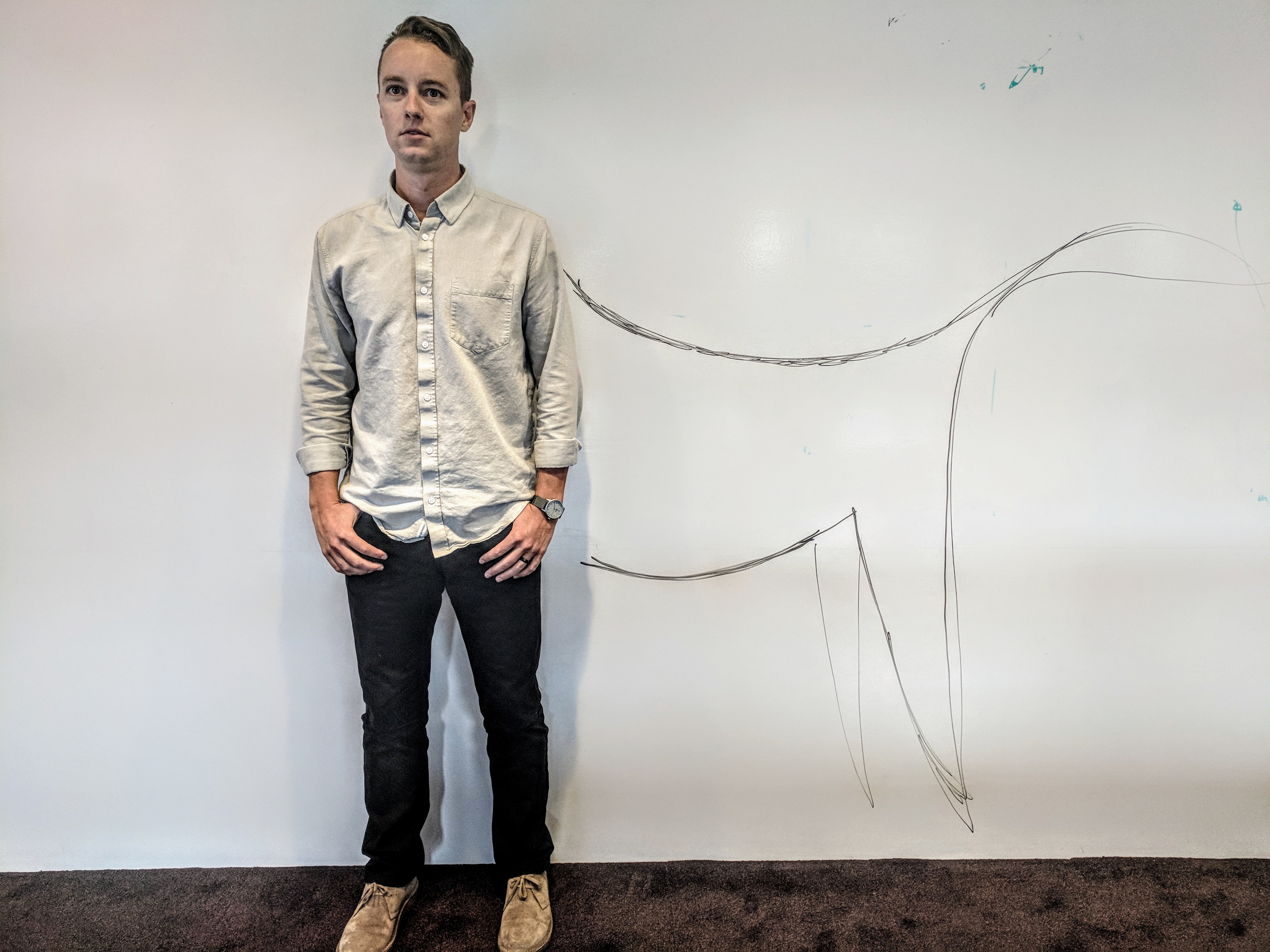
I started idly sketching something that could become a shorthand for a ‘centaur’ actor in a system. The kind of visual shorthand that you might often use on whiteboards or in sketches of flows in designing interactive systems.

For example… back in 2006 I sketched this…

My first centaur symbol sketches… was trying to make it something quick and fluid but kept getting hung up on the tail…


I then progressed to subjecting colleagues (thanks Tim) to impromptu lifesize whiteboard centaur sketches…

IMG_20170830_114031.jpg

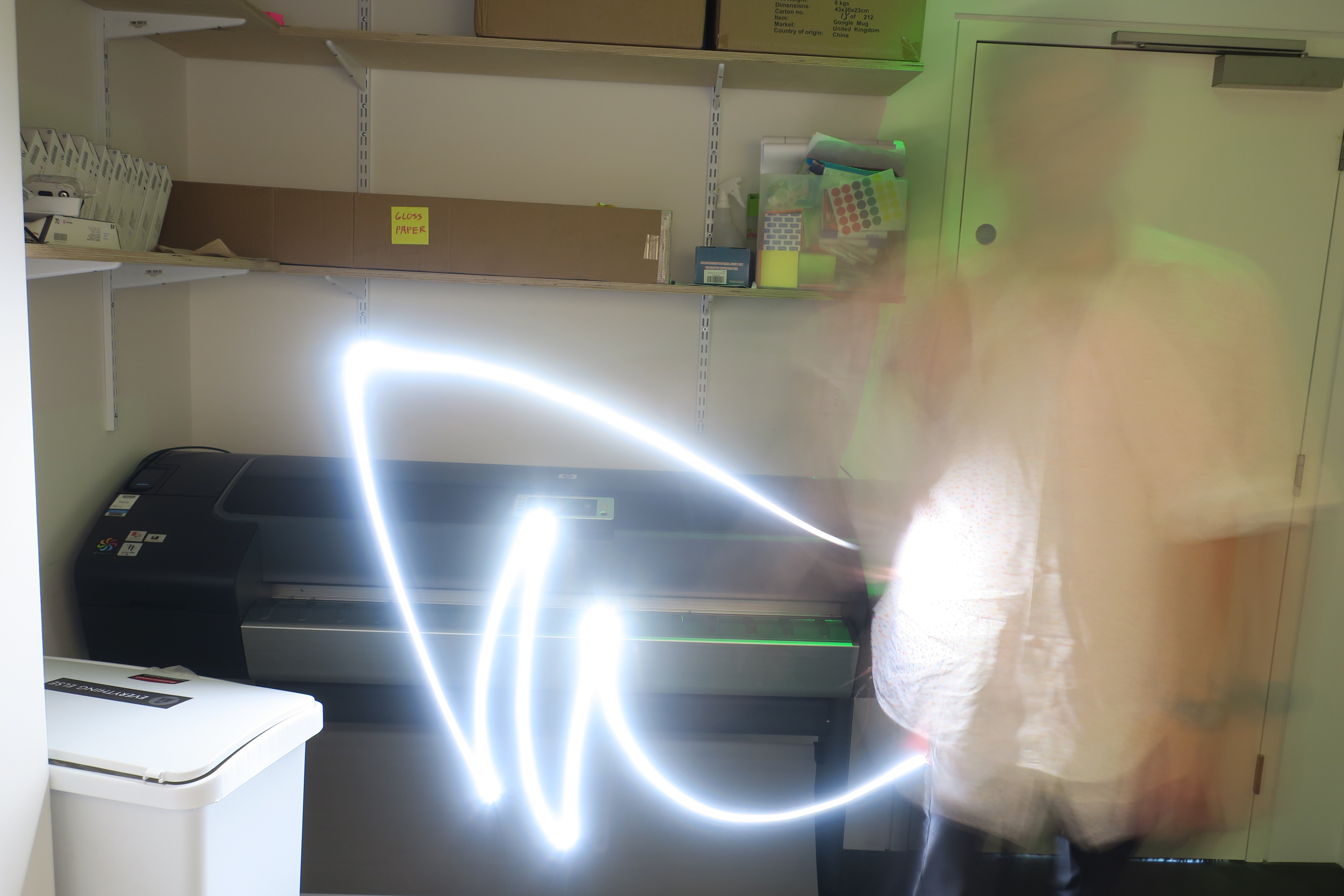
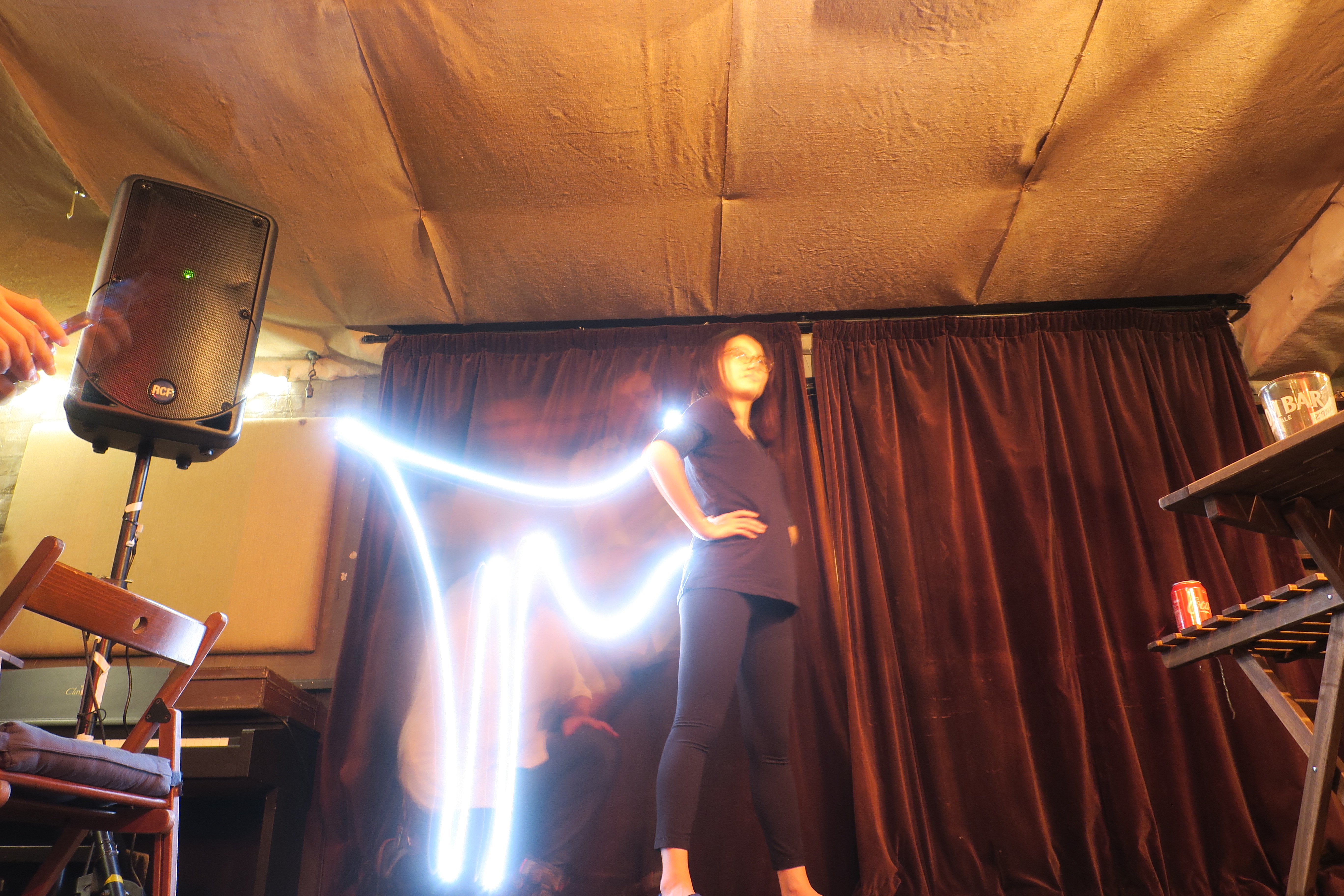
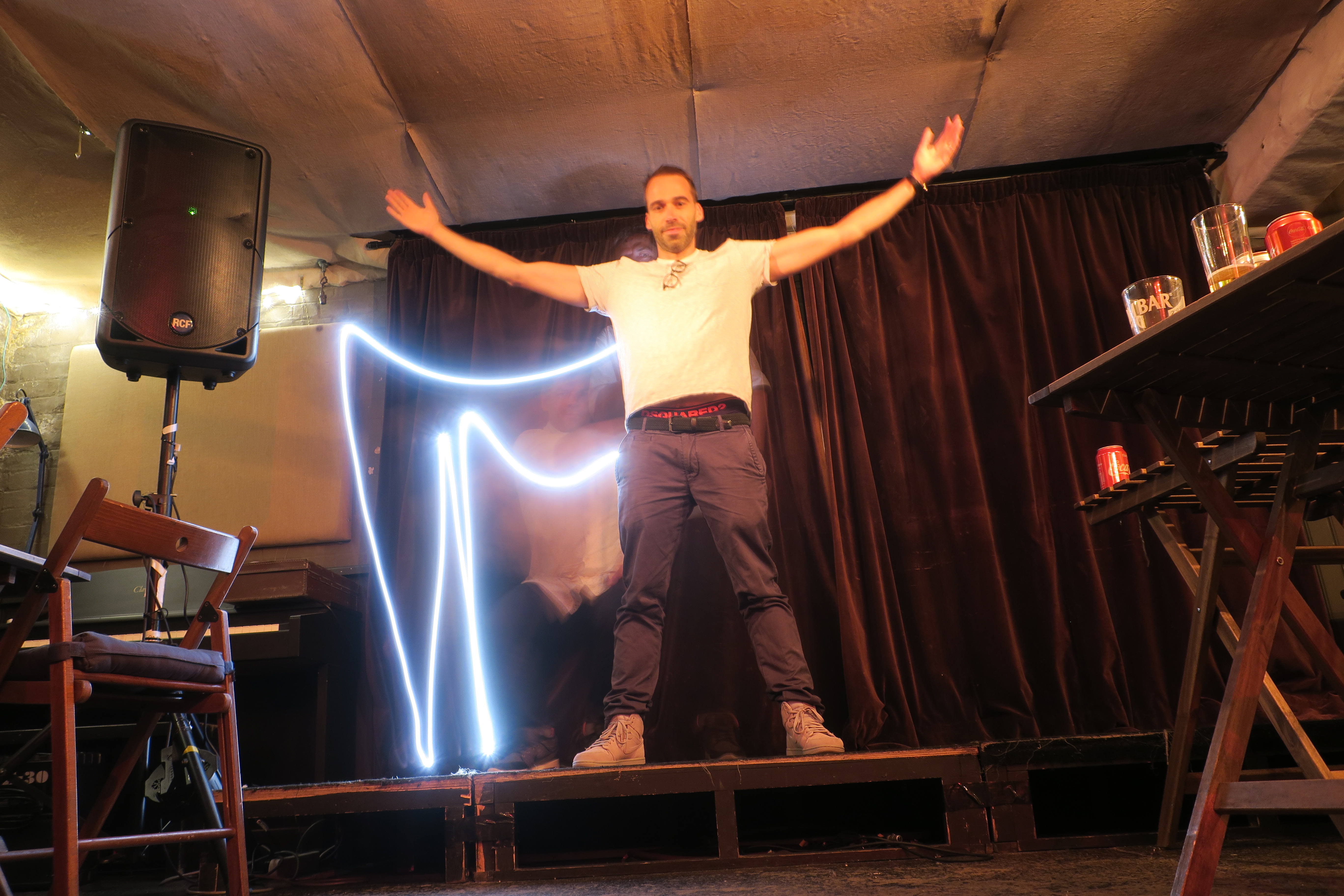
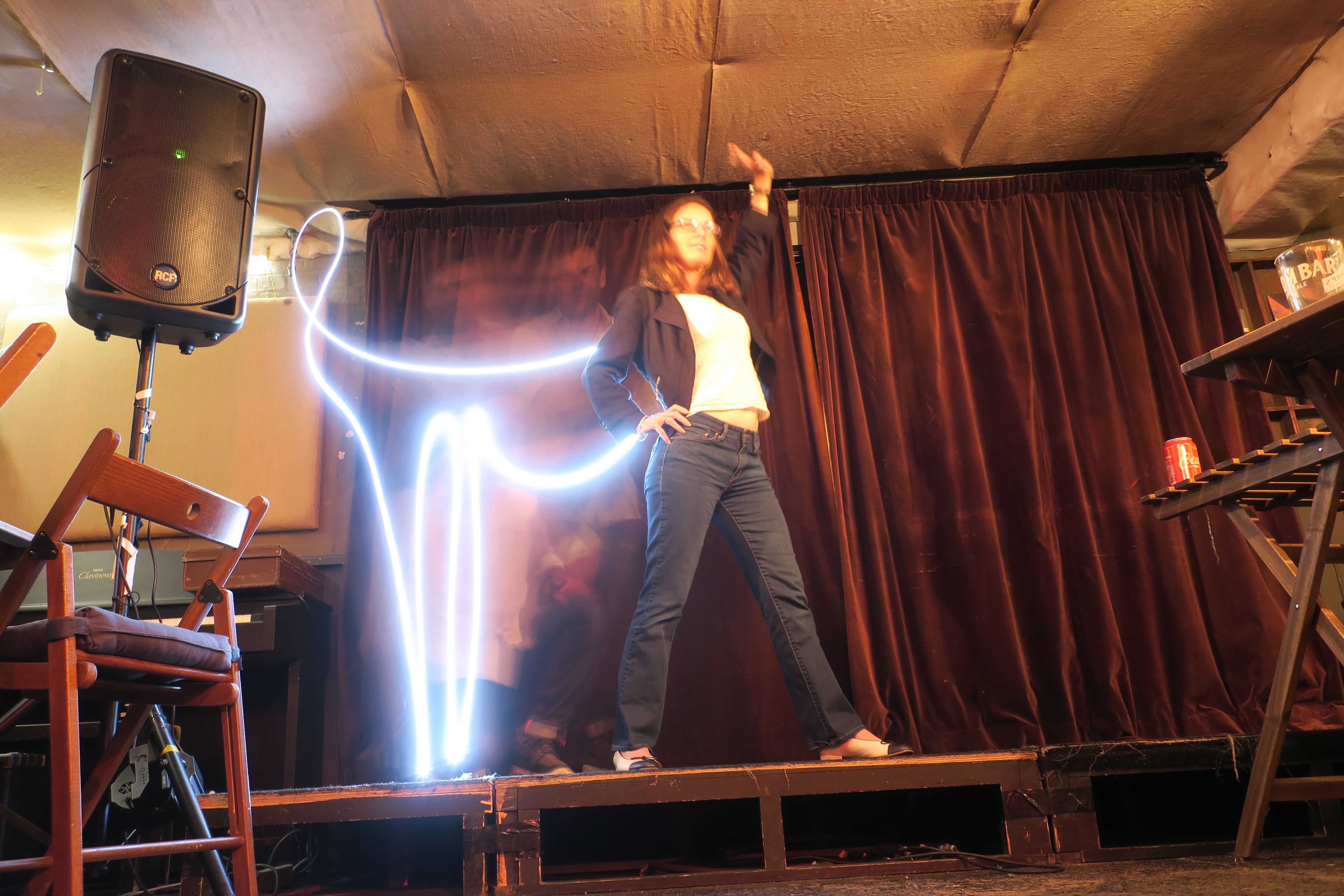
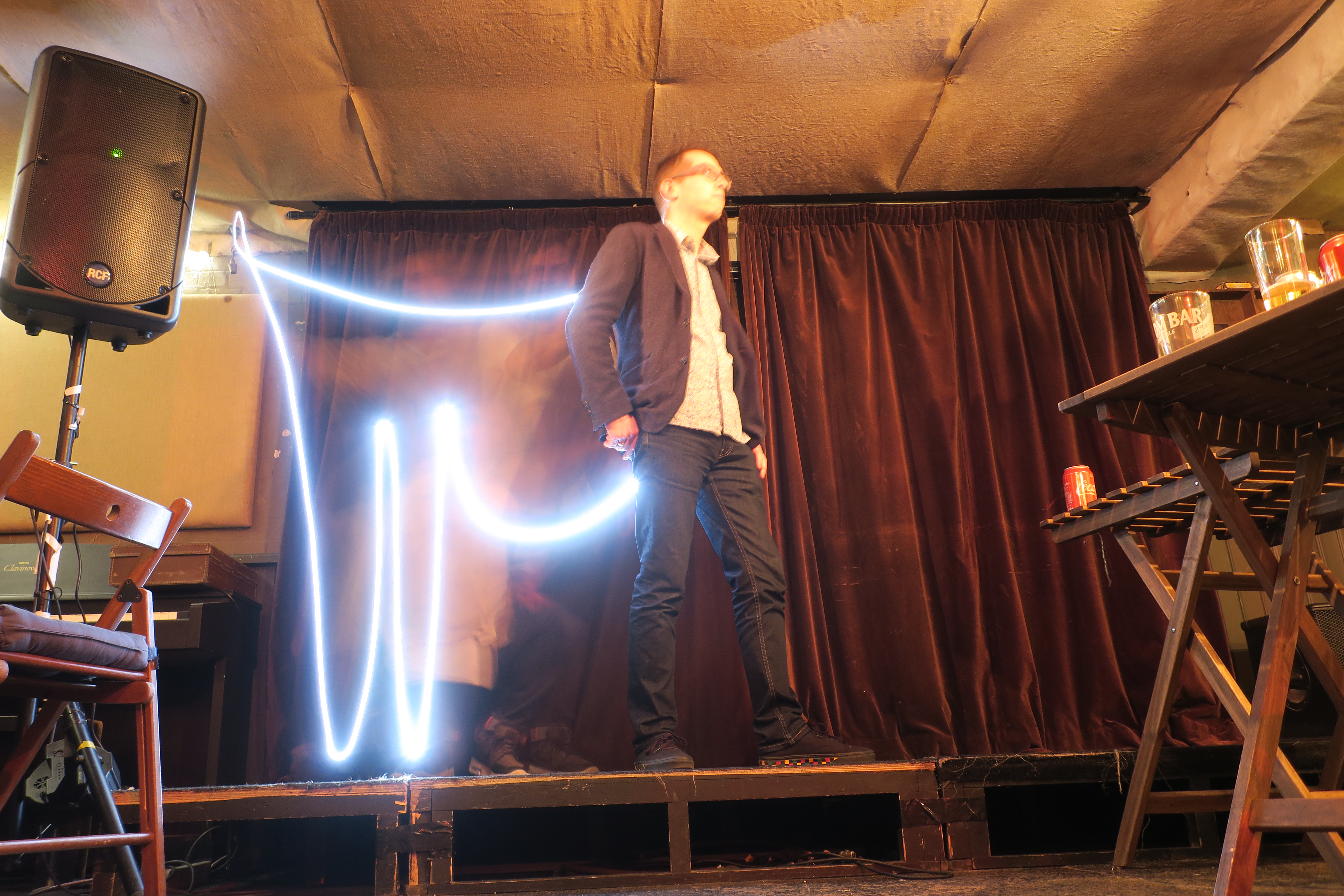
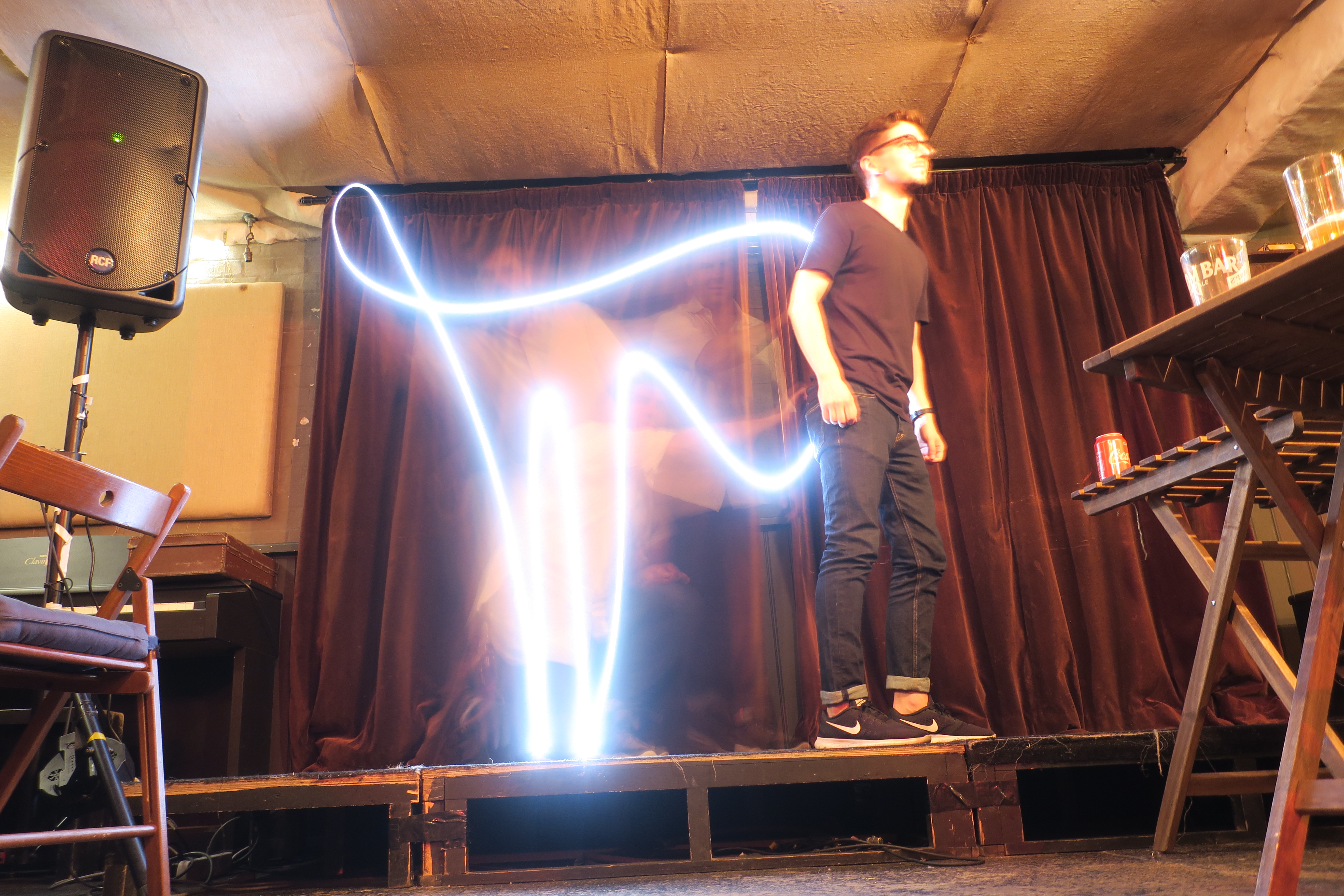
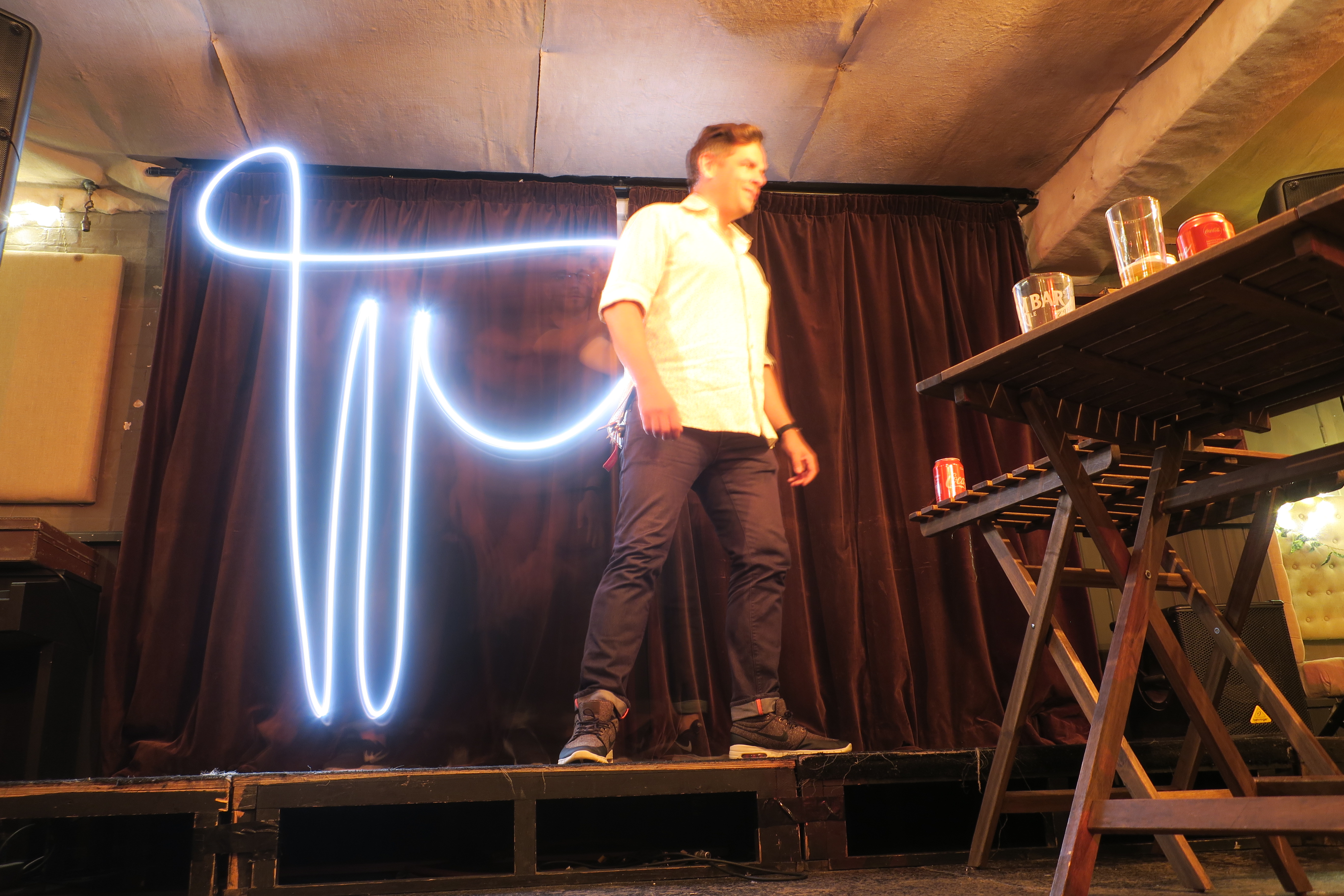
But then I remembered Picasso’s 1949 light paintings of centaurs  which inspired me to do some quick long-exposure experiments.


IMG_1069.jpg

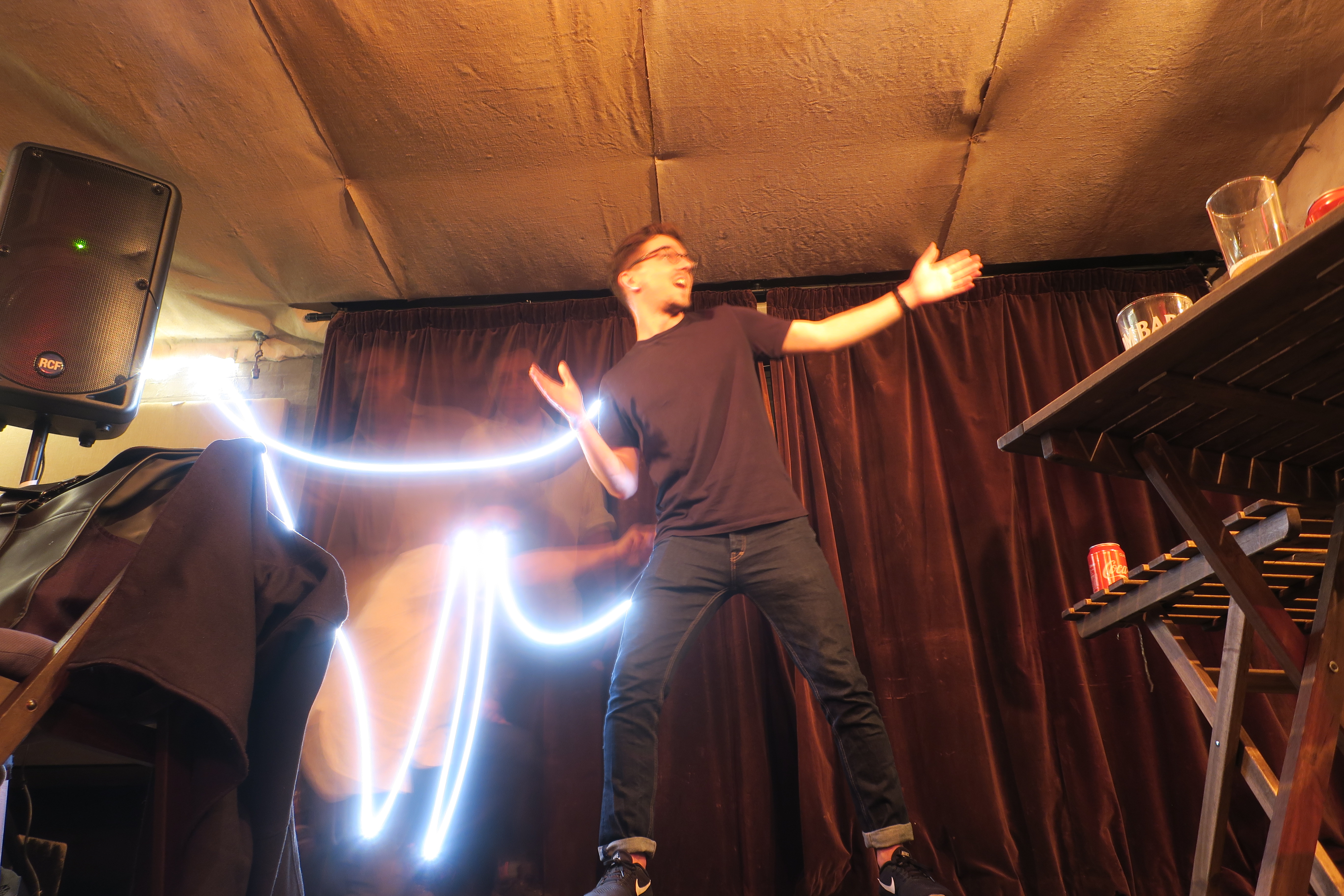
Again, long-suffering colleagues were pressed into service (after buying them some beers…)

And I think that the constraint of having to paint the centaur body in a few seconds of long exposure got me to a more fluid, fluent expression

IMG_1077.jpgIMG_1079.jpgIMG_1080.jpgIMG_1081.jpgIMG_1082.jpgIMG_1083.jpg

But then I think in the end it was Nuno who nailed the tail on this old designer…

IMG_1084.jpg

More centaurs soon, no doubt.

Station Identification

How the Penguin Cafe Orchestra got their name is as beautiful as their music:

“In 1972 I was in the south of France. I had eaten some bad fish and was in consequence rather ill. As I lay in bed I had a strange recurring vision, there, before me, was a concrete building like a hotel or council block. I could see into the rooms, each of which was continually scanned by an electronic eye. In the rooms were people, everyone of them preoccupied. In one room a person was looking into a mirror and in another a couple were making love but lovelessly, in a third a composer was listening to music through earphones. Around him there were banks of electronic equipment. But all was silence. Like everyone in his place he had been neutralized, made grey and anonymous. The scene was for me one of ordered desolation. It was as if I were looking into a place which had no heart. Next day when I felt better, I was on the beach sunbathing and suddenly a poem popped into my head. It started out ‘I am the proprietor of the Penguin Cafe, I will tell you things at random’ and it went on about how the quality of randomness, spontaneity, surprise, unexpectedness and irrationality in our lives is a very precious thing. And if you suppress that to have a nice orderly life, you kill off what’s most important. Whereas in the Penguin Cafe your unconscious can just be. It’s acceptable there, and that’s how everybody is. There is an acceptance there that has to do with living the present with no fear in ourselves.”

Notes from my FooCamp 2014 session: “All of this has happened before and will happen again”

The session I staged at FooCamp this year was deliberately meant to be a fun, none-too-taxing diversion at the end of two brain-baking days.

It was based on (not only a quote from BSG) but something that Matt Biddulph had said to me a while back – possibly when we were doing some work together at BERG, but it might have been as far-back as our Dopplr days.

He said (something like) that a lot of the machine learning techniques he was deploying on a project were based on 1970s Computer Science theory, but now the horsepower required to run them was cheap and accessible in the form of cloud computing service.

This stuck with me, so for the Foo session I hoped I could aggregate a list people’s favourite theory work from the 20thC which now might be possible to turn into practice.

It didn’t quite turn out that way, as Tom Coates pointed out in the session – about halfway through, it morphed into a list of the “prior art” in both fiction and academic theory that you could identify as pre-cursors to current technological preoccupation or practice.

Nether the less it was a very fun way to spend an sunny sunday hour in a tent with a flip chart and some very smart folks. Thanks very much as always to O’Reilly for inviting me.

Below is my photo of the final flip charts full of everything from Xanadu to zeppelins…

Foo2014-PriorArt_session

The beginning of BotWorld


Sad & Hairy, originally uploaded by moleitau.

A while back, two years ago in fact – just under a year before we (BERG) announced Little Printer, Matt Webb gave an excellent talk at the Royal Institution in London called “BotWorld: Designing for the new world of domestic A.I”…

This week, all of the Little Printers that are out in the world started to change.

Their hair started to grow (you can trim it if you like) and they started to get a little sad if they weren’t used as often as they’d like…

IMG_6551

The world of domesticated, tiny AIs that Matt was talking about two years ago is what BERG is starting to explore, manufacture – and sell in every larger numbers.

I poked at it as well, in my talk building on Matt Webb’s thinking “Gardens & Zoos” about a year ago – suggesting that Little Printer was akin to a pot-plant in it’s behaviour, volition and place in our homes.

Little Valentines Printer

Now it is in people’s homes, workplaces, schools – it’s fascinating to see how they relate to it play out everyday.

20 December, 19.23

I’m amazed and proud of the team for a brilliant bit of thinking-through-making-at-scale, which, though it just does very simple things right now, is our platform for playing with the particular corner of the near-future that Matt outlined in his talk.