As always, it was a fascinating deep-dive. He shared that it was his first reading the book – in order to cover the trial‘s repercussions and reflection of British society at the time.
As a result, he released a further episode on the book itself – when I heard the opening lines – which I found perhaps as resonant for 2026 as for when it was published almost one hundred years ago.
“Ours is essentially a tragic age, so we refuse to take it tragically.
The cataclysm has happened, we are among the ruins, we start to build up new little habitats, to have new little hopes.
It is rather hard work: there is now no smooth road into the future: but we go round, or scramble over the obstacles.
We’ve got to live, no matter how many skies have fallen.”
Last Friday I had the pleasure of speaking at ThingsCon in Amsterdam, invited by Iskander Smit to join a day exploring this year’s theme of ‘resize/remix/regen’.
The conference took place at CRCL Park on the Marineterrein – a former naval yard that’s spent the last 350 years behind walls, first as the Dutch East India Company’s shipbuilding site (they launched Michiel de Ruyter‘s fleet from here in 1655), then as a sealed military base.
Since 2015 it’s been gradually opening up as an experimental district for urban innovation, with the kind of adaptive reuse that gives a place genuine character.
The opening keynote from Ling Tan and Usman Haque set a thoughtful and positive tone, and the whole day had an unusual quality – intimate scale, genuinely interactive workshops, student projects that weren’t just pinned to walls but actively part of the conversation. The kind of creative energy that comes from people actually making things rather than just talking about making things.
My talk was titled “Back to BASAAP” – a callback to work at BERG, threading through 15-20 years of experiments with machine intelligence.
The core argument (which I’ve made in the Netherlands before…): we’ve spent too much time trying to make AI interfaces look and behave like humans, when the more interesting possibilities lie in going beyond anthropomorphic metaphors entirely.
What happens when we stop asking “how do we make this feel like talking to a person?” and start asking “what new kinds of interaction become possible when we’re working with a machine intelligence?”
I try i the talk to update my thinking here with the contemporary signals around more-than human design and also more-than-LLM approaches to AI, namely so-called “World Models”.
What follows are the slides with my speaker notes – the expanded version of what I said on the day, with the connective tissue that doesn’t make it into the deck itself.
One of the nice things about going last is that you can adjust your talk and slides to include themes and work you’ve seen throughout the day – and I was particularly inspired by Ling Tan and Usman Haque’s opening keynote.
Thanks to Iskander and the whole ThingsCon team for the invitation, and to everyone who came up afterwards with questions, provocations, and adjacent projects I need to look at properly.
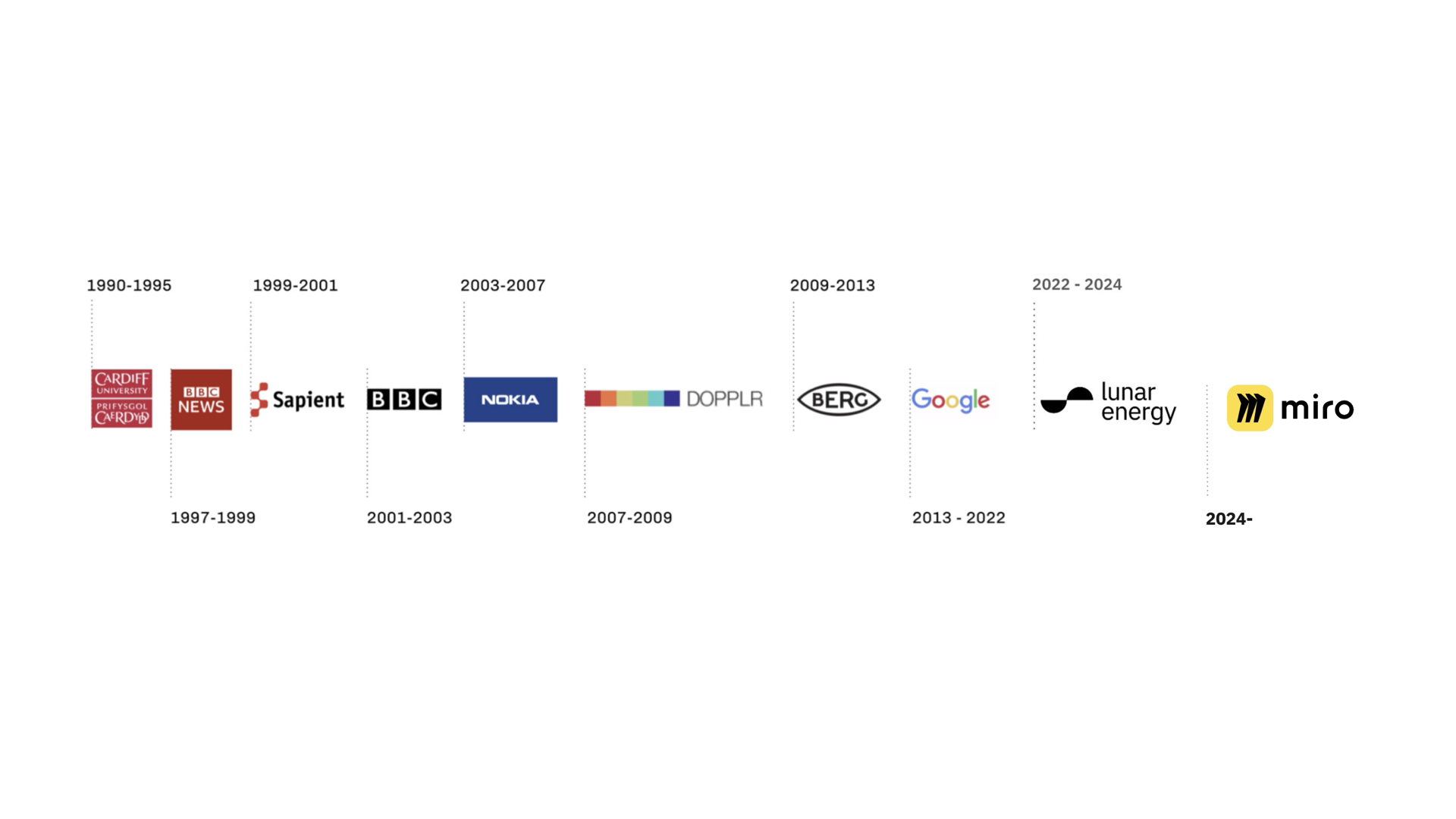
Hi I’m Matt – I’m a designer who studied architecture 30 years ago, then got distracted.
Around 20 years ago I met a bunch of folks in this room, and also started working on connected objects, machine intelligence and other things… Iskander asked me to talk a little bit about that!
I feel like I am in a safe space here, so imagine many of you are like me and have a drawer like this, or even a brain like this… so hopefully this talk is going to have some connections that will be useful one day!
We were messing around with ML, especially machine vision – very early stuff – e.g. this experiment we did in the studio with Matt Biddulph to try and instrument the room, and find patterns of collaboration and space usage.
And at BERG we tended to have some recurring themes that we would resize and remix throughout out work.
BASAAP was one.
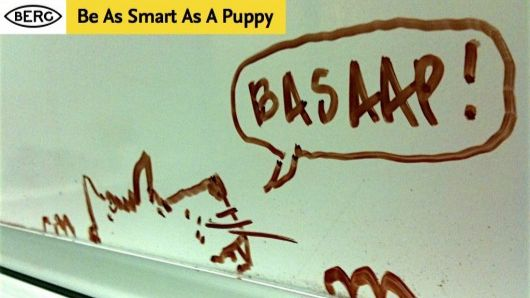
BASAAP is an acronym for Be As Smart As A Puppy – which actually I think first popped into my head while at Nokia a few years earlier.
It alludes to this quote from MIT roboticist and AI curmudgeon Rodney Brooks who said if we get the smartest folks together for 50 years to work on AI we’ll be lucky if we can make it as a smart as a puppy.
I guess back then we thought that puppy-like technologies in our homes sounded great!
We wanted to build those.
Also it felt like all the energy and effort to make technology human was kind of a waste.
And implicit in that I guess was a critique of the mainstream tech drive at the time (around the earliest days of Siri, Google Assistant) around voice interfaces, which was a dominant dream.
Our clients really wanted things like this, and we had to point out that voice UIs are great for moving the plot of tv shows along.
I only recently (via the excellent Futurish podcast) learned this term – ‘hyperstition’ – a self-fulfilling idea that becomes real through its own existence (usually in movies or other fictions) e.g. flying cars
And I’d argue we need to be critically aware of them still in our work…
And while it can feel like we have crossed the uncanny valley there, I think we can still look to the BASAAP thought to see if there’s other paths we can take with these technologies.
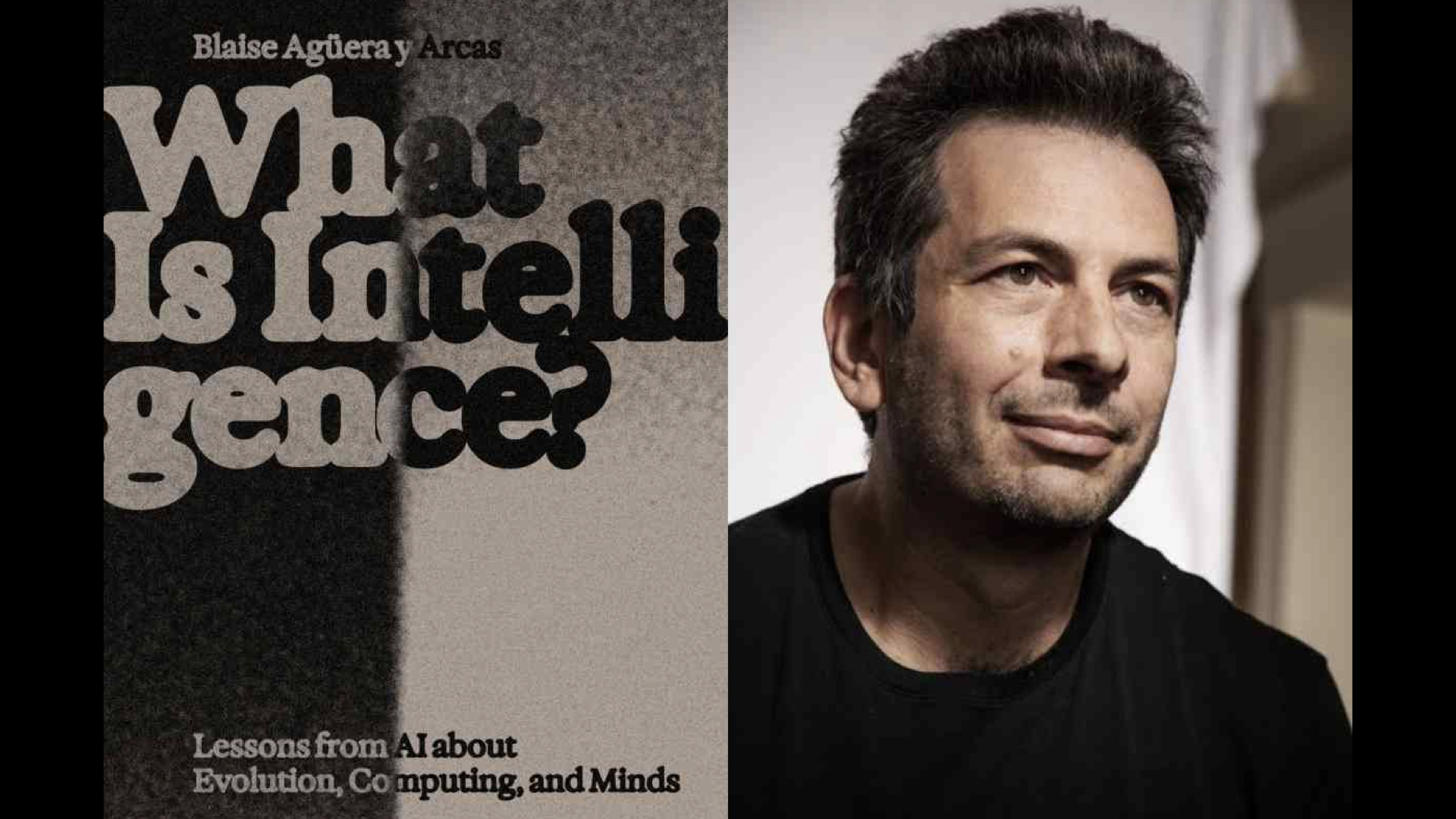
In it he frames our current moment as the start of a ‘symbiosis’ of machine and human intelligence, much as we can see other systems of natural/artificial intelligences in our past – like farming, cities, economies.
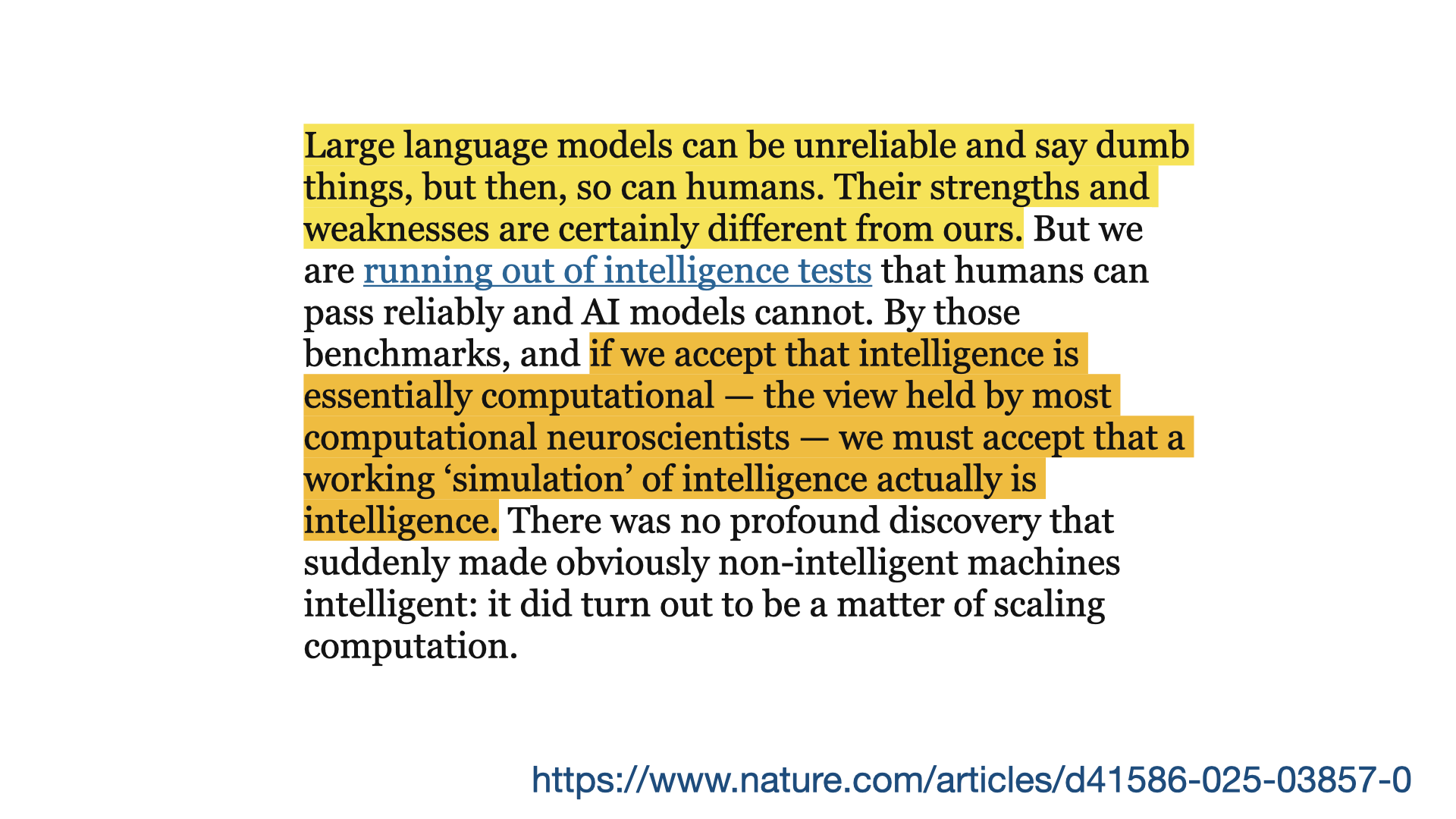
There’s so much in there – but this line from an accompanying essay in Nature brings me back to BASAAP. “Their strengths and weaknesses are certainly different fromours” – so why as designers aren’t we exposing that more honestly?
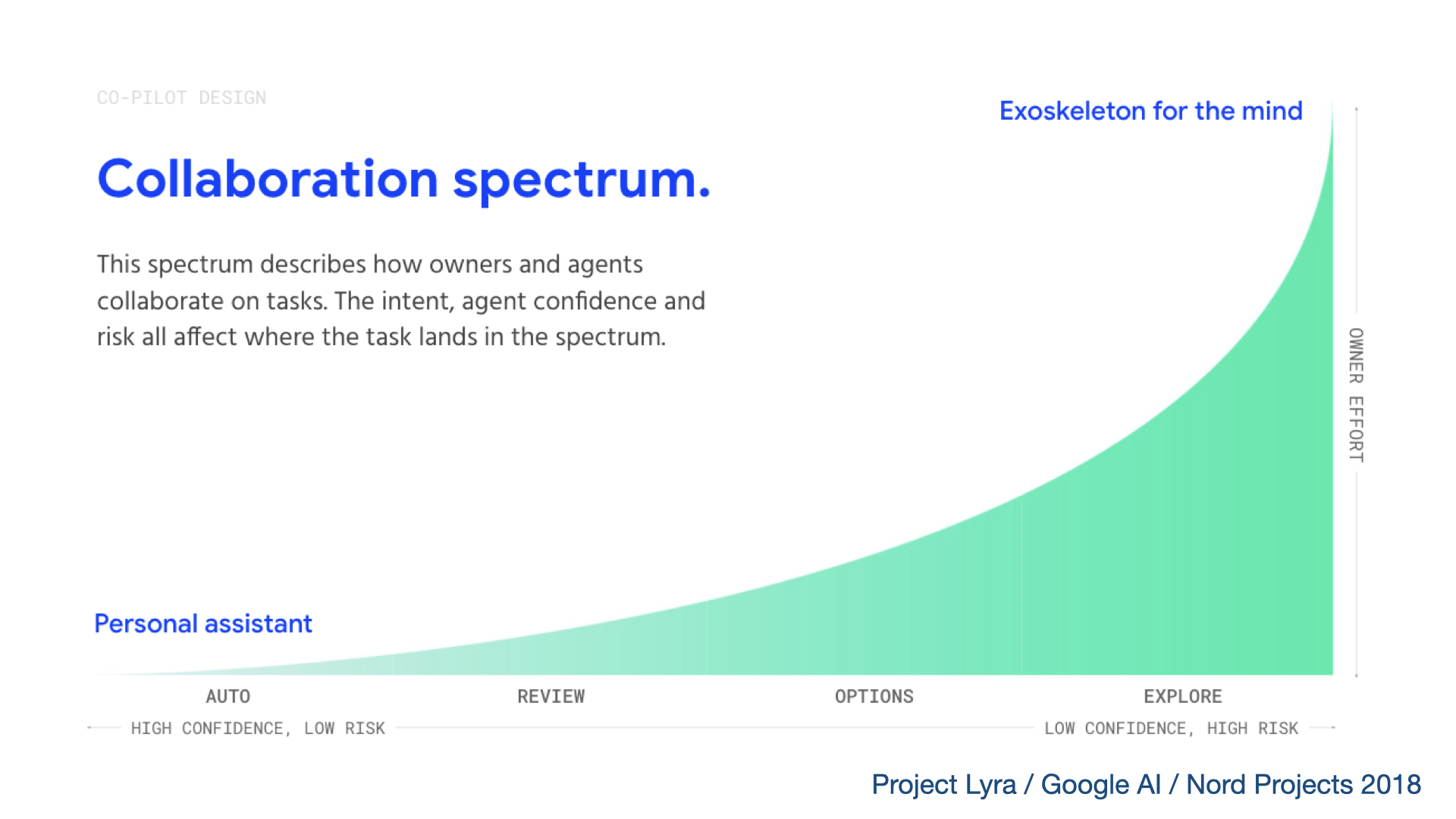
In work I did in Blaise’s group at Google in 2018 we examined some ways to approach this – by explicitly surfacing an AI’s level of confidence in the UX.
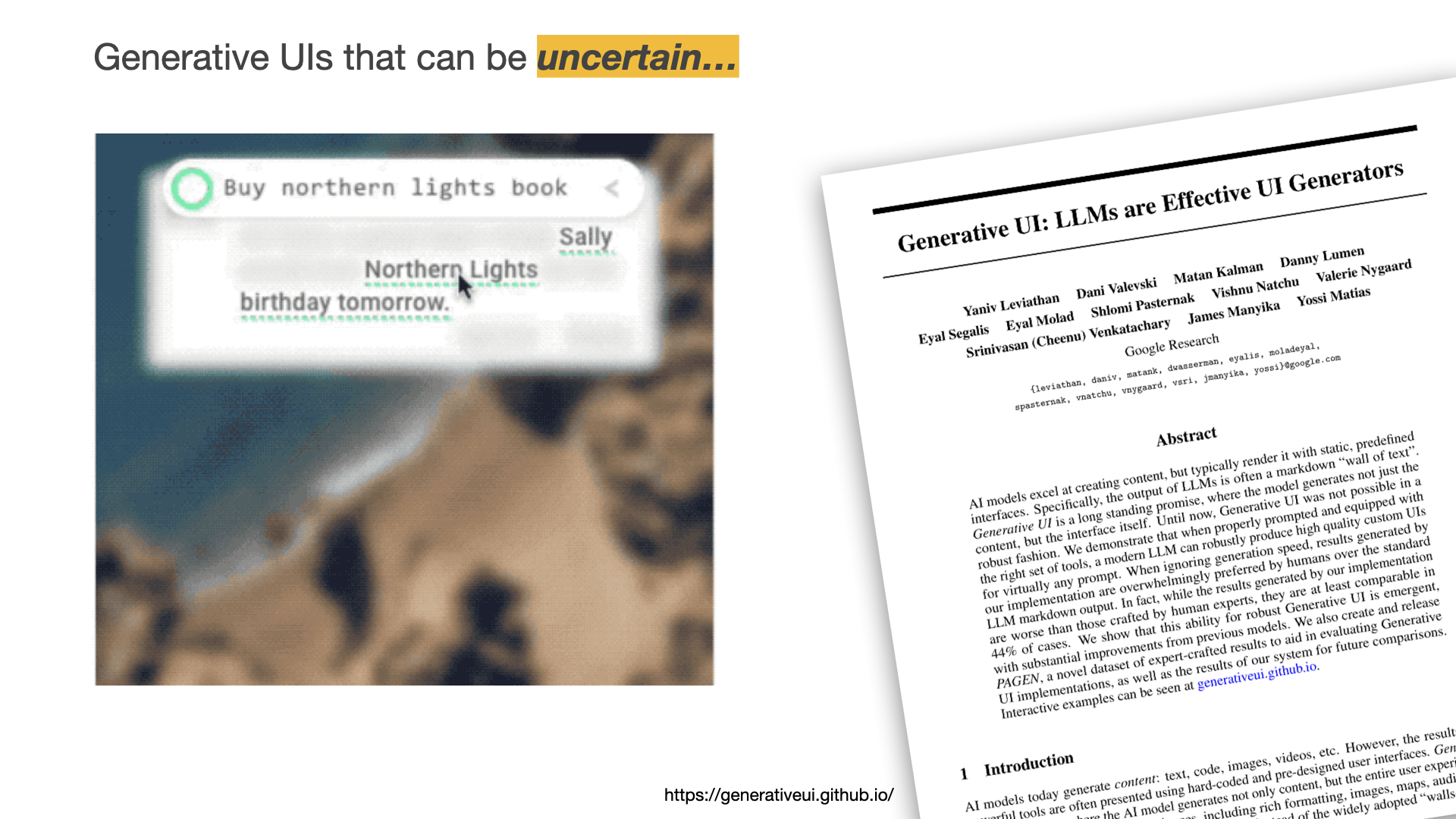
Here’s a little mock up of some work with Nord Projects from that time where we imagined dynamic UI that was built by the agent to surface it’s uncertainties to its user – and right up to date – papers published at the launch of Gemini 3 where the promise of generated UI could start to support stuff like that.
And just yesterday this new experimental browser ‘Disco’ was announced by Google Labs – that builds mini-apps based on what it thinks you’re trying to achieve…
But again lets return to that thought about Machine Intelligence having a symbiosis with the human rather than mimicking it…
There could be more useful prompts from the non-human side of the uncanny valley… e.g. Spiders
I came across this piece in Quanta https://www.quantamagazine.org/the-thoughts-of-a-spiderweb-20170523/ some years back about cognitive science experiments on spiders revealing that their webs are part of their ‘cognitive equipment’. The last paragraph struck home – ‘cognition to be a property of integrated nonbiological components’
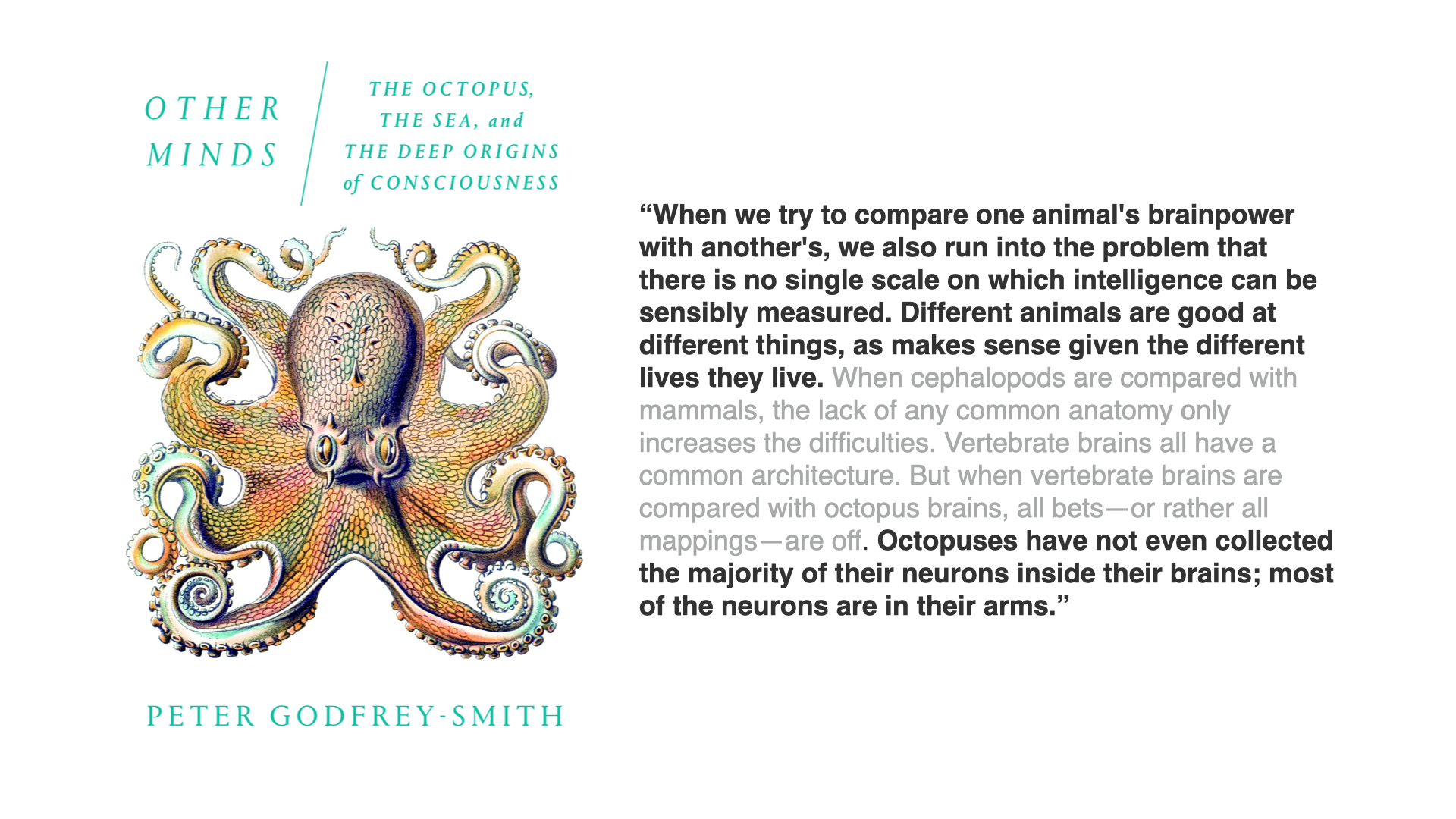
What I find fascinating is the distributed, embodied (rather than centralized) model of cognition they appear to have – with most of their ‘brains’ being in their tentacles…
I have always found this quote from ETH’s Bertrand Meyer inspiring… No need for ‘brains’!!!
“H is for Hawk” is a fantastic memoir of the relationship between someone and their companion species. Helen McDonald writes beautifully about the ‘her that is not her’
This is CavCam and CavStudio – more work by Nord Projects, with Alison Lentz, Alice Moloney and others in Google Research examining how these personalised trained models could become intelligent reactive ‘lenses’ for creative photography.
We could use AI in creating different complimentary ‘umwelts’ for us.
Perhaps surprising is that the tech world is heading there too perhaps.
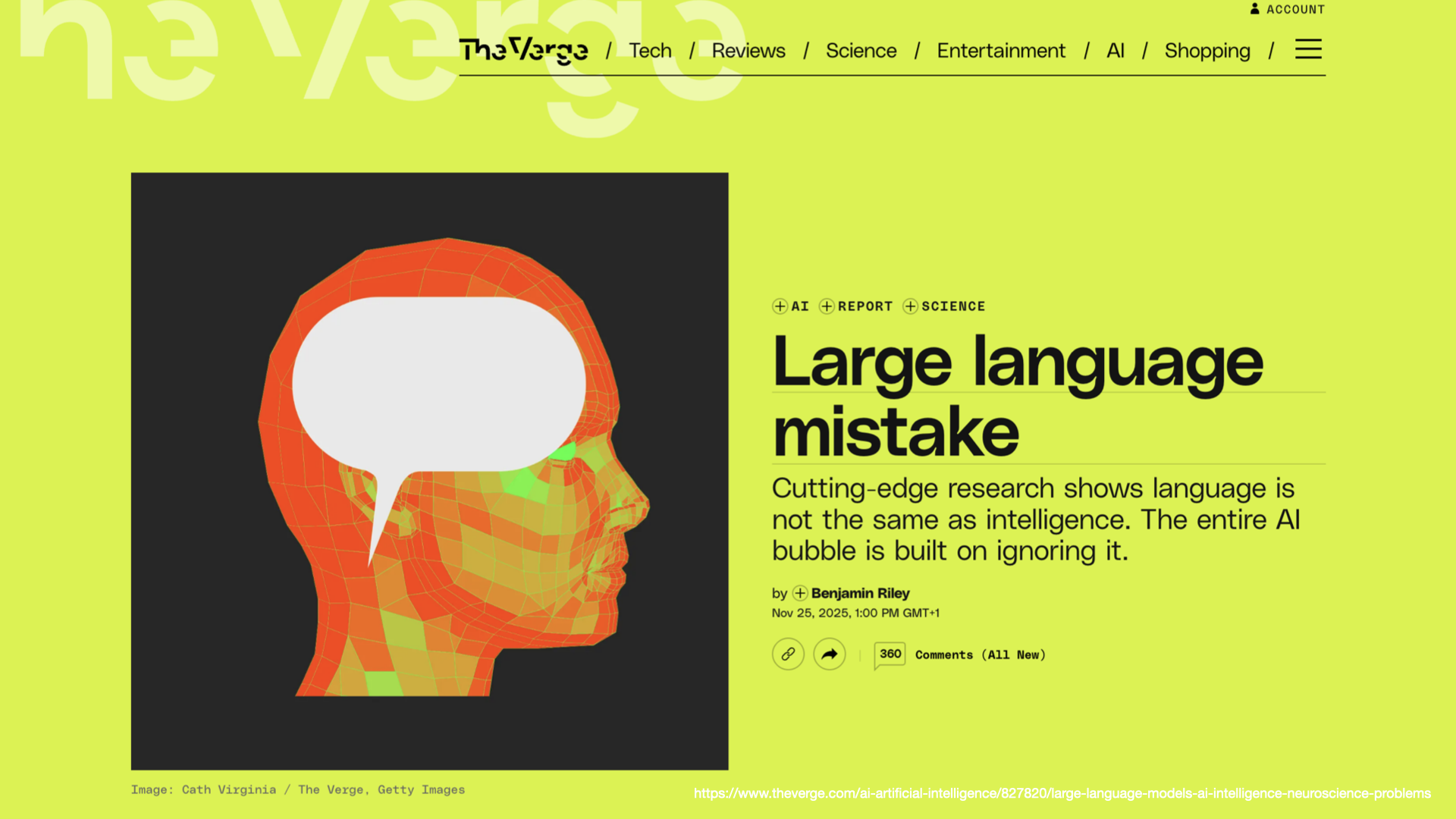
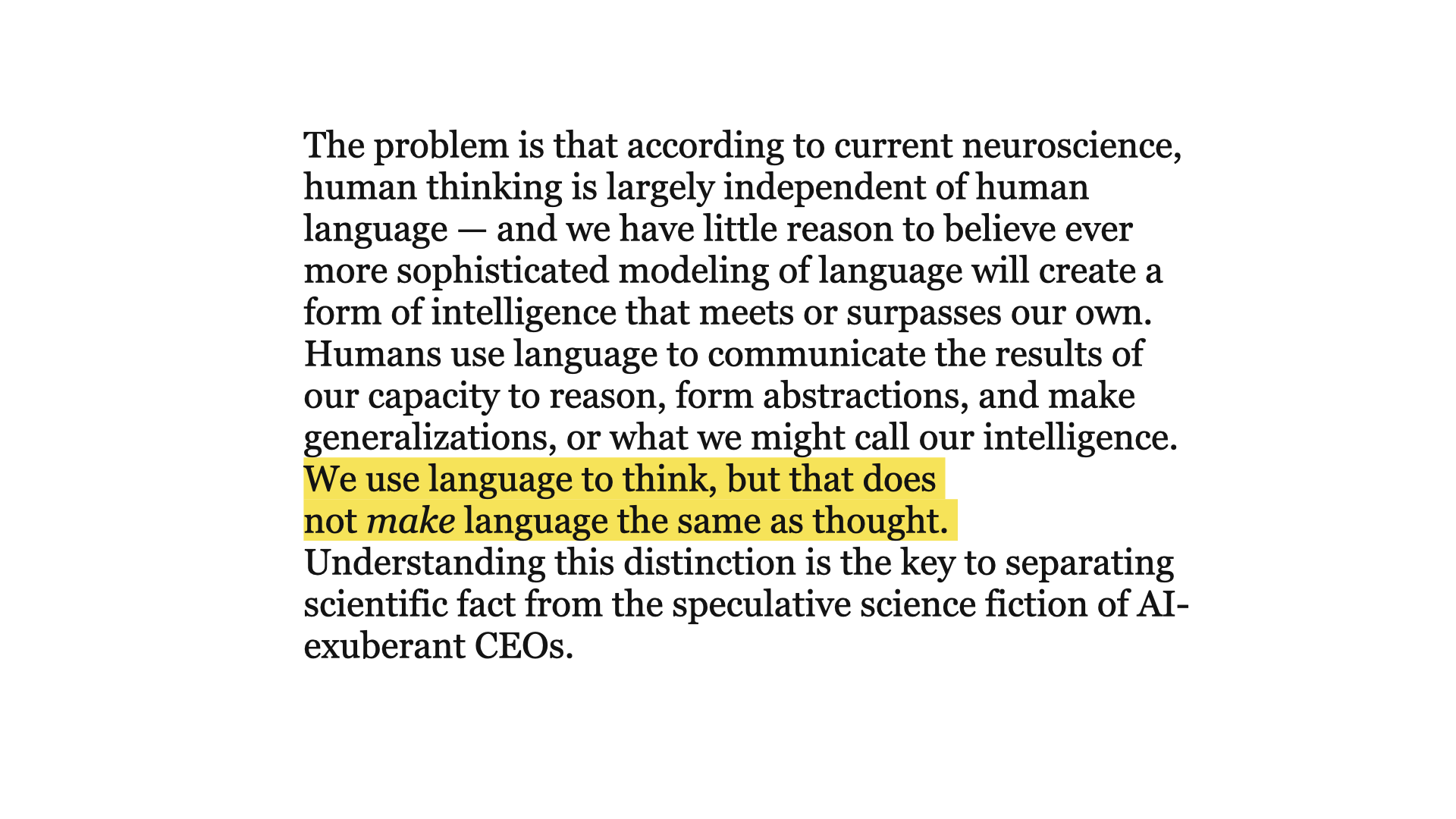
There’s a growing suspicion among AI researchers – voiced at their big event NeurIPS just a weekor so – that the language model will need to be supplanted or at least complemented by other more embodied and physical approaches, including what are getting categorised as “World Models” – playing in the background is video from Google Deepmind’s announcement of the autumn on this agenda.
“Spatial Intelligence is the scaffolding upon which our cognition is built. It’s at work when we passively observe or actively seek to create. It drives our reasoning andplanning, even on the most abstract topics. And it’s essential to the way we interact—verbally or physically, with our peers or with the environment itself.”
Here are some old friends from Google who have started a company – Archetype AI – looking at physical world AI models that are built up from a multiplicity of real-time sensor data…
As they mention the electrical grid – here’s some work from my time at solar/battery company Lunar Energy in 2022/23 that can illustrate the potential for such approaches.
In Japan, Lunar have a large fleet of batteries controlled by their Lunar AI platform. You can perhaps see in the time-series plot the battery sites ‘anticipating’ the approach of the typhoon and making sure they are charged to provide effective backup to the grid.
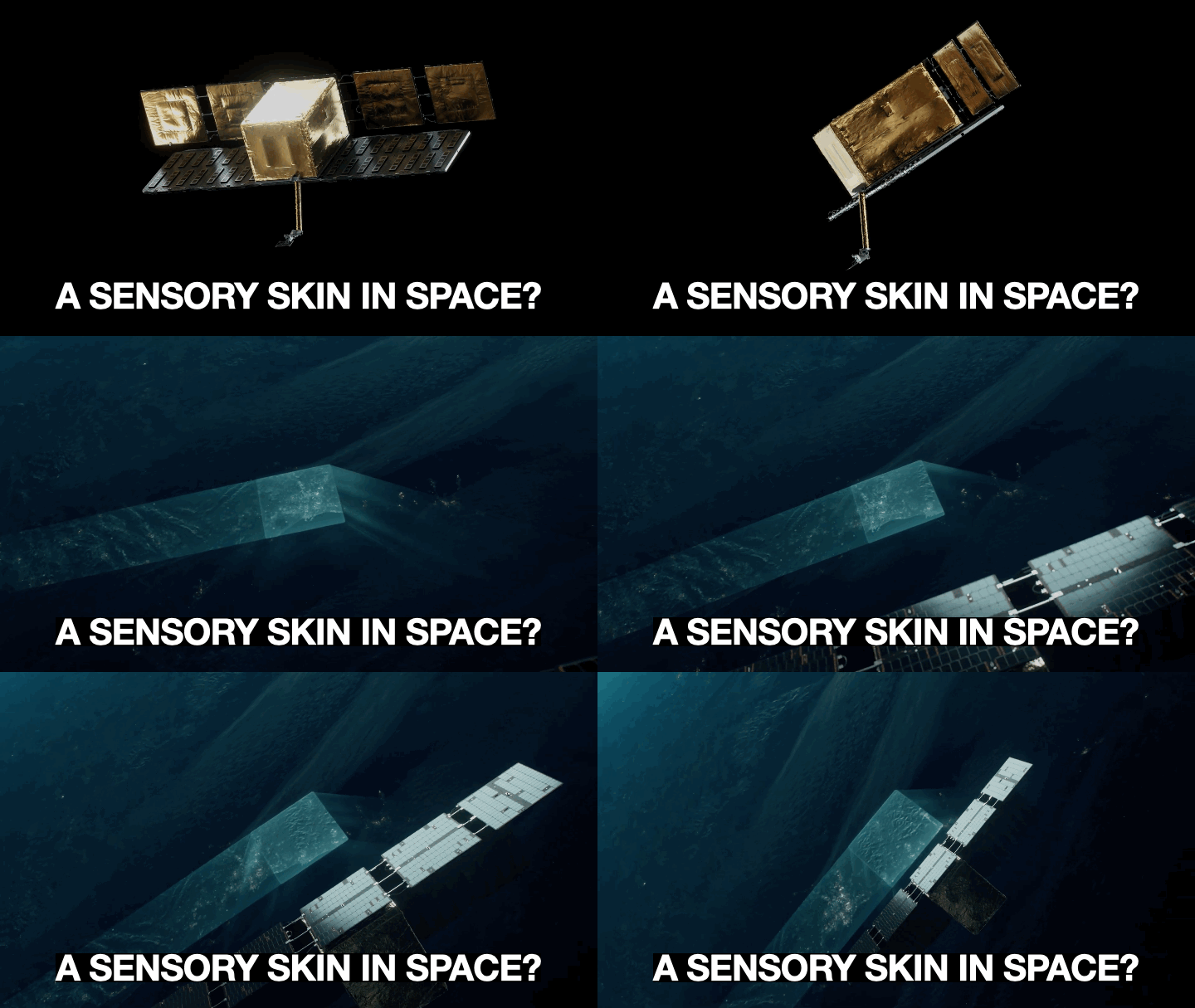
Here’s some imagery from this past week they released of how they’ve been helping emergency response to the flooding in SE Asia – e.g. Sri Lanka here with real-time imaging.
But as Ling said this morning – we can know more and more but it might not unlock the regenerative responses we need on its own.
How might we follow their example with these new powerful world modelling technologies?
And I’ll leave you with the symbiotic nature/AI hope of my friends at Superflux and their project that asks, I guess – “What is it like to be a river?”…
“BASAAP stands for “Be As Smart As A Puppy” – something I originally wrote on a (physical) post it note back when I worked at Nokia in 2005 or 2006. For the past 20 years I’ve been exploring metaphors and experiences that might arise from the technology we call ‘AI’ – and while a lot of us now talk to LLMs every day – they still might not… B… ASAAP…”
I joined Miro a year ago this week, back in November 2024.
In my first few weeks I wrote down and shared with the team a few assumptions / goals / thoughts / biases / priors as a kind of pseudo-manifesto for how I thought we might proceed with AI in Miro, and I thought I’d dust them off.
About a month ago we released a bunch of AI features that the team did some amazing work on, and will continue to improve and iterate upon.
If I squint I can maybe see some of this in there, but of course a) it takes a village and b) a lot changed in both the world of AI and Miro in the course of 2025.
Anyway – FWIW I thought it would still be fun to post what I thought I year ago, as there might be something useful still there, accompanied by some slightly-odd Sub-Gondry stylings from Veo3…
Multiplayer / Multispecies
When we are building AI for Miro always bear in mind the human-centred team nature of innovation and making complex project work. Multiplayer scenarios are always the start of how we consider AI processes, and the special sauce of how we are different to other AI tools.
Minds on the Map
The canvas is a distinct advantage for creating an innovation workspace – the visibility and context than can be given to human team members should extend to the AI processes that can be brought to bear on it. They should use all the information created by human team members on the canvas in their work.
Help both Backstage & On-Stage
Work moves fluidly from unstructured and structured modes, asynchronous and synchronous, solo and team work – and there are aspects of preparation and performance to all of these. AI processes should work fluidly across all of them.
AI is always Non-Destructive
All AI processes aim to preserve and prioritise work done by human teams.
AI gets a Pencil, Humans get a Pen
Anything created by an AI process (initially) has a distinct visual/experiential identity so that human team members can identify it quickly.
No Teleporting
Don’t teleport users to a conclusion.
Where possible, expose the ‘chain of thought’ that the AI process so that users can understand how it arrived at the output, and edit/iterate on it.
AIs leave visible (actionable) evidence
Where possible, expose the AI processes’ ‘chain of thought’ on the board so that users can understand how it arrived at the output, and edit/iterate on it. Give hooks into this for integrations, and make context is well logged in versions/histories.
eBikes for the Mind
Humans always steer and control – but AI processes can accelerate and compress the distances travelled. They are mostly ‘pedal-assistance’ rather than self-driving.
Help do the work of the work
What are the AI processes that can accelerate or automate the work around the work e.g. taking notes, scheduling, follows ups, organising, coordinating: so that the human team mates can get on with the things they do best.
Using Miro to use Miro
Eventually, AI processes in Miro extend in competence to instigate and initiate work in teams in Miro. This could have its roots in composable workflows and intelligent templates, but extend to assembling/convening/facilitating significant amounts of multiplayer/multispecies work on an indvidual’s behalf.
My Miro AI
What memory / context can I count on to bring to my work, that my agents or my team can use. How can I count on my agents not to start from scratch each time? Can I have projects I am working on with my agents over time? Are my agents ‘mine’? Can I bring my own AI, visualise and control other AI tools in Miro or export the work of Miro agents to other tools, or take it with me when I move teams/jobs (within reason). Do my agents have resumes?
This excellent image visualises household carbon footprints – highlighting in coincidental green the extreme efficiency of NYC compared to the surrounding suburban sprawl of the emerging BAMA.
I thought as it’s a 16 year old now, I should check in on it, with some distance, and give it a new home here.
I thankfully found my original non-edited google doc that I shared with Annalee, and it’s pasted below…
My friend Nick Foster is giving the closing keynote at the event Sir Norman spoke at tomorrow. He just wrote an excellent book on our attitudes to thinking about futures called “Could Should Might Don’t” – which I heartily recommend.
My little piece of amateur futurism from 2009 has a dose of all four – but for the reasons Sir Norman pointed out, I think it’s still a ‘Could’.
And… Still a ‘Should’.
The City is (still) a battlesuit for surviving the future.
[The following is my unedited submission to io9.com, published 20th September 2009]
The city is a battlesuit for surviving the future.
Looking at the connections between architects and science-fiction’s visions of future cities
In February of this year I gave a talk at webstock in New Zealand, entitled “The Demon-Haunted World” – which investigated past visions of future cities in order to reflect upon work being done currently in the field of ‘urban computing’.
In particular I examined the radical work of influential 60’s architecture collective Archigram, who I found through my research had coined the term ‘social software’ back in 1972, 30 years before it was on the lips of Clay Shirky and other internet gurus.
Rather than building, Archigram were perhaps proto-bloggers – publishing a sought-after ‘magazine’ of images, collage, essays and provocations regularly through the 60s which had an enormous impact on architecture and design around the world, right through to the present day. Archigram have featured before on io9 [http://io9.com/5157087/a-city-that-walks-on-giant-actuators], and I’m sure they will again.
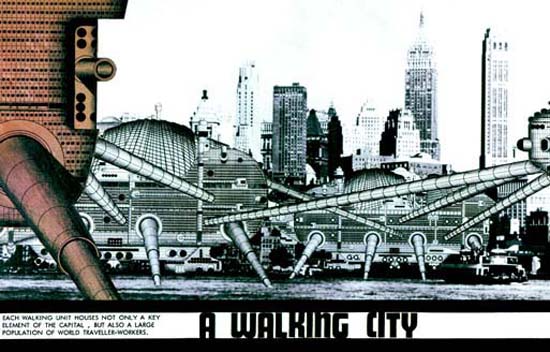
They referenced comics – American superhero aesthetics but also the stiff-upper-lips and cut-away precision engineering of Frank Hampson’s Dan Dare and Eagle, alongside pop-music, psychedelia, computing and pulp sci-fi and put it in a blender with a healthy dollop of Brit-eccentricity. They are perhaps most familiar from science-fictional images like their Walking City project, but at the centre of their work was a concern with cities as systems, reflecting the contemporary vogue for cybernetics and belief in automation.
Although Archigram didn’t build their visions, other architects brought aspects of them into the world. Echoes of their “Plug-in city” can undoubtedly be seen in Renzo Piano and Richard Rogers’ Pompidou Centre in Paris.
Much of the ‘hi-tech’ style of architecture (chiefly executed by British architects such as Rogers, Norman Foster and Nicholas Grimshaw) popular for corporate HQs and arts centers through the 80s and 90s can be traced back to, if not Archigram, then the same set of pop sci-fi influences that a generation of British schoolboys grew up with – into world-class architects.
Lord Rogers, as he now is, has made a second career of writing and lobbying about the future of cities worldwide. His books “Cities for a small planet” and “Cities for a small country” were based on work his architecture and urban-design practice did during the 80s and 90s, consulting on citymaking and redevelopment with national and regional governments. His work for Shanghai is heavily featured in ‘small planet’ – a plan that proposed the creation of an ecotopian mega city. This was thwarted, but he continues to campaign for renewed approaches to urban living.
Last year I saw him give a talk in London where he described the near-future of cities as one increasingly influenced by telecommunications and technology. He stated that “our cities are increasingly linked and learning” – this seemed to me a recapitulation of Archigram’s strategies, playing out not through giant walking cities but smaller, bottom-up technological interventions. The infrastructures we assemble and carry with us through the city – mobile phones, wireless nodes, computing power, sensor platforms are changing how we interact with it and how it interacts with other places on the planet. After all it was Archigram who said “people are walking architecture”
Dan Hill (a consultant on how digital technology is changing cities for global engineering group Arup) in his epic blog post “The Street as Platform” [http://www.cityofsound.com/blog/2008/02/the-street-as-p.html] says “…the way the street feels may soon be defined by what cannot be seen by the naked eye”.
He goes on to explain:
“We can’t see how the street is immersed in a twitching, pulsing cloud of data. This is over and above the well-established electromagnetic radiation, crackles of static, radio waves conveying radio and television broadcasts in digital and analogue forms, police voice traffic. This is a new kind of data, collective and individual, aggregated and discrete, open and closed, constantly logging impossibly detailed patterns of behaviour. The behaviour of the street.”
Adam Greenfield, a design director at Nokia wrote one of the defining texts on the design and use of ubiquitous computing or ‘ubicomp’ called “Everyware” [http://www.studies-observations.com/everyware/] and is about to release a follow-up on urban environments and technology called “The city is here for you to use”.
In a recent talk he framed a number of ways in which the access to data about your surroundings that Hill describes will change our attitude towards the city. He posits that we will move from a city we browser and wander to a ‘searchable, query-able’ city that we can not only read, but write-to as a medium.
He states
“The bottom-line is a city that responds to the behaviour of its users in something close to real-time, and in turn begins to shape that behaviour”
Again, we’re not so far away from what Archigram were examining in the 60’s. Behaviour and information as the raw material to design cities with as much as steel, glass and concrete.
The city of the future increases its role as an actor in our lives, affecting our lives.
This of course, is a recurrent theme in science-fiction and fantasy. In movies, it’s hard to get past the paradigm-defining dystopic backdrop of the city in Bladerunner, or the fin-de-siècle late-capitalism cage of the nameless, anonymous, bounded city of the Matrix.
Perhaps more resonant of the future described by Greenfield is the ever-changing stage-set of Alex Proyas’ “Dark City”.
For some of the greatest-city-as-actor stories though, it’s perhaps no surprise that we have to turn to comics as Archigram did – and the eponymous city of Warren Ellis and Darrick Robertson’s Transmetropolitan as documented and half-destroyed by gonzo future journalist-messiah Spider Jerusalem.
Transmet’s city binds together perfectly a number of future-city fiction’s favourite themes: overwhelming size (reminiscent of the BAMA, or “Boston-Atlanta Metropolitan Axis from William Gibson’s “Sprawl” trilogy), patchworks of ‘cultural reservations’ (Stephenson’s Snowcrash with it’s three-ring-binder-governed, franchise-run-statelets) and a constant unrelenting future-shock as everyday as the weather… For which we can look to the comics-futrue-city grand-daddy of them all: Mega-City-1.
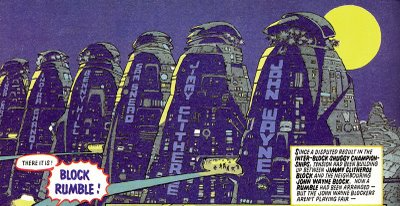
Ah – The Big Meg, where at any moment on the mile-high Zipstrips you might be flattened by a rogue Boinger, set-upon by a Futsie and thrown down onto the skedways far below, offered an illicit bag of umpty-candy or stookie-glands and find yourself instantly at the mercy of the Judges. If you grew up on 2000AD like me, then your mind is probably now filled with a vivid picture of the biggest toughest, weirdest future city there’s ever been.
This is a future city that has been lovingly-detailed, weekly, for over three decades years, as artist Matt Brooker (who goes by the psuedonym D’Israeli) points out:
“Working on Lowlife, with its Mega-City One setting freed from the presence of Judge Dredd, I found myself thinking about the city and its place in the Dredd/2000AD franchise. And it occurred to me that, really, the city is the actual star of Judge Dredd. I mean, Dredd himself is a man of limited attributes and predictable reactions. His value is giving us a fixed point, a window through which to explore the endless fountain of new phenomena that is the Mega-City. It’s the Mega-City that powers Judge Dredd, and Judge Dredd that has powered 2000AD for the last 30 years.”
Brooker, from his keen-eyed-viewpoint as someone currently illustrating MC-1, examines the differing visions that artists like Carlos Ezquerra and Mike McMahon have brought to the city over the years in a wonderful blogpost which I heartily recommend you read [http://disraeli-demon.blogspot.com/2009/04/lowlife-creation-part-five-all-joy-i.html]
Were Mega-City One’s creators influenced by Archigram or other radical architects?
I’d venture a “yes” on that.
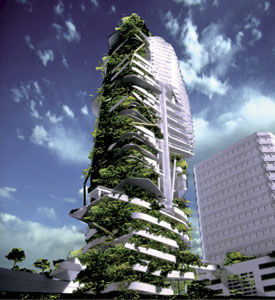
Mike McMahon, seen to many, including Brooker and myself as one of the definitive portrayals of The Big Meg renders the giant, town-within-a-city Blocks as “pepperpots” organic forms reminiscent of Ken Yeang (pictured here), or (former Rogers-collaborator) Renzo Piano’s “green skyscrapers”.
While I’m unsure of the claim that MC-1 can trace it’s lineage back to radical 60’s architecture, it seems that the influence flowing the other direction, from comicbook to architect, is far clearer.
“Mega City One is the ultimate comic book city: bigger, badder, and more spectacular than its rivals. It’s underlying design principle is simple – exaggeration – which actually lends it a coherence and character unlike any other. While Batman’s Gotham City and Superman’s Metropolis largely reflect the character of the superheroes who inhabit them (Gotham is grim, Metropolis shines) Mega City One presents an exuberant, absurd foil to Dredd’s rigid, monotonous outlook.”
Back in our world, the exaggerated mega-city is going through a bit of bad patch.
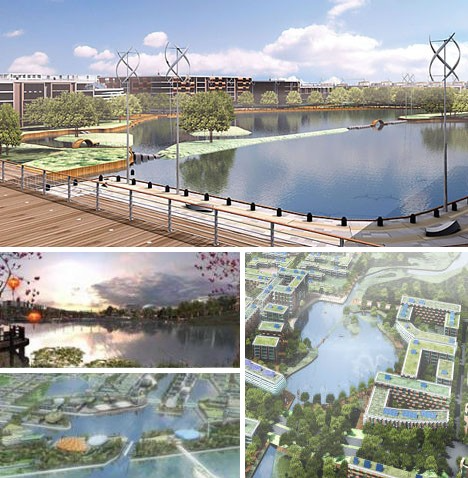
The bling’d up ultraskyscraping and bespoke island-terraforming of Dubai is on hold until capitalism reboots, and changes in political fortune have nixed the futuristic, ubicomp’d-up Arup-designed ecotopia of Dongtan [http://en.wikipedia.org/wiki/Dongtan] in China.
But, these are but speedbumps on the road to the future city.
There are still ongoing efforts to create planned, model future cities such as one that Nick Durrant of design consultancy Plot is working on in Abu Dhabi: Masdar City [http://en.wikipedia.org/wiki/Masdar_City] It’s designed by another alumni of the British Hi-tech school – Sir Norman Foster. “Zero waste, carbon neutral, car free” is the slogan, and a close eye is being kept on it as a test-bed for clean-tech in cities.
We are now a predominantly urban species, with over 50% of humanity living in a city. The overwhelming majority of these are not old post-industrial world cities such as London or New York, but large chaotic sprawls of the industrialising world such as the “maximum cities” of Mumbai or Guangzhou [http://en.wikipedia.org/wiki/Guangzhou]. Here the infrastructures are layered, ad-hoc, adaptive and personal – people there really are walking architecture, as Archigram said.
Hacking post-industrial cities is becoming a necessity also. The “shrinking cities” project, http://www.shrinkingcities.com, is monitoring the trend in the west toward dwindling futures for cities such as Detroit and Liverpool.
They claim:
“In the 21st century, the historically unique epoch of growth that began with industrialization 200 years ago will come to an end. In particular, climate change, dwindling fossil sources of energy, demographic aging, and rationalization in the service industry will lead to new forms of urban shrinking and a marked increase in the number of shrinking cities.”
However, I’m optimistic about the future of cities. I’d contend cities are not just engines of invention in stories, they themselves are powerful engines of culture and re-invention.
David Byrne in the WSJ [http://is.gd/3q1Ca] as quoted by entrepreneur and co-founder of Flickr, Caterina Fake [http://caterina.net/] on her weblog recently:
“A city can’t be too small. Size guarantees anonymity—if you make an embarrassing mistake in a large city, and it’s not on the cover of the Post, you can probably try again. The generous attitude towards failure that big cities afford is invaluable—it’s how things get created. In a small town everyone knows about your failures, so you are more careful about what you might attempt.”
Patron saint of cities, Jane Jacobs, in her book “The Economy of Cities” put forward the ‘engines of invention’ argument in her theory of ‘import replacement’:
“…when a city begins to locally produce goods which it formerly imported, e.g., Tokyo bicycle factories replacing Tokyo bicycle importers in the 1800s. Jacobs claims that import replacement builds up local infrastructure, skills, and production. Jacobs also claims that the increased produce is exported to other cities, giving those other cities a new opportunity to engage in import replacement, thus producing a positive cycle of growth.”
Urban computing and gaming specialist, founder of Area/Code and ITP professor Kevin Slavin showed me a presentation by architect Dan Pitera about the scale and future of Detroit, and associated scenarios by city planners that would see the shrinking city deliberately intensify – creating urban farming zones from derelict areas so that it can feed itself locally. Import replacement writ large.
He also told me that 400 cities worldwide independently of their ‘host country’ agreed to follow the Kyoto protocol. Cities are entities that network outside of nations as their wealth often exceeds that of the rest of the nation put together – it’s natural they solve transnational, global problems.
Which leads me back to science-fiction. Warren Ellis created a character called Jack Hawksmoor in his superhero comic series The Authority.
The surname is a nice nod toward psychogeography and city-fans: Hawksmoor was an architect and progeny of Sir Christopher Wren, fictionalised into a murderous semi-mystical figure who shaped the city into a giant magical apparatus by Peter Ackroyd in an eponymous novel.
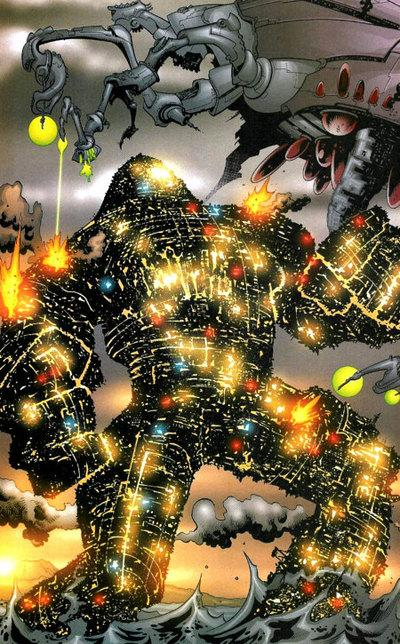
Ellis’ Hawksmoor however was abucted multiple times, seemingly by aliens, and surgically adapted to be ultimately-suited to live in cities – they speak to him and he gains nourishment from them. If you’ll excuse the spoiler, the zenith of Hawksmoor’s adventures with cities come when he finds the purpose behind the modifications – he was not altered by aliens but by future-humans in order to defend the early 21st century against a time-travelling 73rd century Cleveland gone berserk. Hawksmoor defeats the giant, monstrous sentient city by wrapping himself in Tokyo to form a massive concrete battlesuit.
Cities are the best battlesuits we have.
It seem to me that as we better learn how to design, use and live in cities – we all have a future.
Figma feels (to me) like one of those product design empathy experiences where you’re made to wear welding gloves to use household appliances.
I appreciate its very good for rapidly constructing utilitarian interfaces with extremely systemic approaches.
I just sometimes find myself staring at it (and/or swearing at it) when I mistakenly think of it as a tool for expression.
Currently I find myself in a role where I work mostly with people who are extremely good and fast at creating in Figma.
I am really not.
However, I have found that I can slowly tinker my way into translating my thoughts into Figma.
I just can’t think in or with Figma.
Currently there’s discussion of ‘vibe coding’ – that is, using LLMs to create code by iterating with prompts, quickly producing workable prototypes, then finessing them toward an end.
I’ve found myself ‘vibe designing’ in the last few months – thinking and outlining with pencil, pen and paper or (mostly physical) whiteboard as has been my habit for about 30 years, but with interludes of working with Claude (mainly) to create vignettes of interface, motion and interaction that I can pin onto the larger picture akin to a material sample on a mood board.
Where in the past 30 years I might have had to cajole a more technically adept colleague into making something through sketches, gesticulating and making sound effects – I open up a Claude window and start what-iffing.
It’s fast, cheap and my more technically-adept colleagues can get on with something important while I go down a (perhaps fruitless) rabbit hole of trying to make a micro-interaction feel like something from a triple-AAA game.
The “vibe” part of the equation often defaults to the mean, which is not a surprise when you think about what you’re asking to help is a staggeringly-massive machine for producing generally-unsurprising satisfactory answers quickly. So, you look at the output as a basis for the next sketch, and the next sketch and quickly, together, you move to something more novel as a result.
Inevitably (or for now, if you believe the AI design thought-leadering that tools like replit, lovable, V0 etc will kill it) I hit the translate-into-Figma brick wall at some point, but in general I have a better boundary object to talk with other designers, product folk and engineers if my Figma skills don’t cut it to describe what I’m trying to describe.
Of course, being of a certain vintage, I can’t help but wonder that sometimes the colleague-cajoling was the design process, and I’m missing out on the human what-iffing until later in the process.
I miss that, much as I miss being in a studio – but apart from rarefied exceptions that seems to be gone.
Vibe designing is turn-based single-player, for now… which brings me back to the day job…
About 15 years ago, I did a little project to make a ‘rosary’ for what is often referred to as a ‘secular prayer’.
Shipping Forecast Rosary – South East Iceland
Each of the forecast’s regions are represented in laser-cut marine plywood, and strung – in the order of the broadcast – to be thumbed through as you listen.
Shipping Forecast Rosary – German Bight
It was a very quick idea but I’ve always loved it – and it seemed to resonate with a few folks.
This attempted to create alternate coastlines from the shipping forecast areas.
I’m less happy with the execution here, but it’s still a fun idea. Might be more satisfying as something playable, generative – perhaps it has a future as a code experiment with an LLM’s assistance…
“Look at the pattern this seashell makes. The dappled whorl, curving inward to infinity. That’s the shape of the universe itself. There’s a constant pressure, pushing toward pattern. A tendency in matter to evolve into ever more complex forms. It’s a kind of pattern gravity, a holy greening power we call viriditas, and it is the driving force in the cosmos. Life, you see. Like these sand fleas and limpets and krill—although these krill in particular are dead, and helping the fleas. Like all of us,” waving a hand like a dancer. “And because we are alive, the universe must be said to be alive. We are its consciousness as well as our own. We rise out of the cosmos and we see its mesh of patterns, and it strikes us as beautiful. And that feeling is the most important thing in all the universe—its culmination, like the colour of the flower at first bloom on a wet morning. It’s a holy feeling, and our task in this world is to do everything we can to foster it.”
“Deuterium–tritium fusion, the kind of fusion that most star builders are doing, releases ten million times the amount of energy per kilogram as coal. Ten million. If you had a fusion reactor in your house, you’d have to go to the deuterium-tritium shed once for every ten million times you went to the coal shed. What this means is that the mass of a single cup of water contains the equivalent energy of 290 times what the average person in the US uses each year. The mass of an Olympic swimming pool contains an amount of energy in excess of total world annual energy use.”
“People aren’t the apex species they think they are. Other creatures—bigger, smaller, slower, faster, older, younger, more powerful—call the shots, make the air, and eat sunlight. Without them, nothing.”
“‘It’s going to be all right,’ he said, looking at as many of them as he could. ‘Every moment in history contains a mix of archaic elements, things from all over the past, right back into prehistory itself. The present is always a melange of these variously archaic elements. There are still knights coming through on horseback and taking the crops of peasants. There are still guilds, and tribes. Now we see so many people leaving their jobs to work in the flood relief efforts. That’s a new thing, but it’s also a pilgrimage. They want to be pilgrims, they want to have a spiritual purpose, they want to do real work – meaningful work. There is no reason to keep being stolen from. Those of you here who represent the aristocracy look worried. Perhaps you will have to work for yourselves, and live off that. Live at the same level as anyone else. And it’s true – that will happen. But it’s going to be all right, even for you. Enough is as good as a feast. And it’s when everyone is equal that your kids are safest.”
“There is a possible future for humanity where we have stabilized our climate, where everyone has the energy and resources that they need to survive and thrive, where we get to connect with each other in myriad ways. I get to use “we” in the best possible way, meaning all of humanity. Running the numbers and realizing exactly how abundant renewable energy is, and then realizing how close we are to being able to harness it—it’s an absolute game changer. We’re accustomed to thinking about making the transition away from fossil fuels to renewable sources as one that we are doing under duress, making a sacrifice to stave off disaster. But that’s not what we’re doing. What we’re doing is leveling up. We—you, me, anyone who is alive today—we have the opportunity to not just live through but contribute to a species-wide transition from struggle to security, from scarcity to abundance. We can be the best possible ancestors to future generations, putting them on a permanent, sustainable path of abundance and thriving. And we can do it for all of our descendants—all of humanity—not just a narrow line. But we can only do it together, and we still need to figure out how to get there.”
“It’s a miracle the weeds push up. Where is their sustenance, what are they feeding on? They see them only on the roads, by the mast towers, and on the airport runway where they landed. It is as if they thrive on provocation, rising up only when they have something to tear down. They are impish and morbid and embittered and they sort of love them. On the black rubble beaches, on the lower hillsides, they linger; they sit back, wait for the hubris of industry.”
“Another of his favourites, even more puzzling to young men and women conditioned to seek answers, was, ‘Uncertainty is all we have. It’s our advantage. It’s the virtue of the day.’”
Was able to get some time this week to catchup with Bryan Boyer.
We talked about some of the work he was doing with his students, particularly challenging them to think about design interventions and prototyping those across the ‘pace layers’ as famously depicted by Stewart Brand in his book “How buildings learn”
The image is totemic for design practitioners and theorists of a certain vintage (although I’m not sure how fully it resonates with today’s digital ‘product’ design / UX/UI generation) and certainly has been something I’ve wielded over the last two decades or so.
I think my first encounter with it would have been around 2002/2003 or so, in my time at Nokia.
I distinctly remember a conference where (perhaps unsurprisingly!) Dan Hill quoted it – I think it was DIS in Cambridge Massachusetts, where I also memorably got driven around one night in a home-brew dune buggy built and piloted (for want of a better term) by Saul Griffith.
For those not familiar with it – here it is.
The ‘point’ is to show the different cadences of change and progress in different idealised strata of civilisation (perhaps a somewhat narrow WEIRD-ly defined civilisation) – and moreover, much like the slips, schisms and landslides of different geological layers – make the reader aware of the shearing forces and tensions between those layers.
It is a constant presence in the discourse which both leads to it’s dismissal / uncritical acceptance as a cliche.
But this familiarity, aside from breeding contempt means it is also something quite fun to play in semi-critical ways.
While talking with Bryan, I discussed the biases perhaps embedded in showing ‘fashion’ as a wiggly ‘irrational’ line compared to the other layers.
What thoughts may come from depicting all the layers as wiggly?
Another thought from our chat was to extend the geological metaphor to the layers.
Geologists and earth scientists often find the most interesting things at the interstices of the layers. Deposits or thin layers that tell a rich tale of the past. Tell-tale indicators of calamity suck as the K–Pg/K-T boundary. Annals of a former world.
The laminar boundary between infrastructure and institutions is perhaps the layer that gets the least examination in our current obsession with “product”…
I’ve often discussed with folks the many situations where infrastructure (capex) is mistaken for something that can replace institutions/labour (opex) – and where the role of service design interventions or strategic design prototypes can help mitigate.
In the pace layers, perhaps we can call that the “Dan Hill Interstitial Latencies Layer” – pleasingly recurrent in its acronymic form (D-HILL) and make it irregular and gnarly to indicate the difficulties there…
The Representational Planar OP-Ex layer (R-POPE) might be another good name, paying homage to the other person I associate with this territory, Richard Pope. I’ve just started reading Richard’s book “Platformland” which I’m sure will have a lot to say about it.
“We might interact with them as individuals but they’re inherently collective, social, and spatial. Because they bring resources to where they’re used, they create enduring relationships not just between the people who share the network but also between those people and place, where they are in the world and the landscape the network traverses. These systems make manifest our ability to cooperate to meet universal needs and care for each other.”
So, perhaps… rather than superficial snark about a design talk cliche, the work of unpacking and making connective tissue across the pace layers might seem more vital in that context.






















 Petafloptimism