I’m stealing Matt Webb’s “filtered for” format here – for a bunch of more or less loosely connected items that I want to post, associate and log as much for myself as to share.
And – I’ll admit – to remove the friction from posting something without having a strong thread or thesis to connect them.
I’ve pre-ordered “No miracles needed” by Mark Jacobson – which I’m looking forward to reading in February. Found out about it through this Guardian post a week or so ago.
The good news below from Simon Evans seems to support Prof Jacobson’s hypothesis…
The world has reached peak fossil fuels for electricity, thanks to the rapid growth of wind & solar
Wind & solar are the cheapest sources of electricity for 96% of the world's population
“I found this sort of approach really interesting but mostly I like the small scale of it yes I like the fact that it’s you know it’s something that you could imagine just proliferating as a standard component that’s attached to sort of Street Furniture or things around the house or whatever it is you might put them on your windowsill because they’re quite small and they just generate like enough power to make a sensor work or a light or something and yeah it’s this this alternative future to the big powerful set piece green Energy Future that’s obviously being pushed and should continue to be pushed because that’s competing against the big Power and the fossil fuel future but I like this idea of like the smaller cuter weirder fluttery imagine it’s quite fluttery yeah so yeah so this is this is Breeze Punk everybody…”
I like the idea of it being a standard component – a lego. A breezeblock?
I would like it to become… a thing. I suppose that’s why I’m writing this.
Used to be how you made things become things.
It’s probably not how you do it now, you need a much larger coordinated cultural footprint across various short-form streaming formats to make a dent in the embedding space of the LLMs.
Mind you, that’s not the same as making it ‘real’ or even ‘realish’ now is it.
A bit vogue-ish perhaps, to prove a point I asked ChatGPT what it knew about Breezepunk.
It took a while, but… it tried to turn into the altogether less satisfying “windpunk”…
I like making the cursor blink on ChatGPT.
The longer the better. I think it means you’re onto something.
Or maybe that’s just my Bartle-type showing again.
The production design of the recent adaptation of William Gibson’s The Peripheral seemed “fluttery” – particularly in it’s depiction of the post-jackpot London timeline.
Or perhaps the aesthetic is much more one of ‘filigree‘.
There’s heaviness and lightness being expressed as power by the various factions in their architecture, fashion, gadgets.
It’s an overt expression of that power being wielded via nanotechnology – assemblers, disassemblers constructing and deconstructing huge edifices at will.
The last four Tuesday evenings have been for learning and messing about in Unity3D, as part of an excellent online Intro to Unity3d course from City Lit and taught by the knowledgeable (and patient) Rich Cochrane.
It’s been enormously enjoyable – and great to learn a new tool / learn in general. Although as fun as making my final sketch above futzing about with skyboxes, particle systems and physics was – I certainly won’t be giving Tobias Revell anything to worry about any time soon!
About a month ago, I woke up and decided I wasn’t getting any value out of using Twitter.
In fact I was getting negative value – it just made me angry, upset and stressed out.
So I stopped using it and deleted my account.
I was user number 821… I joined back in 2006 and it was a lot of fun for a lot of the twelve years I used it, but then it really, really wasn’t. So far, I don’t miss it that much.
A couple of weeks ago in a late night fugue of amateur futurism I sent an email to a few friends, looking a little bit further out and laden with bias / fiction / wishful thinking. Anyway – putting it here to re-examine in ten years time…
1) Hard Brexit happens to the UK by default, rather than planning.
2) UK becomes virtual client state of EU anyway, any business wanting to make money in goods or services (apart from hardliners like Witheredspoons and Dyson) has to ditch ideology and comply with EU regs, without any of the benefits to citizenry. Well done everyone.
3) USA becomes increasingly insular, either as result of second Trump term or more likely to concentrate on recovering from the first… GAFA gets bashed a lot over next 5yrs and plateaus, net-non-neutrality locks in incumbent value chains but favours big carriers/media not big tech.
4) GDPR and other citizen-centred regulation in EU (plus net-non-neutrality) push value models to ‘federated-edge’, Europe becomes IoT2.0 leader, esp around energy, manufacturing, logistics, auto/vehicular. Neural architectures start to dominate, blockchain-like federation of devices lowers reliance on centralised models of computing (and business)
5) European (esp French, German) startups focus on EU and Africa, to an extent Asia Minor and South Asia as markets. Edge-computing hybrids leapfrog solely cloud-centric business models in hipness if not value (yet).
5.1) EU open banking and finance laws + mobile money innovation around Africa make very attractive markets for edge-focussed fintech startups. The Swiss go all-in for this…
6) one of the Gulf states cashes out on oil, goes all-in on becoming a silicon manufacturer/designer/licenser, with focus on neural architectures, Indian and Chinese manufacturers license, buy or copy.
6.1) Tim Cook moves Apple corp HQ to Dubai. Significant automation in Apple supply chain + IP risks allow edge manufacturing of most of their premium hardware. Other members of GAFA pay attention as the fruit company leaves the plateau of the last few years behind.
7) Chinese firm announces it has an AGI running on a supercomputer running on UAE-designed chips.
8) Bezos announces Amazon to HQ in Zurich (and an orbital solar-powered blockchain datacore at LaGrange Point L1)
9) It’s 2027 and 60% of tech ‘unicorns’ are HQ’d in EU, UAE, India or Singapore.
10) UK joins special economic area of EU in order to adopt data laws formally. Press starts to refer to this as Brentrance…
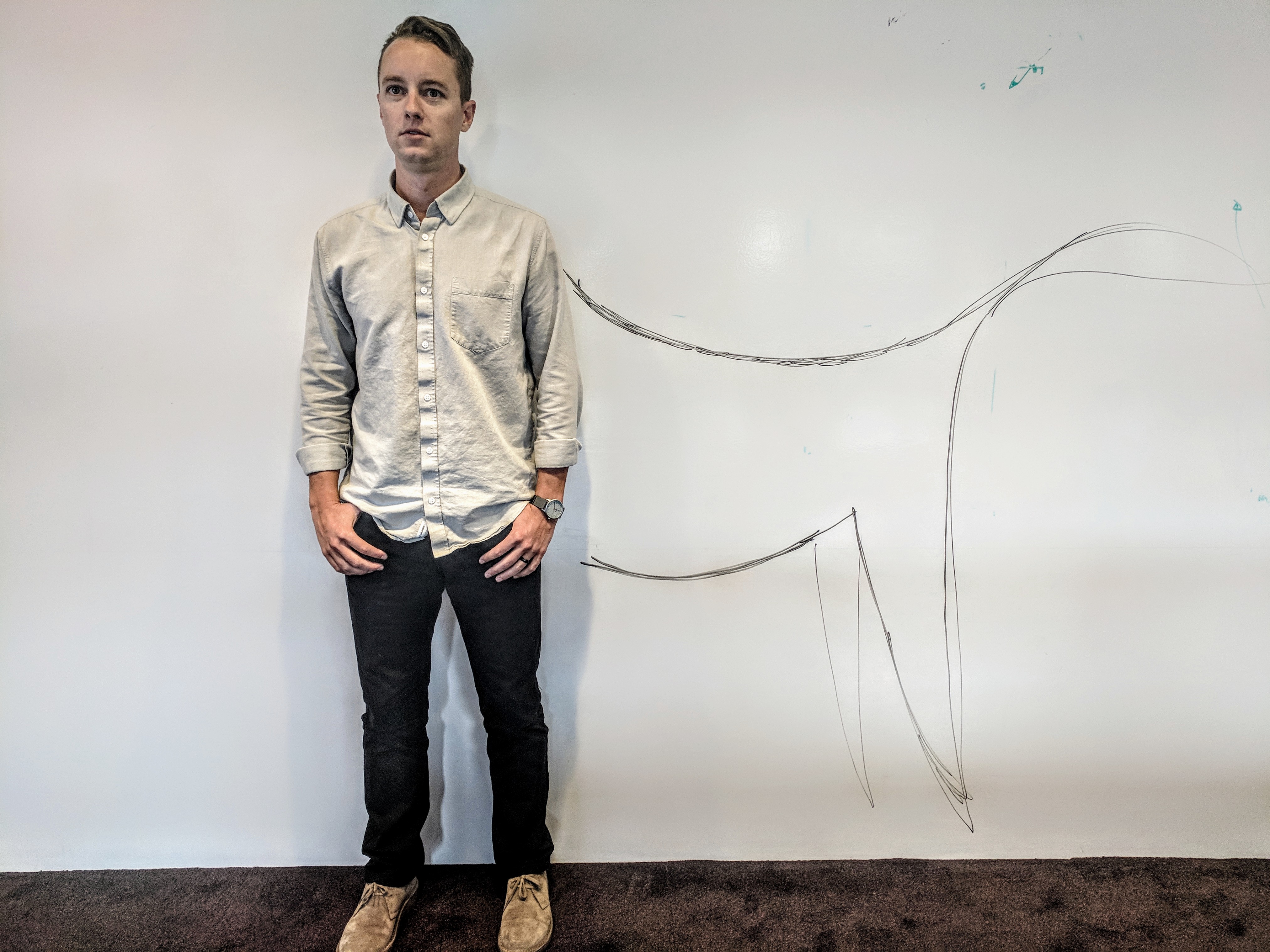
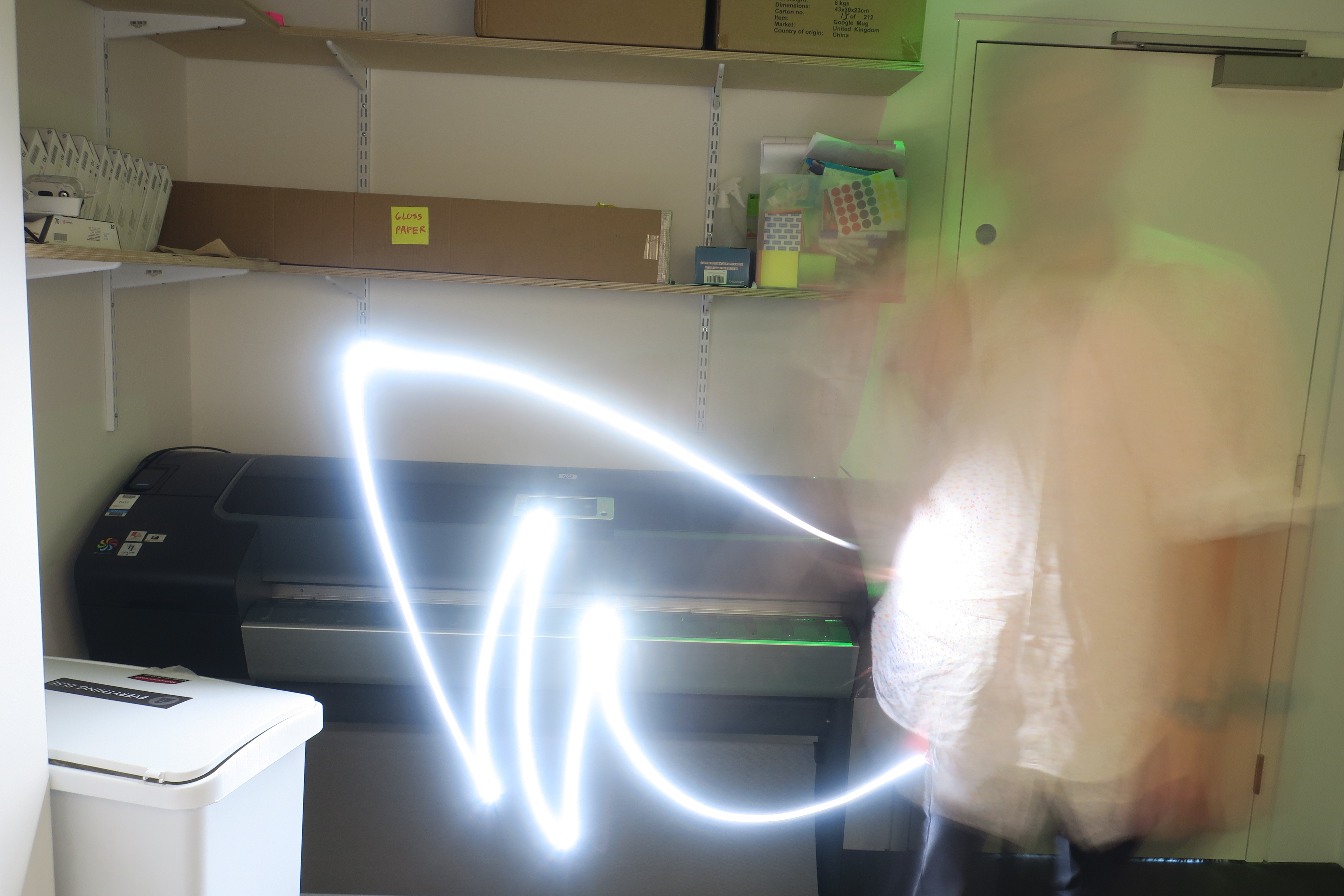
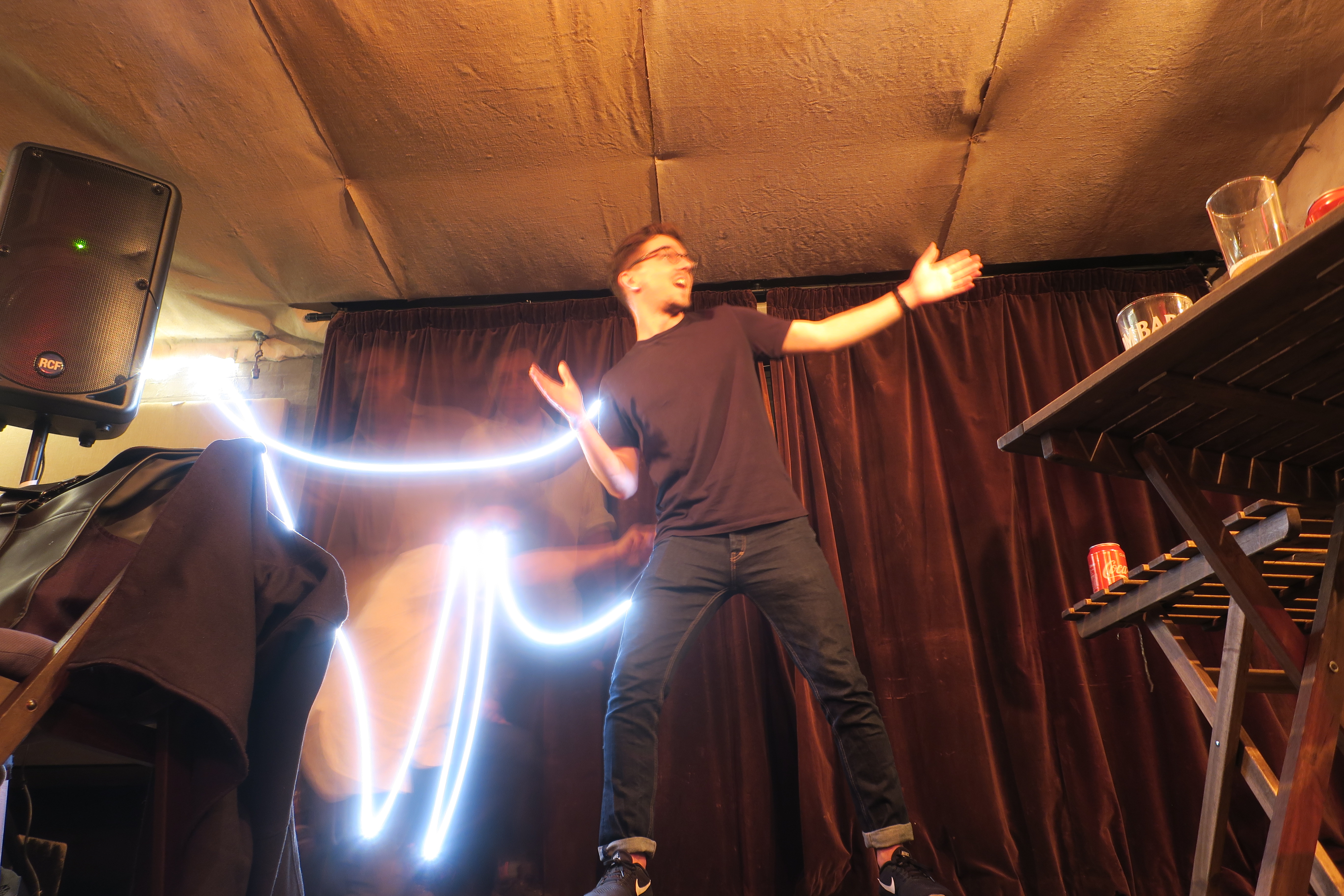
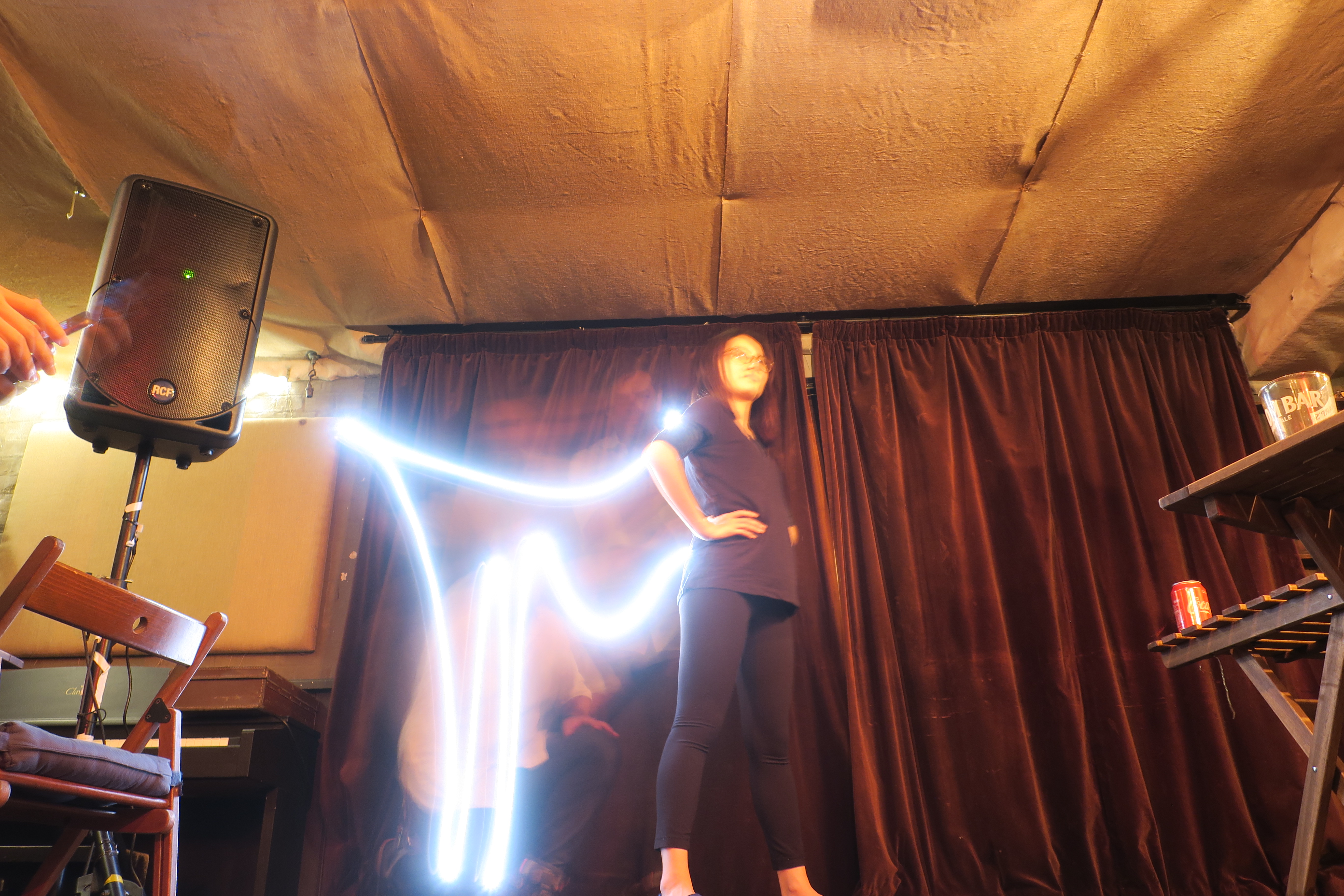
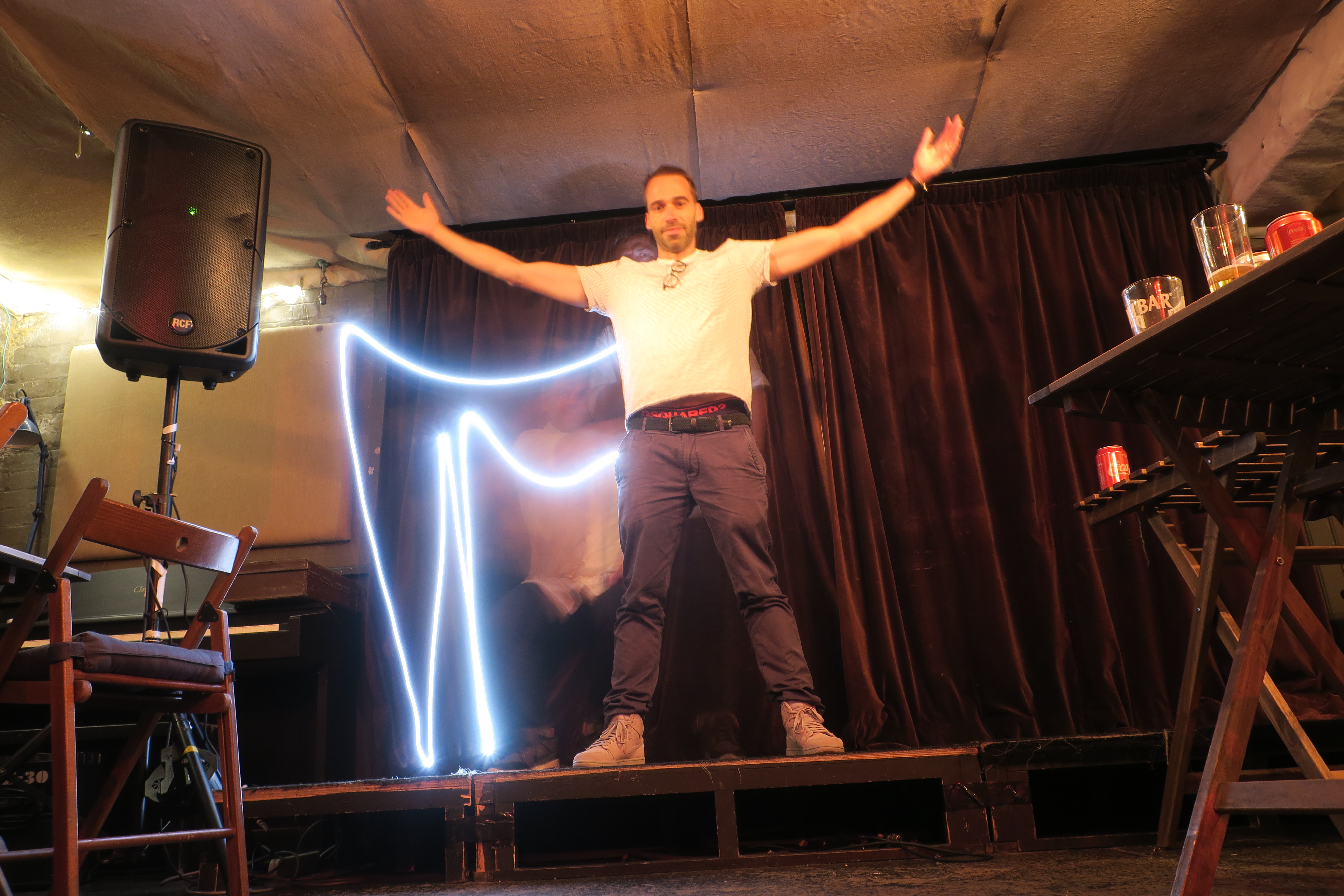
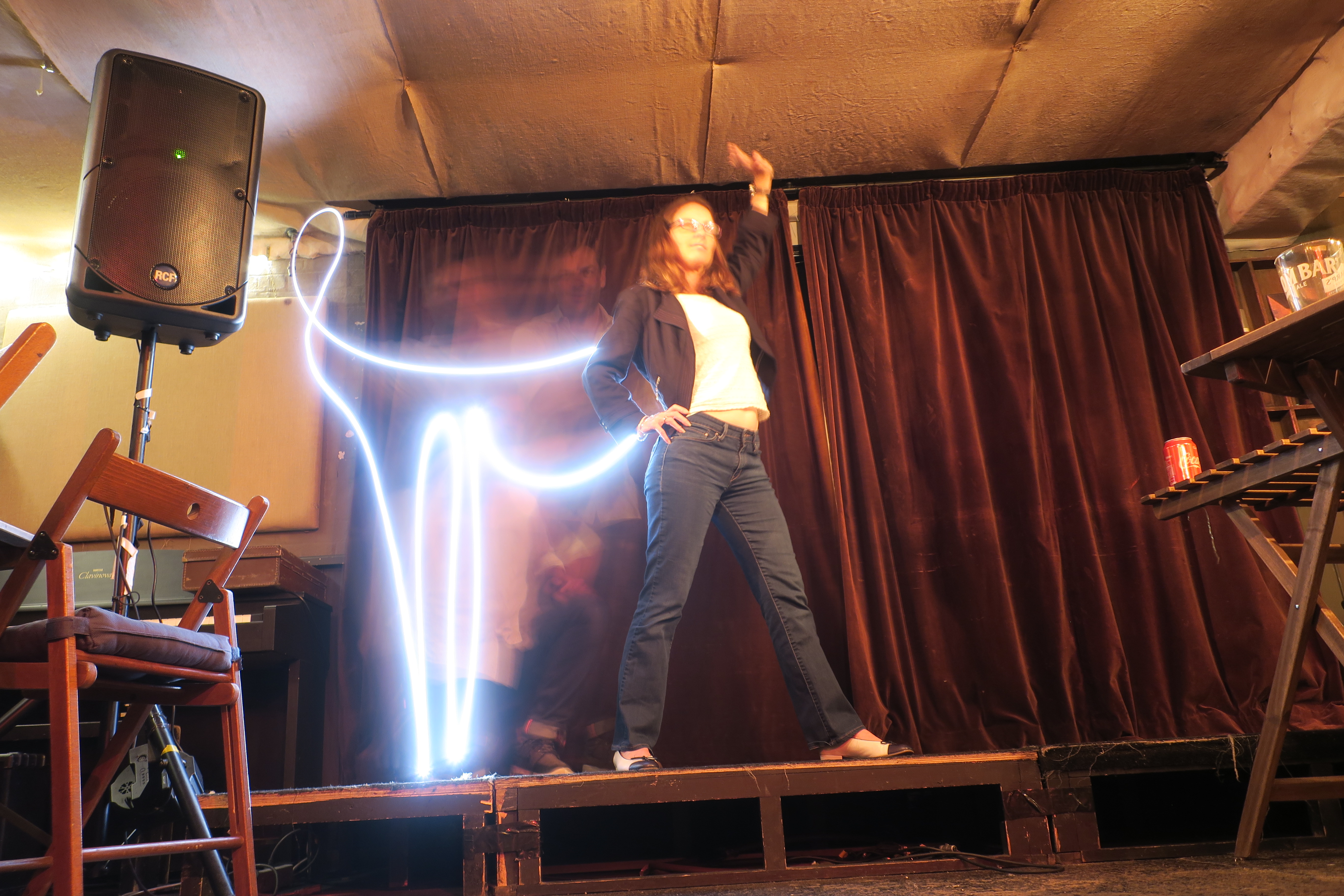
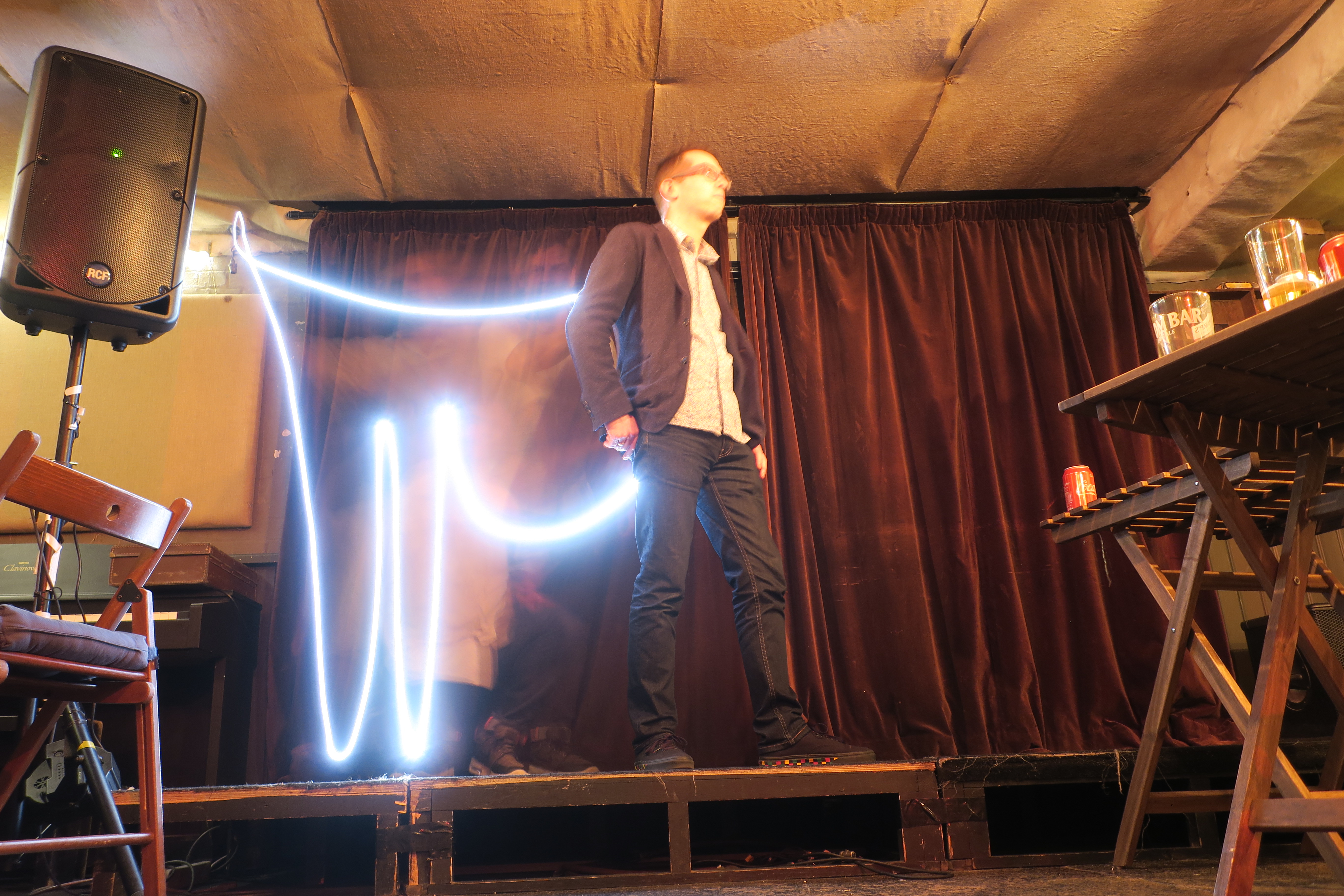
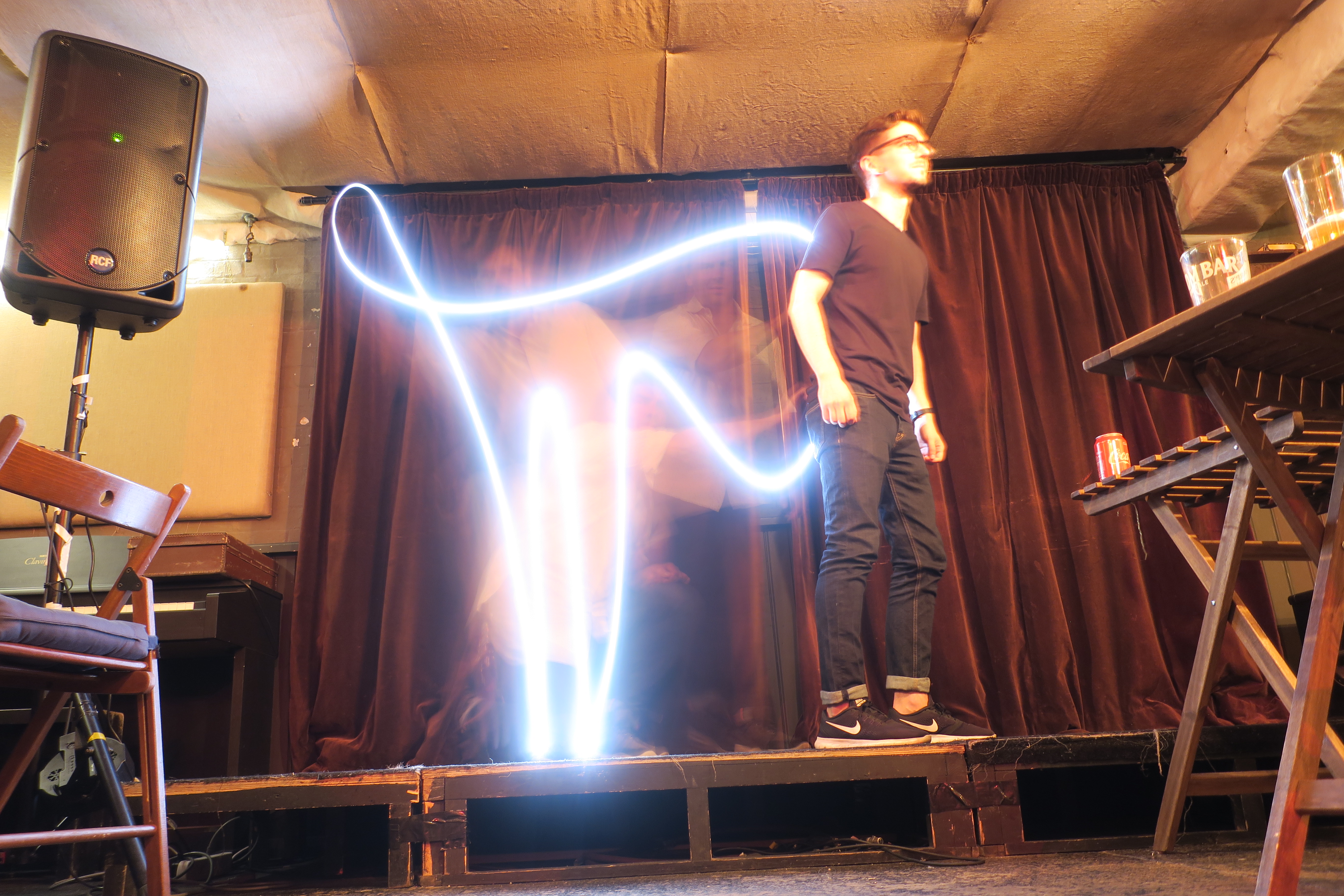
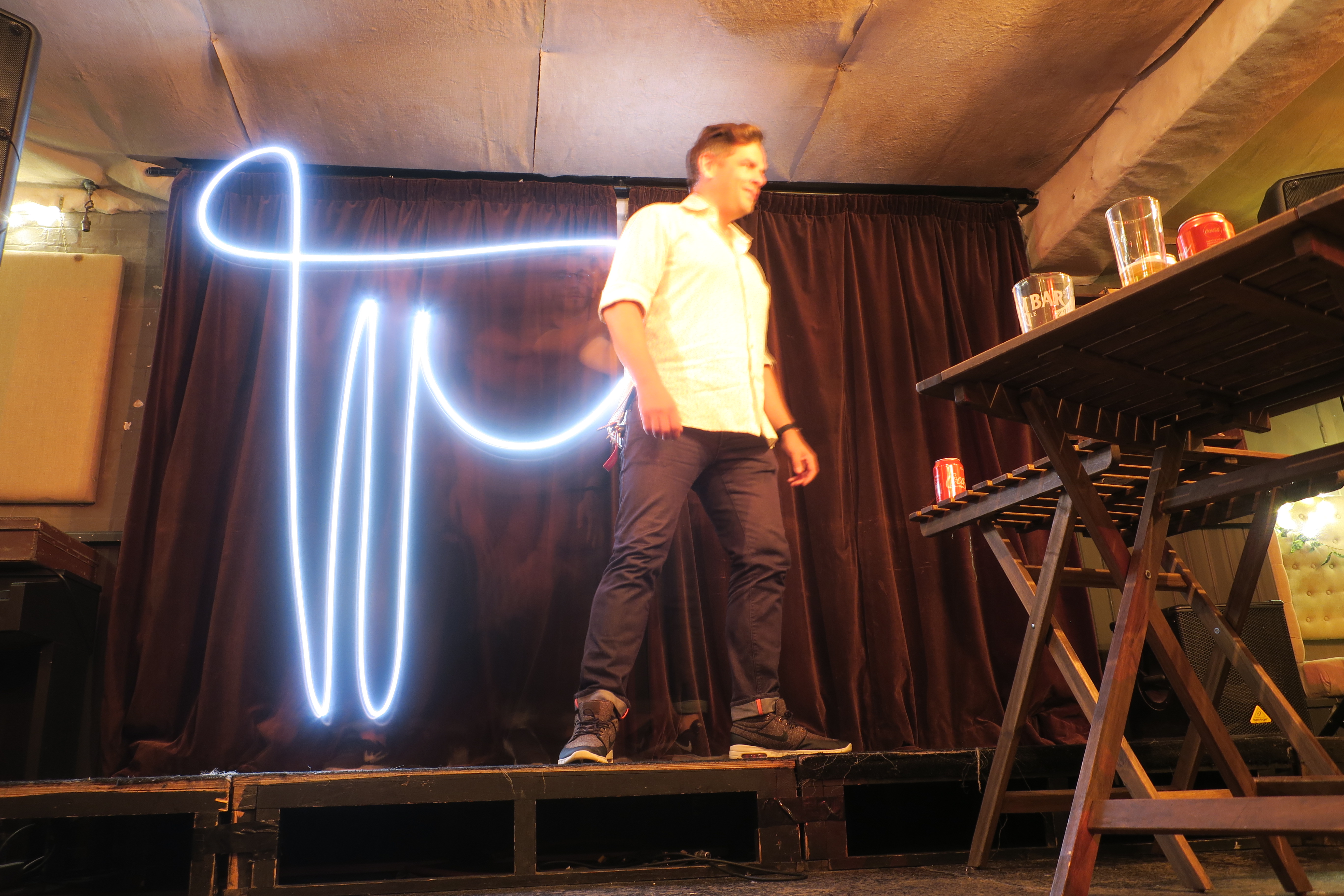
I started idly sketching something that could become a shorthand for a ‘centaur’ actor in a system. The kind of visual shorthand that you might often use on whiteboards or in sketches of flows in designing interactive systems.
For example… back in 2006 I sketched this…
My first centaur symbol sketches… was trying to make it something quick and fluid but kept getting hung up on the tail…
I then progressed to subjecting colleagues (thanks Tim) to impromptu lifesize whiteboard centaur sketches…
I first met them both at the RCA, and so I was thrilled when they asked me in late summer to be part of their show at ApexArt that would be based on the premise of designing future systems or objects for New York City’s Office of Emergency Management.
The show is on now until December 19th 2015 at ApexArt, but I thought I’d write up a little bit of the project I submitted to the group show along with my fantastic collaborators Isaac Blankensmith and Matt Delbridge
The premise
Chris and Elliott’s first recruit was writer Tim Maughan who based on the initial briefing with the OEM created a scenario that we as designers and artists would respond to, and create props for a group of improvisational actors to use in a disaster training simulation. More of that later!
Here’s what we got early on from Tim by way of stimulus…
Backdrop NYC has been hit by a major pandemic (the exact nature of which is still to be decided – something new/fictitious). The city has been battling against it for several weeks now, with research showing that it may spread easily via the transit system. The city, in association with the public transport and the police are enforcing a strict regime of control, monitoring, and – where necessary – quarantining. By constant monitoring of infection data (using medical reports, air monitoring/sampling, social media data mining etc) they are attempting to watch, predict, and hopefully limit spread. Using mobile ‘pop-up’ checkpoints they are monitoring and controlling use of buses and the subway, and in extreme cases closing off parts of the city completely from mass transit. Although it seems to be largely working, and fatalities have been relatively low so far, it has created an understandable sense of paranoia and distrust amongst NYC citizens. Setting The Canal street subway station, late evening. Scenario Our characters are two individuals heading home to Brooklyn after leaving a show at apexart. They are surprised to find that the streets seem fairly empty. Just as they reach Canal station they are alerted (via Wireless Emergency Alert) that quarantine and checkpoint procedures have been activated in the neighbourhood, and a pop-up infection checkpoint has been set up at the entrance to the subway. They’ve never encountered one of these before, but in order to get home they must pass through it by proving they do not pose an infection.
Our proposals
I submitted two pieces with Isaac and Matt for the show.
The first concept “Citibikefrastructure” was built out into a prop which features in the gallery, the second concept “Bodyclocks” featured in the catalog and briefly in the final performed scenario.
1. “Citibikefrastructure”
This first concept uses the NYC citibike bike share program as a widely installed base of checkpoints / support points in the city that have data and power, plus very secure locking mechanisms connected to the network.
The essential thought behind this project was this: What if these were used in times of emergency with modular systems of mobile equipment that plugged into them?
I started to think of both top-down and bottom-up uses for this system.
Top-down uses would be to assist in ‘command and control’ type situations and mainly by the OEM and other emergency services in the city.
TOP-DOWN:
e.g. Command post
Loudhailer system
Solar panels
Space heaters
Shelter / lights / air-conditioning
Wireless mesh networking
Refrigerator for medicine / perishable materials
Water purification
But perhaps more promising to me seemed ‘bottom-up’ uses
BOTTOM-UP:
USB charging stations
Inspiration: after Hurricane Sandy many people who still had electricity offered it up via running powerstrips and extension cords into the streets so people could charge their mobile devices and alert loved ones, keep up with the news etc.
Wireless mesh networking – p2p store/forward text across the citibike network.
LE bluetooth connection to smartphones with ‘take-away’ data
PDF maps
emergency guides
Bluetooth p2p Noticeboard for citizens
Blockchain-certified emergency local currency dispenser!
Barter/volunteer ‘cash’ infrastructure for self-organising relief orgs a la Occupy Sandy
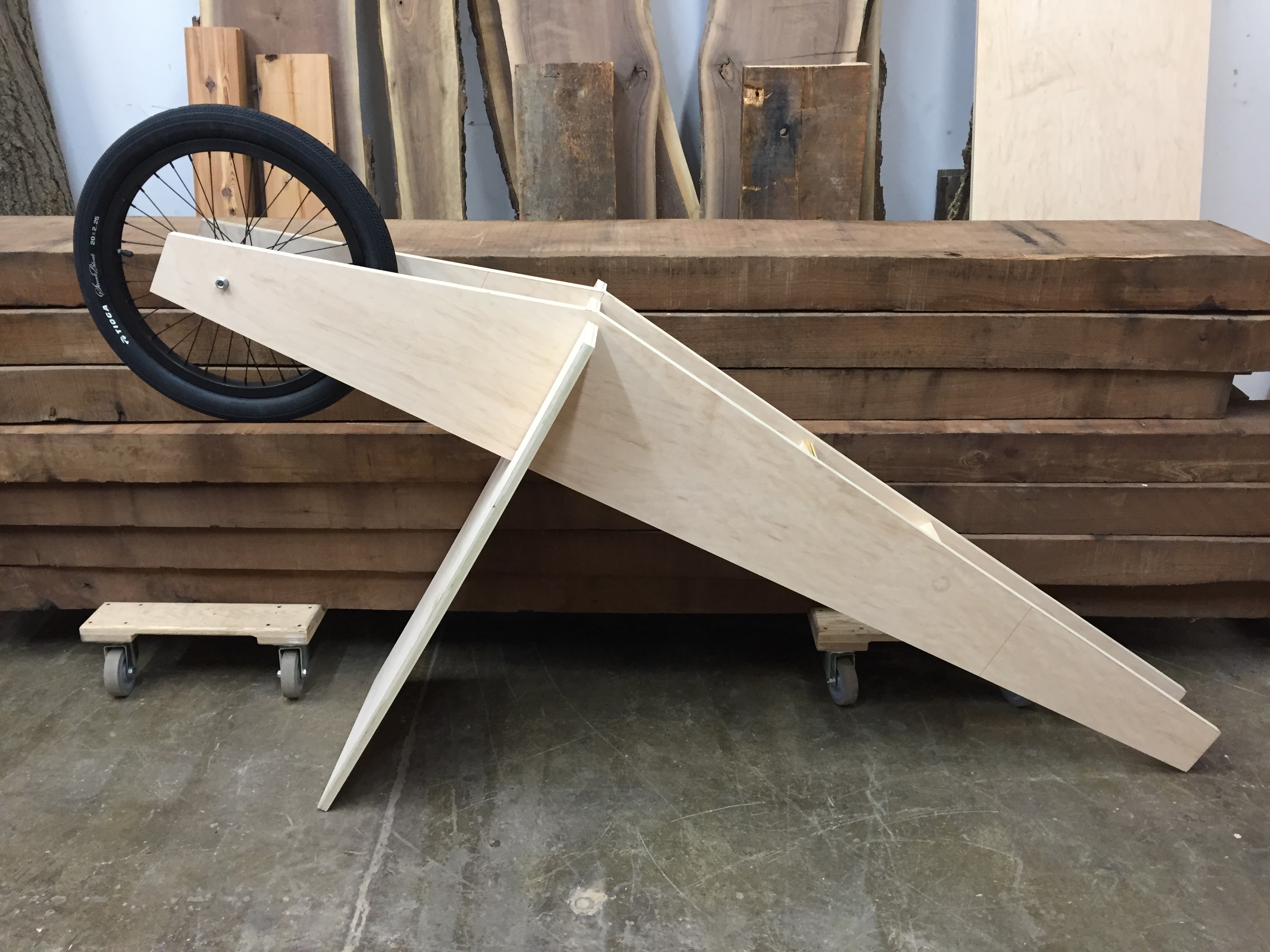
1:1 Sketch proto
After making some surreptitious measurements of the Citibike docking stations, I started to build a very simple 1:1 model of one of these ‘bottom-up’ modules for the show at the fantastic Bien Hecho woodworking academy in Brooklyn’s Navy Yard.
Detail design and renderings
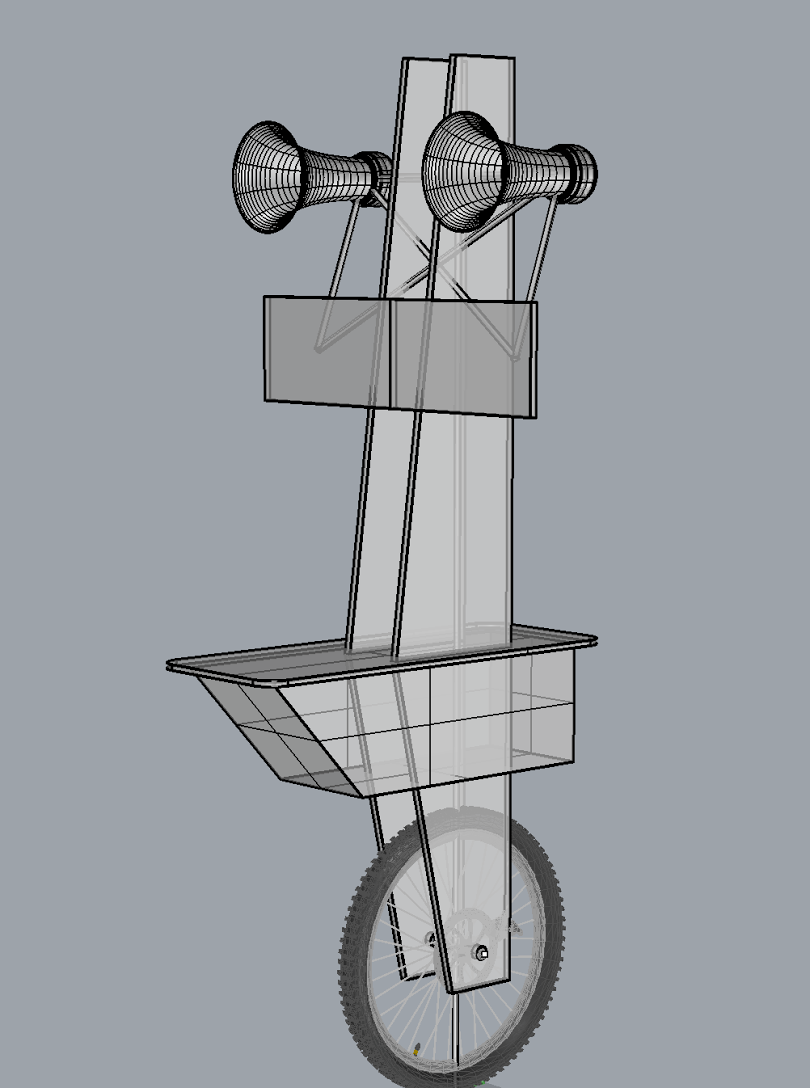
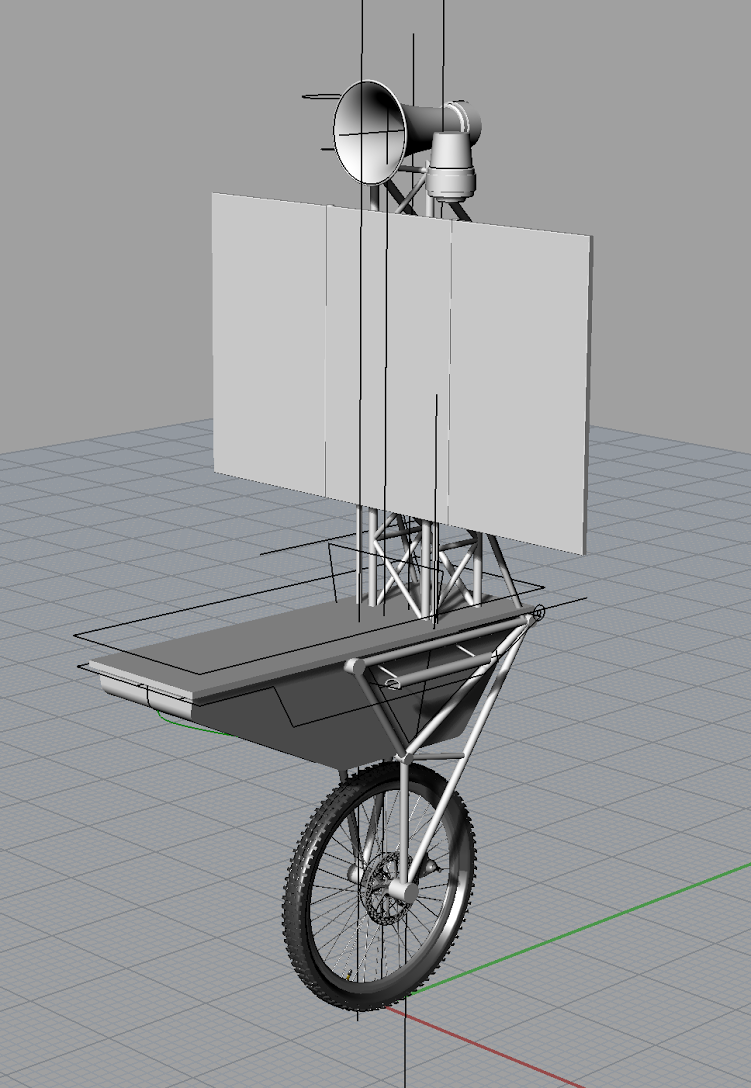
Meanwhile, Isaac had both taken my crappy sketches far beyond into a wonderfully-realised modular system and created some lovely renders to communicate it.
Initial sketch by Isaac Blankensmith
Isaac then started to flesh out a modular system that could accommodate the majority of the use-cases we had brainstormed.
Some final adjustments were made to the sketch model on the days of installation in the gallery – notably the inclusion of a flashing emergency light, and functioning cellphone charger cables which I hopd would prove popular with gallery visitors if nothing else!
2. “Bodyclocks”
This one is definitely more in the realm of ‘speculative design’ and perhaps flirts with the dystopian a little more than I usually like to!
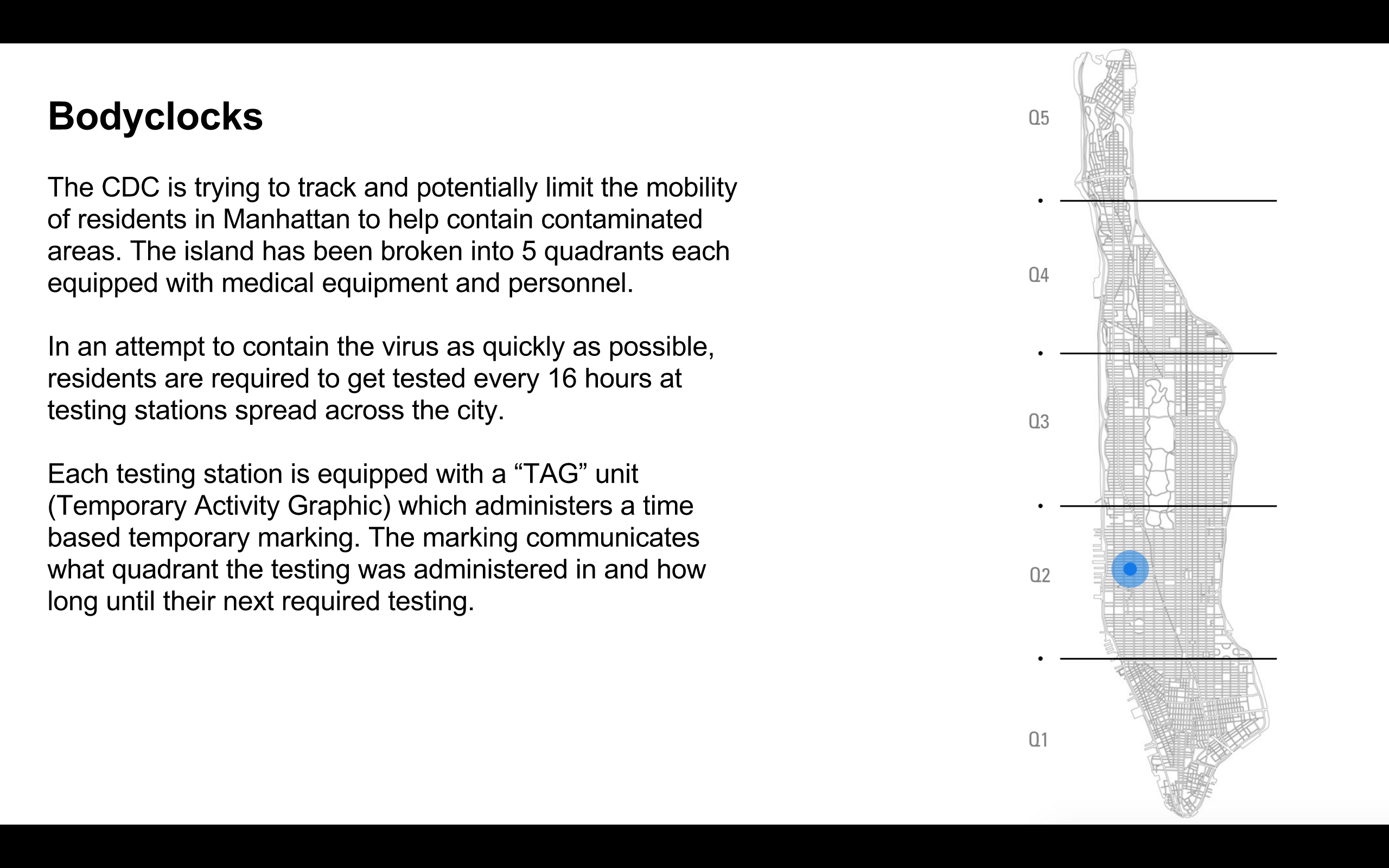
Bodyclocks riffs off the “clocks-for-robots” concept we sketched out at BERG that created computer-readable objects sync’d to time and place.
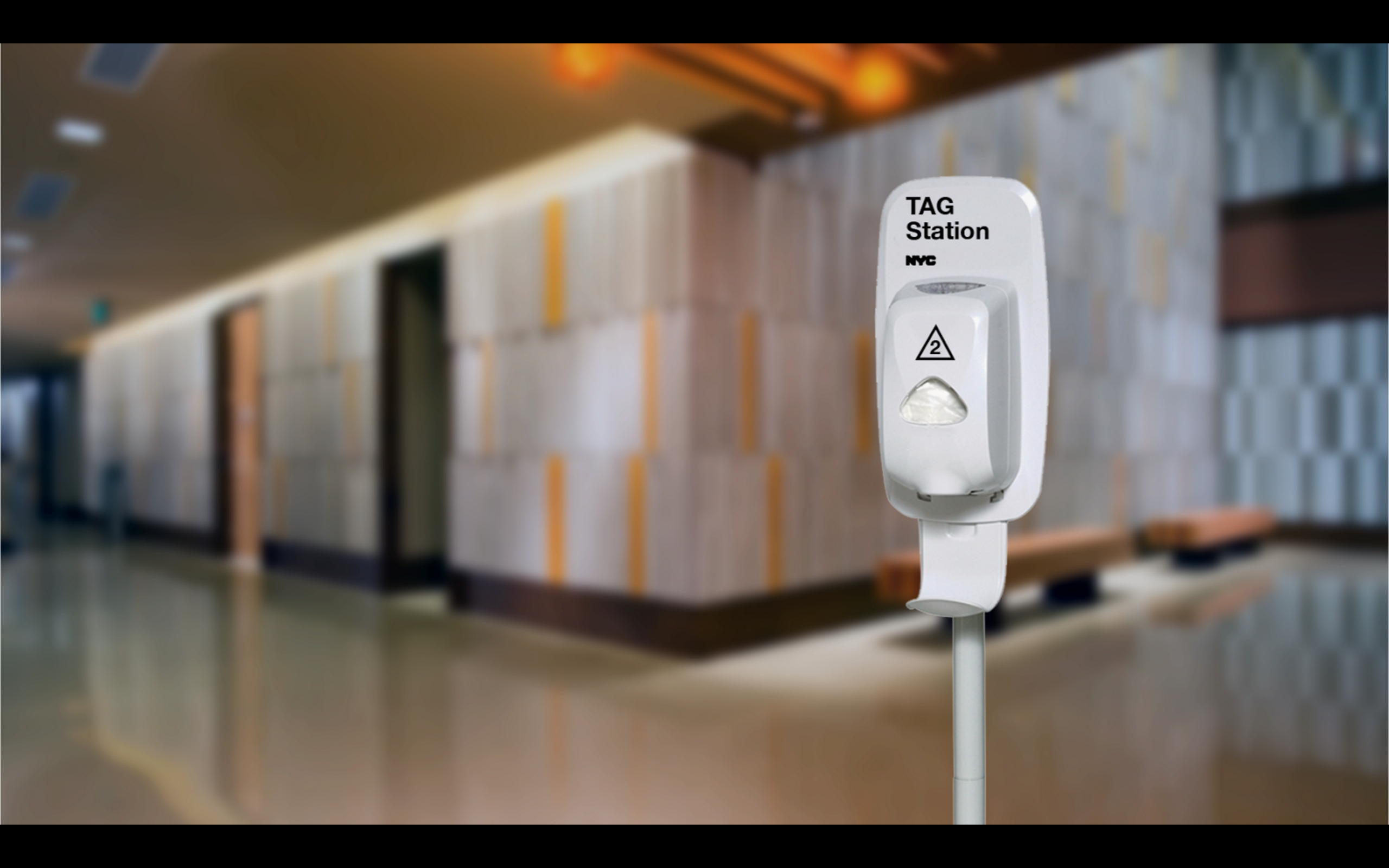
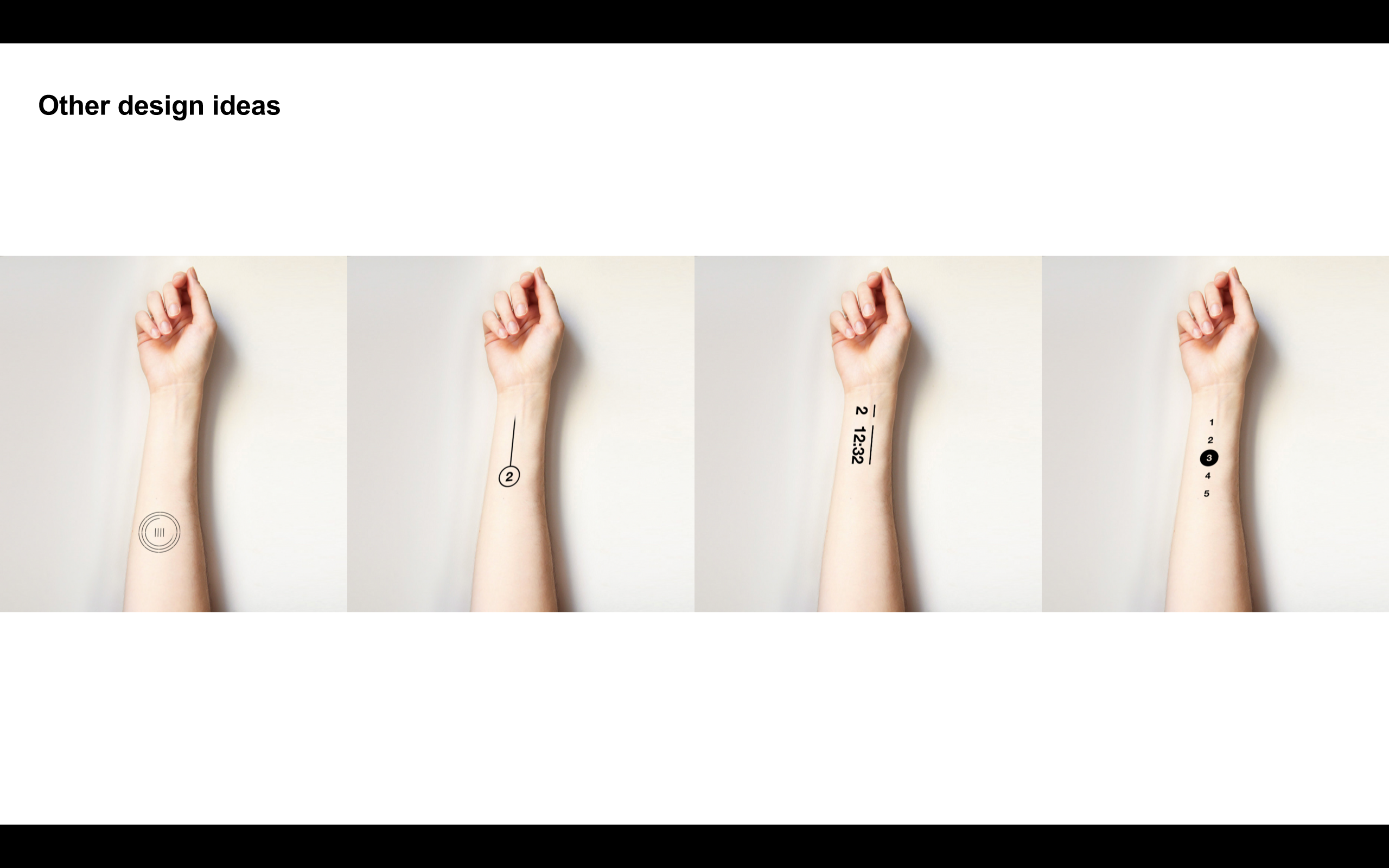
Bodyclocks extends this idea to some kind of time-reactive dye, inkjet-squirted onto skin by connected terminals in order to verify and control the movements of individuals in a quarantined city / city district…
I’d deliberated chosen to ‘parasite’ this onto the familiar and mundane design of the ‘sanitation spray’ stations that proliferated suddenly in public/private spaces at the time of the H1N1 scare of 2009…
When you think about it, a new thing appeared in our semi-public realm – a new ritual, with it.
People would quickly habituate such objects and give themselves new temporary tracking ‘tattoos’ every time they crossed a threshold…
So, the dystopian angle is pretty obvious here. It doesn’t tend to reflect well on societies when they start to force people to identifying marks after all…
We definitely all talked about that a lot and under what circumstances people would tolerate or even elect to have a bodyclock tattoo. Matt Delbridge started creating some fantastic visuals and material to support the scenario.
For the purposes of the show and the performances, Matt D. even made a stamp that the actors could use to give each other bodyclocks…
Would the ritual of applying it in order to travel through the city be seen as something of a necessary evil, much like the security theatre of modern air travel? Or could a visible sign of how far you needed to travel spur assistance from strangers in a city at times of crisis? This proposal aimed to provoke those discussions.
The show and performance
One of the most interesting and exciting parts of being involved in this was that Chris and Elliott wanted to use actors to improvise with our designs as props and Tim’s script and prompt cards as context.
I thought this was a brilliant and brave move – unreliable narrators and guides taking us on as designers and interpreting the work for the audience – and perhaps exposing any emperor’s new clothes or problematic assumptions as they go…
“In 1972 I was in the south of France. I had eaten some bad fish and was in consequence rather ill. As I lay in bed I had a strange recurring vision, there, before me, was a concrete building like a hotel or council block. I could see into the rooms, each of which was continually scanned by an electronic eye. In the rooms were people, everyone of them preoccupied. In one room a person was looking into a mirror and in another a couple were making love but lovelessly, in a third a composer was listening to music through earphones. Around him there were banks of electronic equipment. But all was silence. Like everyone in his place he had been neutralized, made grey and anonymous. The scene was for me one of ordered desolation. It was as if I were looking into a place which had no heart. Next day when I felt better, I was on the beach sunbathing and suddenly a poem popped into my head. It started out ‘I am the proprietor of the Penguin Cafe, I will tell you things at random’ and it went on about how the quality of randomness, spontaneity, surprise, unexpectedness and irrationality in our lives is a very precious thing. And if you suppress that to have a nice orderly life, you kill off what’s most important. Whereas in the Penguin Cafe your unconscious can just be. It’s acceptable there, and that’s how everybody is. There is an acceptance there that has to do with living the present with no fear in ourselves.”