This time about the development of the original Star Wars arcade game, and Lucasfilm’s objections [pdf, approx 60k] to some of the games’ features. A fanatical drive for self-consistency in the creation of alternative universes is always great to see…
[via The Occasional Yay]
Pullman on storytelling
An article looking at the return to critical success and popularity of epic narrative – Lord of the Rings, Phillip Pullman’s “His Dark Materials” trilogy and the Cannes film-festival-award-winning “Atanarjuat the Fast Runner”
“It’s a shift of emphasis from the telling to the subject of what’s being told; from the writing down part to the making up part,” he says. “It’s always more satisfying to use your imagination to explore the business of being alive than to explore language.”
Also – more Phillip Pullman links over at the awesome Linkmachinego.com
Also-Also – another Pullman profile from this week’s Observer courtesy of the Linkmachinego.com
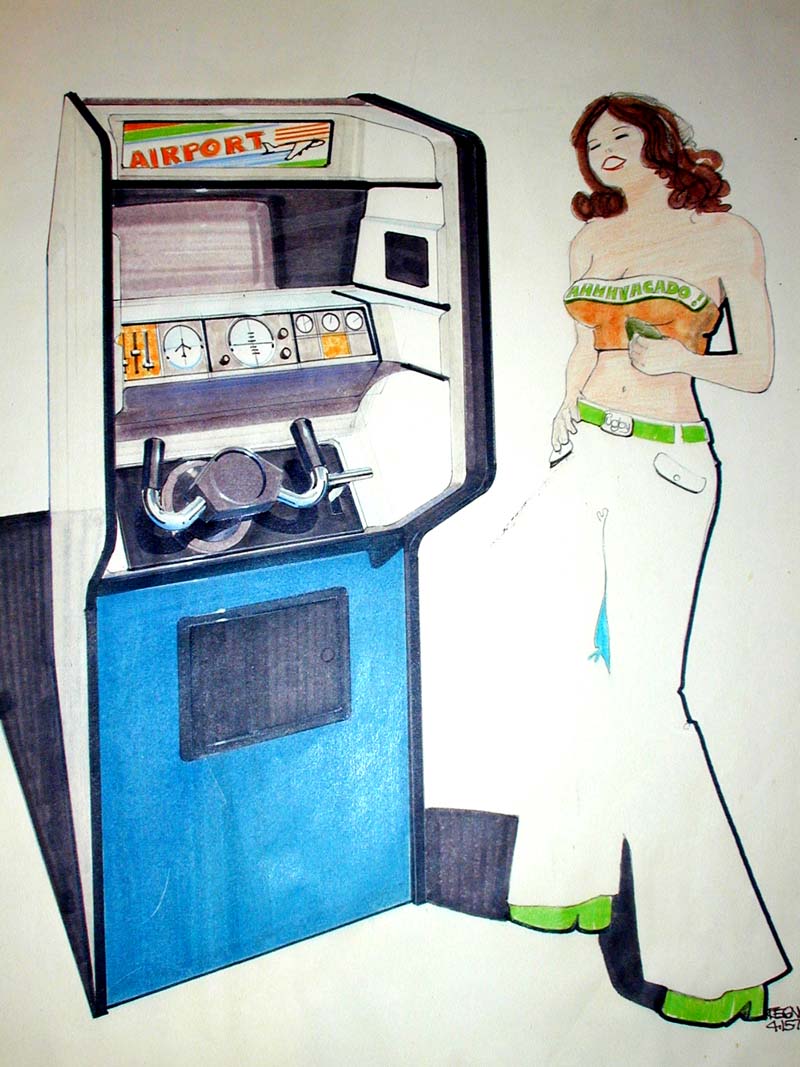
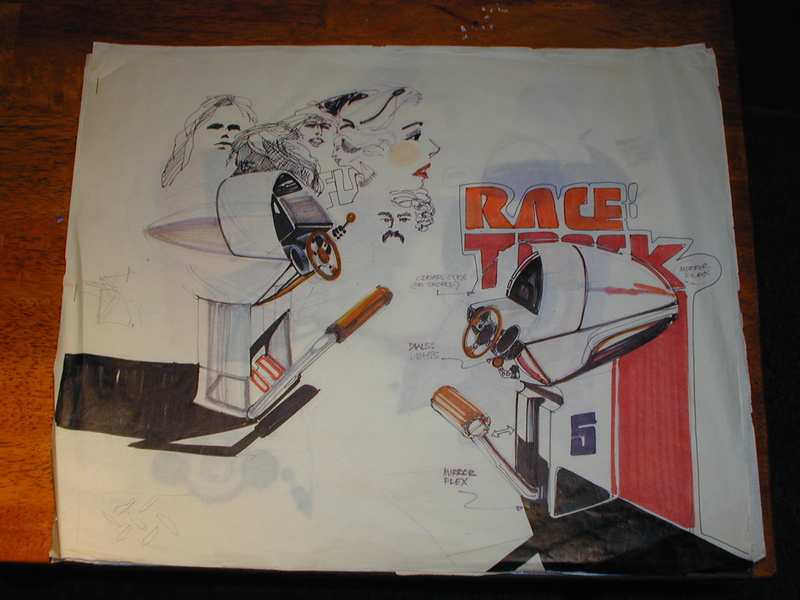
Atari concept art
This is fantastic! Syd Mead meets Nolan Bushnell and the “Joy of Sex” synchronised moustache
display team…
That’s SO…SO… SO… GOOD.
Some favourites:

The substance versus the simulation
“Style, too, will become increasingly important. Just as consumers now change screensavers and buy iMac computers in a range of colors, in the future they’ll have more options when it comes to the look, feel, and functionality of high-tech products. Boyle compares it to buying a car: “Some people want a car with good gas mileage. Some want a sports car to look cool. Products have to be configured to the person using them.”
Business Week | Dennis Boyle: The Power of Smart Design | by Jane Black
Versus:
“What Steve Jobs did was decree that the Apple II was to have an aesthetic enclosure. He said we have to put this in a pretty box. We can’t sell a naked board. He was absolutely right. But what he has been doing ever since is repeat that formula. They keep the hardware up to or slightly above the standard set by PCs, but they can’t think outside the pretty box.
Q: What’s wrong with that strategy over the long haul?
A: When you sit down at the product and you start typing, you aren’t looking at the box. You’re looking at the screen. Computers are pretty much fungible at that level. If I sit at a PC or a Mac and use a familiar application, I can pretty much forget which computer I’m using. It all looks and feels the same.”
Business Week | Can Jobs “Think Outside the Pretty Box”?
[via iaslash.org]
Spikes redux
The venerable fellows at SATN.org say it more briefly and better than I perhaps:
“Coding is fun, especially when the problems are subtle, the tools powerful, and the architecture you are framing out keeps surprising you with new insights into unanticipated ways to think about things.
So few of my peers in their late 40s and 50s get a chance to think and sculpt in code anymore. It’s too bad. Back when I was a VP and Chief Scientist at Lotus, I tried to make sure I spent 50% of my time doing technical work, just to keep my knowledge current – and 20% coding. How can you manage people, and organize complex projects, without knowing intimately how it feels to create?“
Information dense-City
Dan Hill muses on the above– connecting rolling news TV, Comics, urban display and web structure… I’ll be flippant and add Kylie’s latest video to the mix, for no other reason that it reminds me of something you’d expect Spider Jerusalem to sit watching on all of the thousand screens in his penthouse …
Spikes*
[* attention-conservation notice: long, somewhat self-indulgent post ahoy… sorry!]
From the latest Cooper design newsletter: The high risk of low-risk behavior by Wayne Greenwood, Chief Design Officer.
“Companies often speak of innovation in their brochures, only to engage in what they consider to be low-risk business practices when developing a new product. Instead of innovating, they build a product very similar to their competitors’, only marginally better or cheaper, perhaps with a few more features. There’s a sense of comfort at many companies in this middle of the pack mentality. It seems safe-certainly safer than sticking your neck out and doing something different.
But is this really a safe practice? Not for companies in the software business.”
Welcome reading. A lot of people linked to Alan Cooper’s debate with Kent Beck on User-Centred Design (is it capitalised yet?) and Xtreme Programming. It’s something I had thought about [ PPT presentation, 76k ] and left somewhat unresolved a while ago.
In writing the presentation, I talked to a few coder friends and colleagues about their experiences of XP. It seemed a lot more fun than UCD/IA practice!!!
Many features of the methodology seemed to encourage innovation, chance, and the taking of risks; such as paired coding– where two coders shared a keyboard/workstation to figure stuff out in tandem, and the practice of creating “Spikes”. These are effectively many, many guesses at potential solutions, roughly implemented to assess their fitness for purpose.
It’s that expansive, divergent, daring drive to spike the project – to keep opening things up – to sustain the maximal set of possibilities for as long as possible in order to find the most promising path that appeals.
Maybe it’s just post-holiday blues, but lately I’ve been bored stiff by best practice. User-centred design and information architecture seem stifiling right now. Various factors have conspired. Watching the Larry Page lecture, and his commentary on Googles practice of watching the technological landscape for inspiration; reading subversive, mind-corroding comic books; and getting inspired by artists who play with technology just to see what might happen – have all left me feeling a little straightjacketed by the dogma of “Don’t make me think!”.
A big dark cloud descended on me last night. In the morning I’d been jamming with a mate on some technology / product problems. Absolutely product/tech-riven ideas. Lunatic nonsense. Potentially ungraspable apart from by us and maybe a geeky, early-adopter percentile of our audience. Fun! Spent the afternoon confronted by (unrelated) realities of accesibility, compatibility, appropriateness and implentation… the morning felt like a guilty pleasure I had to consign to a secret chamber of my mind and shackle there. I had a come-down as profound as a drug experience! It was horrible!
Shook it off – realised a way through the problems of the afternoon, and let the fun of the morning bubble back into the brain a little… Then came the dark cloud. What was it about UCD that felt so reductive? I’d rambled negatively about it before in order to reason it out, maybe get it out of my system; but that hadn’t worked – obviously.
Went to the Paul Klee Exhibition at the Hayward gallery after work. Good fun, although I find much of his earlier work unprepossessing… but hey, I’m no art critic – as will become apparent in the next sentence, but stay with me. Striking though was the way he seemed to try and create “spikes” for himself… varying technique, approach and analysis of the creative act, in order to get closer to the things he was trying to resolve.
I want to make some mistakes. I want to frustrate people. Make them think. Let a thousand interactive flowers bloom, or maybe just take a piss in the herbacious borders of UI. I want to make something that is driven purely by technology, looks absolutely bloody beautiful and confounds the hell out of everyone – leaving them guessing why the hell it might be useful to them, but knowing absolutely that they want one.
Of course the trick would be to have this desirability bourne atop a platform of stability and appropriateness. Ol’ Vitruvius’s triangle of Commoditas, Firmitas and Venustas.
But I don’t think you can do that every time.
When you do you are damn lucky. Sure – you’ve got as close as you can to making your own luck through your approach and the teamwork of the people around you – but you still need that luck, that creative act, that leap, that spike to get you there.
Sometimes I guess it seems that we IA/ID/UCD types as a community strive so hard to drive the useful and usable into our work and the work of our colleagues in other disciplines, that we don’t leave room for that.
Some of the pre-eminent voices in our field of practice seem to be questioning this now, and that’s welcome.
So anyway, now is probably not the greatest time every to ask one’s bosses or clients to let mistakes be made, let risks be taken. I’m probably going to have to make the mistakes I need to make happen on my own time and in my own little sandbox – but hey – I’m going to slip ’em a copy of the Cooper newsletter and see what happens…
Fantastic news
Phillip Pullman’s “The Amber Spyglass” wins a prestigious book award. I devoured the “His Dark Materials” trilogy last year – it’s an incredible, profound piece of work. Go read them (and all of “Preacher”) immediately!!!
Guardian Unlimited Books | Special Reports | Epic children’s book takes Whitbread
Making other worlds with heads and pens, #47 in an occasional series.
Couture and desolation from James Jarvis and make a monster with Pete Fowler
[Both links found at kookymojo]
Augmented Reality
“Pinning messages in mid-air, using the location’s Global Positioning System (GPS) reference, could become the next craze in communications. The messages are not actually kept in the air: they’re stored on an Internet page. But that page’s Web address is linked to coordinates on the Earth’s surface, rather than a person or organisation.
As you move about, a GPS receiver in your mobile phone or PDA will check to see if a message has been posted on the website for that particular spot. If you’re in luck a snippet of info-left as text or a voice recording by someone who passed there previously-will pop up on your screen or be whispered into your earpiece.”
New Scientist | Mobile Phones | Write here, write now
see also:
- Annotate Space
- Peter Merholz on the subject, with links to AnnotateSpace and of course, Fiona Raby’s Work.
- Tony Dunne and Fiona Raby’s FLIRT
 Petafloptimism