The City is (still) a battlesuit for surviving the future.

Just watched Sir Norman Foster present at the World Design Congress in London, on cities and urbanism as a defence against climate change.

This excellent image visualises household carbon footprints – highlighting in coincidental green the extreme efficiency of NYC compared to the surrounding suburban sprawl of the emerging BAMA.

Sir Norman Foster presenting at the World Design Congress in London, discussing urbanism and climate change while a colorful map of household carbon footprints in New York City is displayed.

16 years ago this September, while at BERG, I wrote a piece at the invitation of Annalee Newitz for a science fiction focussed blog called io9 called “The City is a battlesuit for surviving the future.

It’s still there: bit-rotted, battered, and oozing dangerously-outdated memetic fluids, like a Mark 1 Jaeger.

Bruce Sterling was (obliquely) very nice about it at the time, and lots of other folks wrote interesting (and far-better written) rebuttals.

I thought as it’s a 16 year old now, I should check in on it, with some distance, and give it a new home here.

I thankfully found my original non-edited google doc that I shared with Annalee, and it’s pasted below…

My friend Nick Foster is giving the closing keynote at the event Sir Norman spoke at tomorrow. He just wrote an excellent book on our attitudes to thinking about futures called “Could Should Might Don’t” – which I heartily recommend.

My little piece of amateur futurism from 2009 has a dose of all four – but for the reasons Sir Norman pointed out, I think it’s still a ‘Could’.

And… Still a ‘Should’.

The City is (still) a battlesuit for surviving the future.

Now, 16 yrs later, we ‘Might‘ build it up from Kardashev Streets


[The following is my unedited submission to io9.com, published 20th September 2009]

The city is a battlesuit for surviving the future.

Looking at the connections between architects and science-fiction’s visions of future cities

In February of this year I gave a talk at webstock in New Zealand, entitled “The Demon-Haunted World” – which investigated past visions of future cities in order to reflect upon work being done currently in the field of ‘urban computing’.

In particular I examined the radical work of influential 60’s architecture collective Archigram, who I found through my research had coined the term ‘social software’ back in 1972, 30 years before it was on the lips of Clay Shirky and other internet gurus.

Rather than building, Archigram were perhaps proto-bloggers – publishing a sought-after ‘magazine’ of images, collage, essays and provocations regularly through the 60s which had an enormous impact on architecture and design around the world, right through to the present day. Archigram have featured before on io9 [http://io9.com/5157087/a-city-that-walks-on-giant-actuators], and I’m sure they will again.
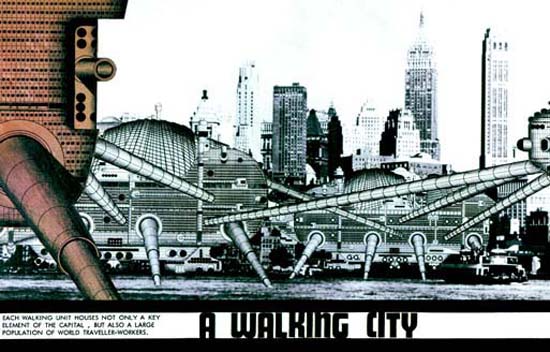
Archigram's "Walking City" Project: An artistic depiction of a futuristic city designed to be mobile, with mechanical elements and skyscrapers in the background, representing a conceptual vision of urban living.

They referenced comics – American superhero aesthetics but also the stiff-upper-lips and cut-away precision engineering of Frank Hampson’s Dan Dare and Eagle, alongside pop-music, psychedelia, computing and pulp sci-fi and put it in a blender with a healthy dollop of Brit-eccentricity. They are perhaps most familiar from science-fictional images like their Walking City project, but at the centre of their work was a concern with cities as systems, reflecting the contemporary vogue for cybernetics and belief in automation.

Exterior view of the Pompidou Centre in Paris, showcasing its unique architectural design with exposed structural elements and colorful escalators.

Although Archigram didn’t build their visions, other architects brought aspects of them into the world. Echoes of their “Plug-in city” can undoubtedly be seen in Renzo Piano and Richard Rogers’ Pompidou Centre in Paris.

Much of the ‘hi-tech’ style of architecture (chiefly executed by British architects such as Rogers, Norman Foster and Nicholas Grimshaw) popular for corporate HQs and arts centers through the 80s and 90s can be traced back to, if not Archigram, then the same set of pop sci-fi influences that a generation of British schoolboys grew up with – into world-class architects.

Lord Rogers, as he now is, has made a second career of writing and lobbying about the future of cities worldwide. His books “Cities for a small planet” and “Cities for a small country” were based on work his architecture and urban-design practice did during the 80s and 90s, consulting on citymaking and redevelopment with national and regional governments. His work for Shanghai is heavily featured in ‘small planet’ – a plan that proposed the creation of an ecotopian mega city. This was thwarted, but he continues to campaign for renewed approaches to urban living.

Colorful graphic featuring a futuristic city skyline with the text 'People Are Walking Architecture' prominently displayed. The design includes abstract shapes and visual elements associated with urban architecture and the concept of people as integral to city structures.

Last year I saw him give a talk in London where he described the near-future of cities as one increasingly influenced by telecommunications and technology. He stated that “our cities are increasingly linked and learning” – this seemed to me a recapitulation of Archigram’s strategies, playing out not through giant walking cities but smaller, bottom-up technological interventions. The infrastructures we assemble and carry with us through the city – mobile phones, wireless nodes, computing power, sensor platforms are changing how we interact with it and how it interacts with other places on the planet. After all it was Archigram who said “people are walking architecture”

Dan Hill (a consultant on how digital technology is changing cities for global engineering group Arup) in his epic blog post “The Street as Platform” [http://www.cityofsound.com/blog/2008/02/the-street-as-p.html] says “…the way the street feels may soon be defined by what cannot be seen by the naked eye”.

He goes on to explain:

“We can’t see how the street is immersed in a twitching, pulsing cloud of data. This is over and above the well-established electromagnetic radiation, crackles of static, radio waves conveying radio and television broadcasts in digital and analogue forms, police voice traffic.  This is a new kind of data, collective and individual, aggregated and discrete, open and closed, constantly logging impossibly detailed patterns of behaviour. The behaviour of the street.”

Adam Greenfield, a design director at Nokia wrote one of the defining texts on the design and use of ubiquitous computing or ‘ubicomp’ called “Everyware” [http://www.studies-observations.com/everyware/] and is about to release a follow-up on urban environments and technology called “The city is here for you to use”.

In a recent talk he framed a number of ways in which the access to data about your surroundings that Hill describes will change our attitude towards the city. He posits that we will move from a city we browser and wander to a ‘searchable, query-able’ city that we can not only read, but write-to as a medium.

He states

“The bottom-line is a city that responds to the behaviour of its users in something close to real-time,  and in turn begins to shape that behaviour”

Again, we’re not so far away from what Archigram were examining in the 60’s. Behaviour and information as the raw material to design cities with as much as steel, glass and concrete.

The city of the future increases its role as an actor in our lives, affecting our lives.

This of course, is a recurrent theme in science-fiction and fantasy. In movies, it’s hard to get past the paradigm-defining dystopic backdrop of the city in Bladerunner, or the fin-de-siècle late-capitalism cage of the nameless, anonymous, bounded city of the Matrix.

Perhaps more resonant of the future described by Greenfield is the ever-changing stage-set of Alex Proyas’ “Dark City”.

For some of the greatest-city-as-actor stories though, it’s perhaps no surprise that we have to turn to comics as Archigram did – and the eponymous city of Warren Ellis and Darrick Robertson’s Transmetropolitan as documented and half-destroyed by gonzo future journalist-messiah Spider Jerusalem.

Transmet’s city binds together perfectly a number of future-city fiction’s favourite themes: overwhelming size (reminiscent of the BAMA, or “Boston-Atlanta Metropolitan Axis from William Gibson’s “Sprawl” trilogy),  patchworks of ‘cultural reservations’ (Stephenson’s Snowcrash with it’s three-ring-binder-governed, franchise-run-statelets) and a constant unrelenting future-shock as everyday as the weather… For which we can look to the comics-futrue-city grand-daddy of them all: Mega-City-1.

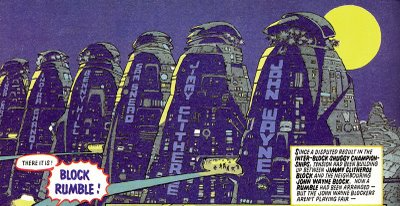
Ah – The Big Meg, where at any moment on the mile-high Zipstrips you might be flattened by a rogue Boinger, set-upon by a Futsie and thrown down onto the skedways far below, offered an illicit bag of umpty-candy or stookie-glands and find yourself instantly at the mercy of the Judges. If you grew up on 2000AD like me, then your mind is probably now filled with a vivid picture of the biggest toughest, weirdest future city there’s ever been.

This is a future city that has been lovingly-detailed, weekly, for over three decades years, as artist Matt Brooker (who goes by the psuedonym D’Israeli) points out:

Working on Lowlife, with its Mega-City One setting freed from the presence of Judge Dredd, I found myself thinking about the city and its place in the Dredd/2000AD franchise. And it occurred to me that, really, the city is the actual star of Judge Dredd. I mean, Dredd himself is a man of limited attributes and predictable reactions. His value is giving us a fixed point, a window through which to explore the endless fountain of new phenomena that is the Mega-City. It’s the Mega-City that powers Judge Dredd, and Judge Dredd that has powered 2000AD for the last 30 years.

Brooker, from his keen-eyed-viewpoint as someone currently illustrating MC-1, examines the differing visions that artists like Carlos Ezquerra and Mike McMahon have brought to the city over the years in a wonderful blogpost which I heartily recommend you read [http://disraeli-demon.blogspot.com/2009/04/lowlife-creation-part-five-all-joy-i.html]

Were Mega-City One’s creators influenced by Archigram or other radical architects?

I’d venture a “yes” on that.
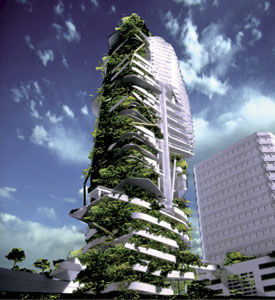
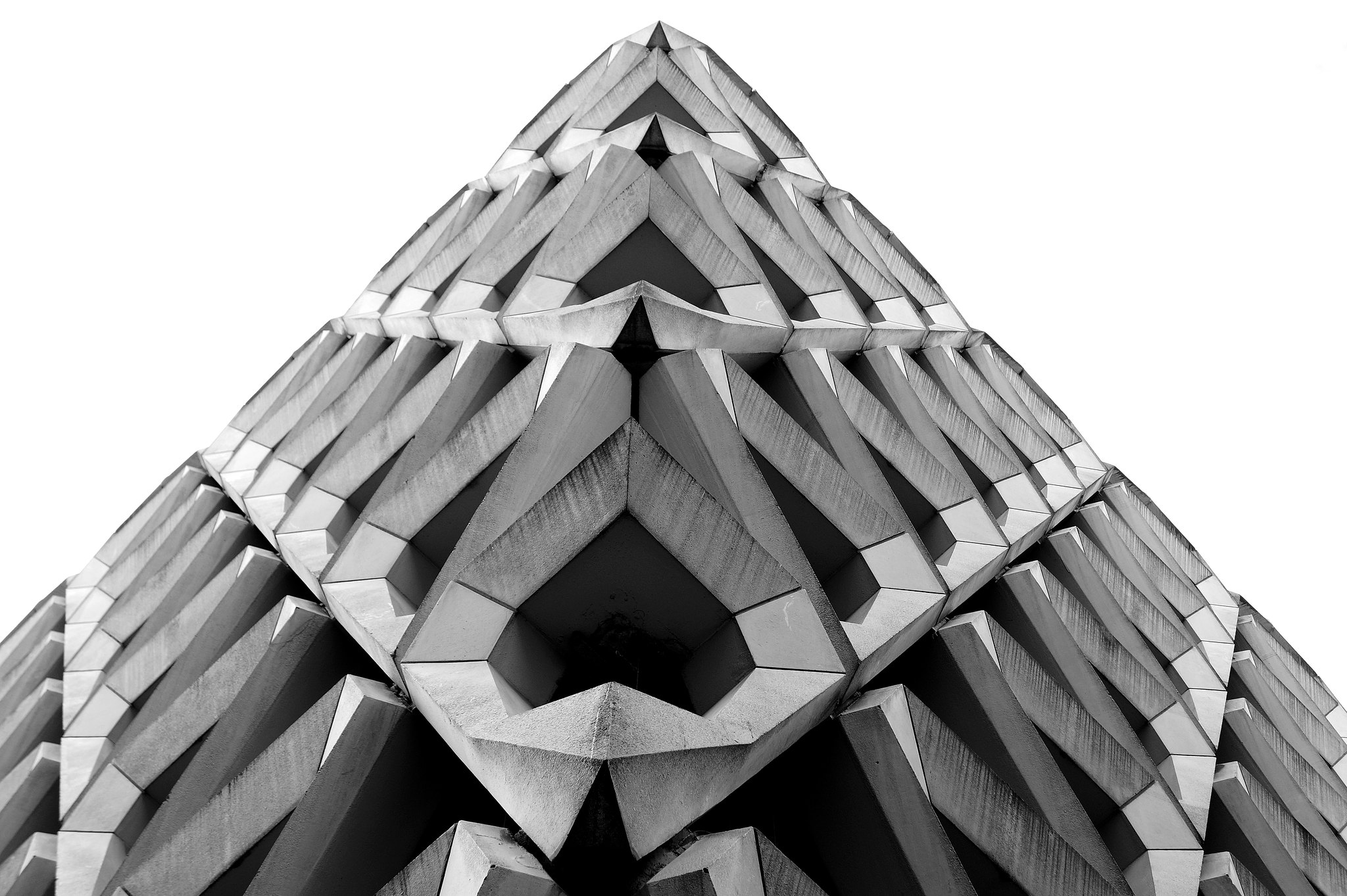
Mike McMahon, seen to many, including Brooker and myself as one of the definitive portrayals of The Big Meg renders the giant, town-within-a-city Blocks as “pepperpots” organic forms reminiscent of Ken Yeang (pictured here), or (former Rogers-collaborator) Renzo Piano’s “green skyscrapers”.

While I’m unsure of the claim that MC-1 can trace it’s lineage back to radical 60’s architecture, it seems that the influence flowing the other direction, from comicbook to architect, is far clearer.

Here in the UK, the Architect’s Journal went as far as to name it the number one comic book city [http://www.architectsjournal.co.uk/story.aspx?storyCode=5204830]

Echoing Brooker’s thoughts, they exclaim:

“Mega City One is the ultimate comic book city: bigger, badder, and more spectacular than its rivals. It’s underlying design principle is simple – exaggeration – which actually lends it a coherence and character unlike any other. While Batman’s Gotham City and Superman’s Metropolis largely reflect the character of the superheroes who inhabit them (Gotham is grim, Metropolis shines) Mega City One presents an exuberant, absurd foil to Dredd’s rigid, monotonous outlook.”
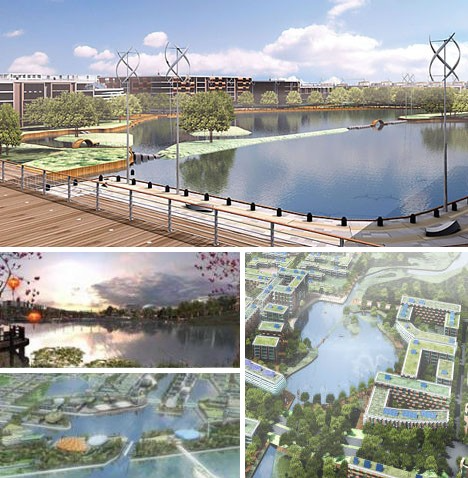
Back in our world, the exaggerated mega-city is going through a bit of bad patch.

The bling’d up ultraskyscraping and bespoke island-terraforming of Dubai is on hold until capitalism reboots, and changes in political fortune have nixed the futuristic, ubicomp’d-up Arup-designed ecotopia of Dongtan [http://en.wikipedia.org/wiki/Dongtan] in China.

But, these are but speedbumps on the road to the future city.

There are still ongoing efforts to create planned, model future cities such as one that Nick Durrant of design consultancy Plot is working on in Abu Dhabi: Masdar City [http://en.wikipedia.org/wiki/Masdar_City] It’s designed by another alumni of the British Hi-tech school – Sir Norman Foster. “Zero waste, carbon neutral, car free” is the slogan, and a close eye is being kept on it as a test-bed for clean-tech in cities.

We are now a predominantly urban species, with over 50% of humanity living in a city. The overwhelming majority of these are not old post-industrial world cities such as London or New York, but large chaotic sprawls of the industrialising world such as the “maximum cities” of Mumbai or Guangzhou [http://en.wikipedia.org/wiki/Guangzhou]. Here the infrastructures are layered, ad-hoc, adaptive and personal – people there really are walking architecture, as Archigram said.

Hacking post-industrial cities is becoming a necessity also. The “shrinking cities” project, http://www.shrinkingcities.com, is monitoring the trend in the west toward dwindling futures for cities such as Detroit and Liverpool.

They claim:

“In the 21st century, the historically unique epoch of growth that began with industrialization 200 years ago will come to an end. In particular, climate change, dwindling fossil sources of energy, demographic aging, and rationalization in the service industry will lead to new forms of urban shrinking and a marked increase in the number of shrinking cities.”

However, I’m optimistic about the future of cities. I’d contend cities are not just engines of invention in stories, they themselves are powerful engines of culture and re-invention.

David Byrne in the WSJ [http://is.gd/3q1Ca] as quoted by entrepreneur and co-founder of Flickr, Caterina Fake [http://caterina.net/] on her weblog recently:

“A city can’t be too small. Size guarantees anonymity—if you make an embarrassing mistake in a large city, and it’s not on the cover of the Post, you can probably try again. The generous attitude towards failure that big cities afford is invaluable—it’s how things get created. In a small town everyone knows about your failures, so you are more careful about what you might attempt.”

Patron saint of cities, Jane Jacobs, in her book “The Economy of Cities” put forward the ‘engines of invention’ argument in her theory of ‘import replacement’:

“…when a city begins to locally produce goods which it formerly imported, e.g., Tokyo bicycle factories replacing Tokyo bicycle importers in the 1800s. Jacobs claims that import replacement builds up local infrastructure, skills, and production. Jacobs also claims that the increased produce is exported to other cities, giving those other cities a new opportunity to engage in import replacement, thus producing a positive cycle of growth.”

Urban computing and gaming specialist, founder of Area/Code and ITP professor Kevin Slavin showed me a presentation by architect Dan Pitera about the scale and future of Detroit, and associated scenarios by city planners that would see the shrinking city deliberately intensify – creating urban farming zones from derelict areas so that it can feed itself locally. Import replacement writ large.

He also told me that 400 cities worldwide independently of their ‘host country’ agreed to follow the Kyoto protocol. Cities are entities that network outside of nations as their wealth often exceeds that of the rest of the nation put together – it’s natural they solve transnational, global problems.

Which leads me back to science-fiction. Warren Ellis created a character called Jack Hawksmoor in his superhero comic series The Authority.

The surname is a nice nod toward psychogeography and city-fans: Hawksmoor was an architect and progeny of Sir Christopher Wren, fictionalised into a murderous semi-mystical figure who shaped the city into a giant magical apparatus by Peter Ackroyd in an eponymous novel.

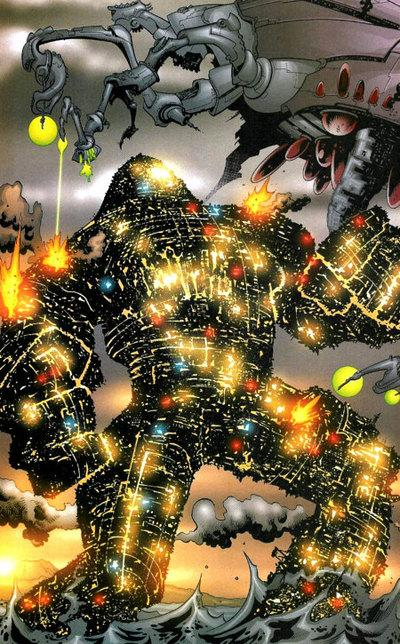
Ellis’ Hawksmoor however was abucted multiple times, seemingly by aliens, and surgically adapted to be ultimately-suited to live in cities – they speak to him and he gains nourishment from them. If you’ll excuse the spoiler, the zenith of Hawksmoor’s adventures with cities come when he finds the purpose behind the modifications – he was not altered by aliens but by future-humans in order to defend the early 21st century against a time-travelling 73rd century Cleveland gone berserk. Hawksmoor defeats the giant, monstrous sentient city by wrapping himself in Tokyo to form a massive concrete battlesuit.

Cities are the best battlesuits we have.

It seem to me that as we better learn how to design, use and live in cities – we all have a future.
Architects, Designers and Keeping up with the Kardashev-ians.

You don’t really expect to see energy company CEOs interviewed in Dezeen, so it’s a nice to surprise to see one of the founders of Bulb (where a few friends of mine work) quoted there this week.

The founders also felt that eventually, homes would become energy producers as well as consumers. By installing solar panels, anaerobic digesters, micro-CHP (combined heat and power) plants or any other small-scale clean-power generator, householders could sell surplus energy back to the grid, using home-storage batteries or electric cars to store the power until it’s needed.

“It wasn’t really happening at the time, but we thought that homes could become a source of energy,” Wood explained.

“If people had solar panels on their roof, or if they had a battery in their home or an electric vehicle and those batteries were plugged into the grid, the homes could at times be providing energy into the grid.”

“Also, the grid becomes more efficient when the electrons travel a shorter distance,” he added. “If you have generation embedded within the grid locally, then the whole system becomes more efficient.”

It has taken a while for this “two-way grid” to become a reality but Wood believes it is now poised to take off.

“That’s one of the things we’re quite excited about now that there are more options available to consumers for solar panels, electric vehicles, heat pumps and batteries.”

https://www.dezeen.com/2021/06/15/carbon-net-zero-architects-bulb-ceo-interview/

In the article he stresses that the architecture and design profession are central to making this happen in the next decade – connecting back to my post earlier this week featuring Saul Griffith’s exhortations to redesign and electrify our domestic lives. I’m hoping to write more about this soon.

A couple of years ago I was very fortunate to be able to work with a local architecture firm, Gruff on renovating my house. Coincidentally it also got featured on Dezeen!

One of my biggest regrets was that we didn’t spend more time talking about the approach to energy, water and other services when we were at the start of the design process.

We did talk about solar – and I was happy to be able install a battery/PV panel array from UK firm Moixa – who’s CEO is also interviewed in the Guardian this month.

But thinking about the home as a machine not just for living in, as Corbusier had it, but also a machine for generating, regenerating, recycling, re-using… That would have been a fantastic opportunity – that I’m sorry to say I missed. This time!

Owning a house is a position of huge privilege of course – as is being able to make alterations on your own terms to where you live.

Designers and architects must also look to provide for those who rent and share buildings – and give them innovative tools/services that increase their agency to save and generate energy.

Thinking about places in the pace layers to make design interventions that are practical, portable, affordable – and make some impact on our climate emergency.

Pace Layering: How Complex Systems Learn and Keep Learning · Journal of  Design and Science

Rounding off the week though with another approach to the urgent problem of decarbonising our way of life – and longer term heading toward a Kardashev Scale 1 civilisation.

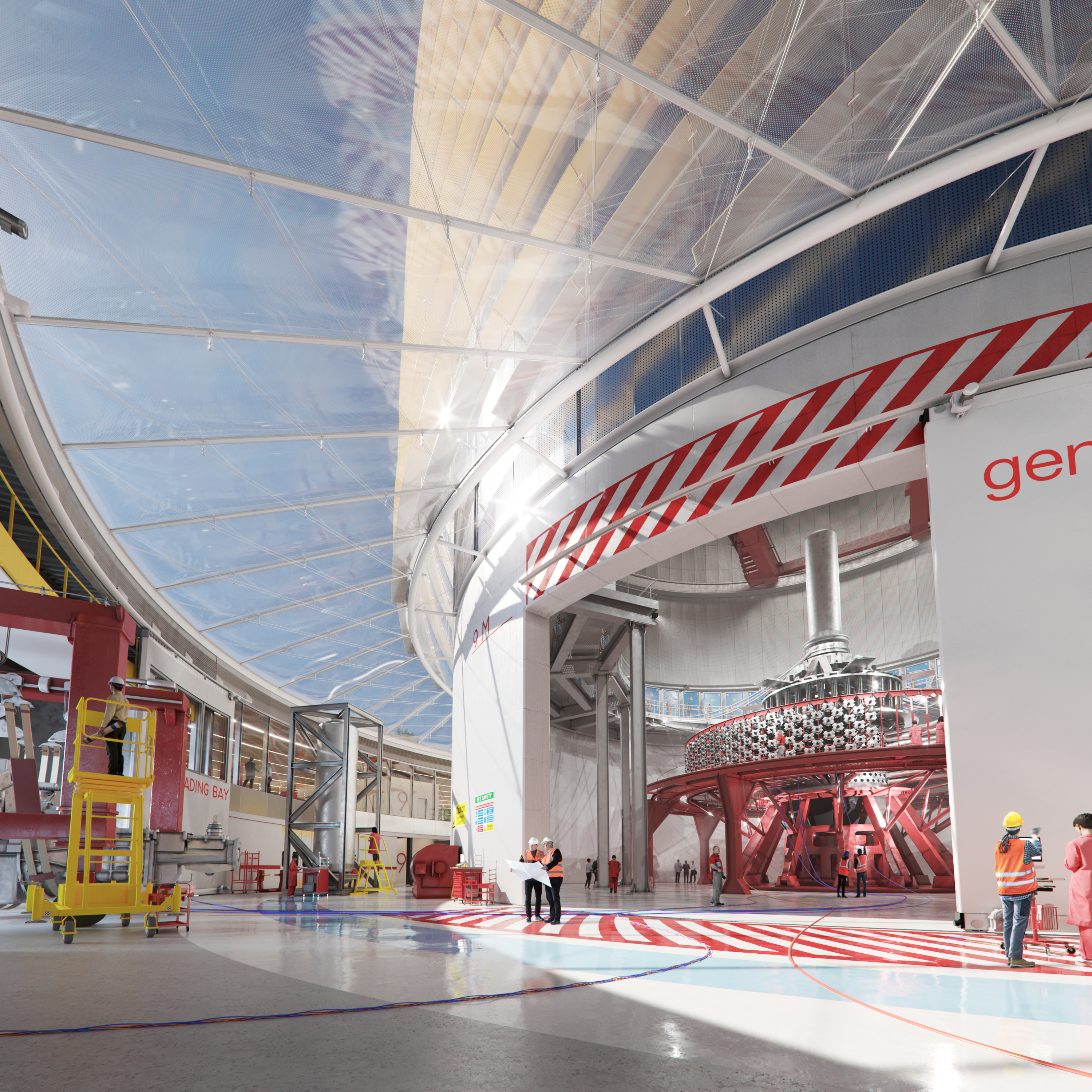
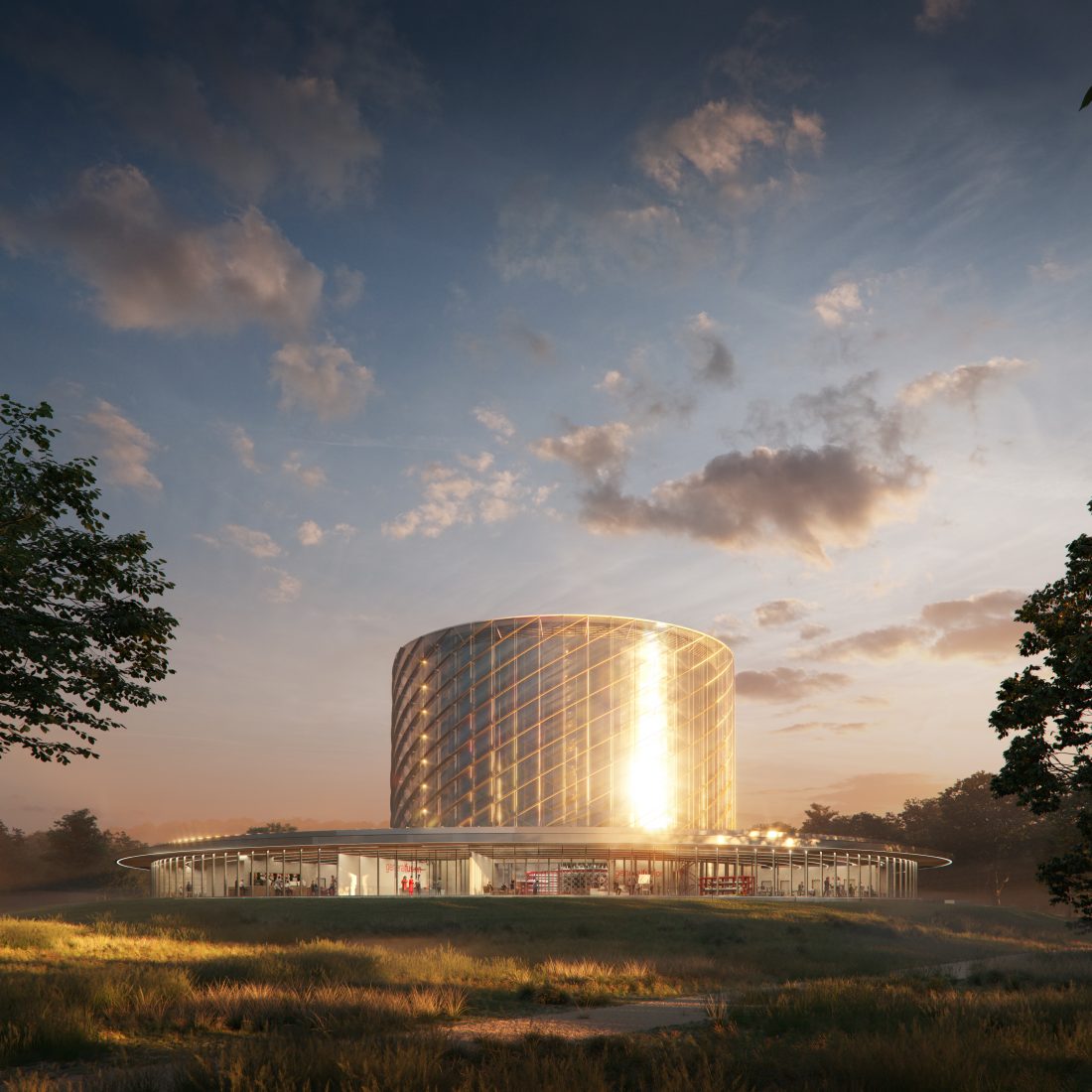
Amanda Levete’s practice AL_A (who has featured before on this blog) has released their designs for a fusion plant in Oxfordshire, UK.

https://generalfusion.com/2021/06/general-fusion-to-build-its-fusion-demonstration-plant-in-the-uk-at-the-ukaea-culham-campus/

Artificial-star-citecture?

Liminal Levete

My father emailed me yesterday, wondering if I’d listened to the episode of Desert Island Discs this last Sunday featuring Amanda Levete. I have not, but think I will have to, if only to find out why she selected Westlife as one of her tracks to be marooned with.

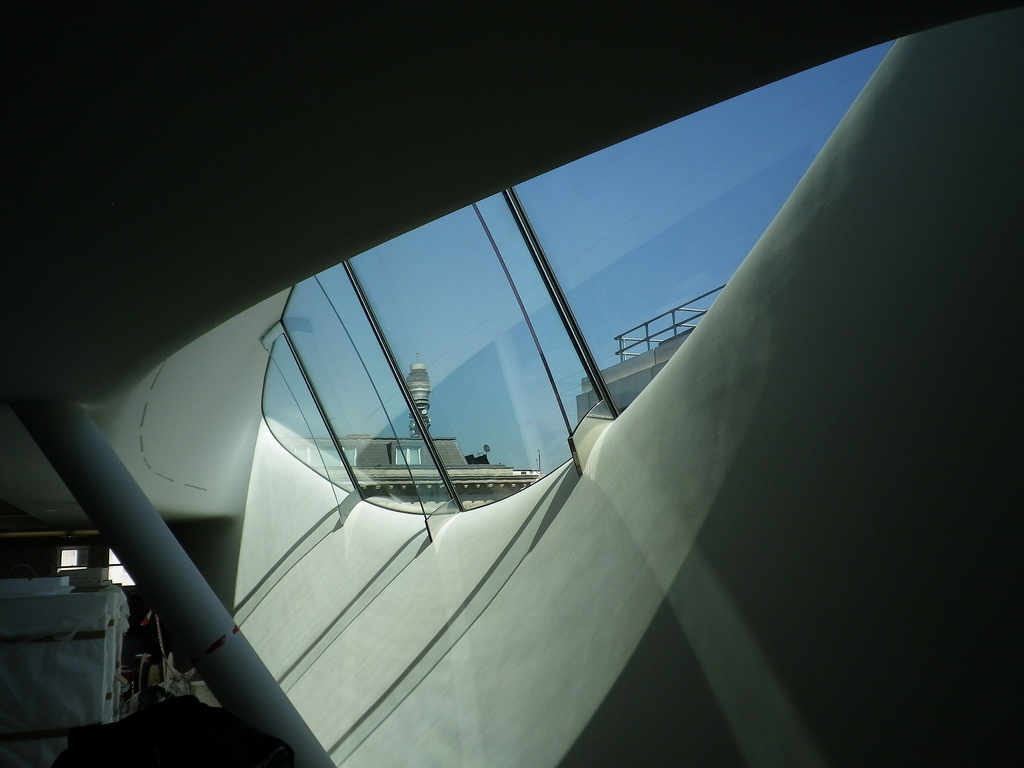
I was reminded as I wrote back to him of the chance I got to walk around AL_A‘s 10 Hills Place in Soho, in order to write about it for Beeker while she was at Dentsu London (RIP).

I always quite like that liminal moment when a building is almost complete but not occupied, and you see the raw bits, the bits between, the bits not quite there yet.

The weekend I got to walk around was also when the Icelandic ash-cloud struck, making London’s skies quiet of planes.

I went looking for the piece I wrote on this in-between place in an in-between time – and quite aptly the only place it exists any more is the in-between place of the Internet Archive.

IMGP0462

p.s. Dan wrote about it here too

Fun Palace

Fun Palace / Golf-Shanty

Pretty near the BERG studio, on the edge of the City of London, is this structure. It’s a golf driving range, with astroturf, a wooden faux-bavarian wurst shack, a bar, a golf store and a few other things I think.

It’s based on some waste ground that I imagine was destined to be redeveloped into shiny-new late-capitalist office accommodation, much like the adjacent glass spires of outer-Broadgate and hinter-Hoxton.

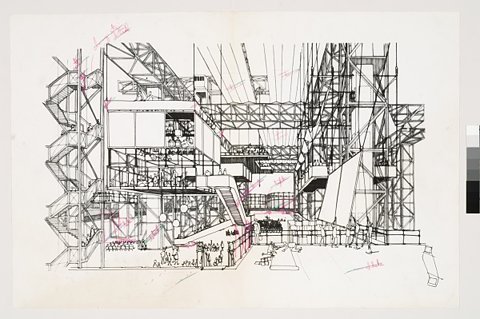
Every time I see it out of the corner of my eye it makes me think of Cedric Price’s “Fun Palace”…

…the seminal scheme for a temporary place/happening where you:

“Choose what you want to do – or watch someone else doing it. Learn how to handle tools, paint, babies, machinery, or just listen to your favourite tune. Dance, talk or be lifted up to where you can see how other people make things work. Sit out over space with a drink and tune in to what’s happening elsewhere in the city. Try starting a riot or beginning a painting – or just lie back and stare at the sky.”

The aesthetic of our Golf Shanty Fun Palace at the edge of the city is more reminiscent of his only (?) built scheme: the aviary at London Zoo…

Snowdon Aviary, London Zoo

…perhaps crossed with The ThunderDome and the million B&Q treated-wood gazebos pressed into service outside Britain’s pubs since the smoking ban.

Of course, it’s far from Price’s high-tech interactive land of do-as-you-please – you get to spoil a good walk without even getting the walk, and then buy a German sausage in a bun.

However I think that Cedric would have maybe approved of this ramshackle, opportunistic, symbiont that’s sprung up on the edge of a dense lode of international capital.

Fore!

Interview with Ken Hollings for ResonanceFM

Did a fun 15mins chat with Ken Hollings on cities, futures, cosmism and many other things from an arcology floating in deep-space (via the magic of radio) which will be going out tonight at 7pm, and podcast shortly.

Here’s the description for the show:

“Enter Hollingsville at 7:00pm this evening. In this new series Ken Hollings and guests Steve Beard and Matt Jones discuss voodoo science parks, cities as battle suits, pods, capsules and world expos. Specially commissioned musical interludes are by the Hollingsville composer in residence, Graham Massey. Hollingsville is open for 12 weeks only”

http://resonancefm.com/archives/3638

Icon Minds: The return of ornament

, originally uploaded by moleitau.

Thanks to Justin McGuirk for the invitation to http://www.iconeye.com/iconminds/.

Below, my (very) raw unedited, incomplete notes from the morning session on ‘Ornament’ – Charles Jencks was most enjoyable, must admit I tuned out as the morning went on…:

icon minds event

the return of ornament: intro by Justin McGuirk

100 yrs since ‘ornament and crime’ aldolf loos- amazing that that is still so potent. digital tech in architecture schools is driving this – in icon office they joke about ‘return of victoriana’ – but then it was incredibly theorised where as no it is not…

charles jencks
farshi mousavi (check) foriegn office architects
marjan colleti, bartlett school of architecture

Charles Jencks
———————-
(shows front page of the FT, picture of hank paulson)
book ‘sense of order’
3 depths of ornament
‘all arts aspire to the condition of music’
rhythms that control and affect / effect us without us having to know to much about them
from simple to complex / abstract to meaningful
distinction between decoration and ornament
in the last ten year, ornament has been ornament as eye candy
paulson’s frown is a piece of decoration rather than ornament
i’m defining decoration as something you wear as a sign as a way to communicate in code to a group.
‘the blush on the face of a virgin in every novel is completely conventional’
(now frowns on the faces of capitalists is ‘the blush of the virgin’)
shows koolhaas morphing into zidane
(angry passionate reluctant – architect and designer’s ‘blush of the virgin’)
morphing is… one of the strongest influences on ornament today… morphing is somehow ‘musical’ – from Koolhaas to crescendo… of Zidane..
the construction / structural elements, repeated in a kind of ‘symphonic’ way in each fact of the OMA’s seattle library… organisational diagram informs the ornament – intersection, interlocking, ornamental use of colour for ciruclation to take you through a grey abstract concrete space… ornament is being used to underscore organisation
shows prada building in tokyo (?) herzog de merreon
rem: “dubai is vernacular zaha” – everyone is doing the same tricks with form – in adevrtising and magazines and academia… cliched images, rather than reality
venturi’s ‘dumb box’ / ‘decorated shed’ – done by FOA in spain… hexagonal tiles… that wobble nicely – ‘i call it the hexiwobble’
eberswalde library by H&dM – ornament not guaranteed to last 8-10 years by concrete manufrs
‘age of mechanical reproduction’ -photograph, but double – the facade is mechinaical reproduction
birds next stadium by h&dm – getting closer to mimicking nature
FOA work – pleats and plates of folded.
the 19th criticised construction – they said ‘don;t construct you ornament, instead decorate your construction’ – then poiret (?) teacher of corb said don’t do that… decoration always hides fault, and so the truth.
argument: philospophical/’moral’ – don’t think it is moral… we all ornament, we all decorate
transformational ornament is the 3rd degree
my own work based on fractals (cosmic garden in N. England?)
ornament should tell a story, should be narrative
shouldn’t stop at the level of semantics
the two great theories underlying nature:
plato – behind nature the underlying forms are regular solids (modernism) unbroken plato -> classical -> cezanne -> corbusier
based on the metaphysics of getting to the underlying forms of nature, the organisation of matter – self organisating relationships between them
1977: benoit mandelbrot: the fractal geometry of nature
things are more or less platonic when viewed from our scale, but in reality – mostly crinkly, self-similar, scale-free, always changing.
a symphonic scaling, between scales… recent work of FOA
gaudi – still the master of doing this… mediating between scale with ornament and structure.
the 4th degree of ornament is where there is an overall story that is seen in every element that the architect/designer/client has worked out whih gives it greater resonance.

Farshid Moussavi / FOA

book: ‘the function of ornament’

how do we define and construct ornament today?

it is part of how they ‘perform’ (structurally, environmentally) – they have a function
architecture has a very outmoded and narrow concept of function
sensorially roles should be part of function
opposition of function to ornament is representative of our dualist thinking between matter and mind
natural / symbolic
structural / symbols
louis sullivan was the last architect of ornament before modernism?
‘form follows function’ dictum reduced function to utility
related forms to culutre – often added inbetween structure and function – not considered together
but now they are – and start transforming each other
it’s no longer possible to isolate forces in the environment: cultural, societal, structural
cities are spaces where multiplicity rules, novelity emerges
materials are now joined by what she calls ‘supermaterials’ – economics, virology, systems, information
cinema
spinoza: affect / affectation

(I have to admit I tuned out at this point…)

In the corner at Icon Minds

RIP Jan Kaplicky

Confessions: Jan Kaplicky, originally uploaded by moleitau.

Missed this last week. One of my design heroes, Jan Kaplicky has died.

Met him when I was in college, and did my written thesis for B.Sc on the work of Future Systems.

Wrote my only published and paid review for Wired UK (original version) on his book “For Inspiration Only“. Operated his carousel of slides when he came to give a lecture to us at the Welsh School of Architecture. This was in the same format of the book – he would show two oppositional images, and jab you (verbally) in the ribs with an aphorism linking the two.

One that always stuck with me was him showing a moody, uplit black-and-white press portrait of Richard Meier in the cliché black-turtleneck and severe glasses in front of venetian blinds – eyes directed up and away in search of the future – very fountainhead.

Kaplicky rumbled: “This is not design”

He pointed at me to click the slide carousel forward. An image of a carpark full of Boeing employees, from design engineers to HR to office cleaners in 777 project t-shirts waving at the camera.

Kaplicky, now beaming, crookedly: “This. This is design.”

Over warm white wine after the talk, he leant over and said to me “When you see a bumpy road, take it”.

Trying to.

Reblog this post [with Zemanta]

Who Stole My Volcano? Or: How I Learned to Stop Worrying and Love the Dematerialisation of Supervillain Architecture.

Sir Ken Adam in conversation with Sir Christopher Frayling, V&A

I saw Sir Ken Adam, production designer of numerous Bonds, Chitty-Chitty-Bang-Bang and Dr. Strangelove amongst other movies, interviewed by Christopher Frayling at the V&A last Friday, as part of their current Cold War Modern exhibit.

As a result, Frayling concentrated the conversation on those iconic Cold War images of the war room in Dr. Strangelove, and the numerous lairs for Bond Villains he had designed.

Frayling described these lairs with a lovely turn of phrase, paraphrasing Corbusier’s “houses are machines for living in” – that they were “Machines for being a meglomaniac in”.

Adam responded that his intention was to make the Bond Villain a contemporary creature. They should embedded in the material culture of the times – albeit with the resources of a meglomaniac millionaire or billionaire – and also able to reach a little bit beyond into a near-future as those resources allow.

Although rather than maintaining a purely high-modernist aesthetic, Adam’s villains were ostentatious, status-seeking magpies, with their old masters from a daring heist, siberian tiger rugs and priceless antiques on display next to their Eames recliners and Open-plan freestanding fireplaces.

“Gantries and Baroque” might be the best name for the look though, as this finery was, of course, all inside the ‘sanctum-sanctorum’ of their lair – generally they would have maintained such a well-appointed apartment somewhere within a more massive and industrial death-dealing facility staffed by uniformed private armies.

Frayling pointed out this repeating formula in the 60s and 70s Bond movies to the audience. A hidden fortress, that had to be discovered, infiltrated and destroyed with a girl/goddess as guide – but not to be destroyed before we could take in some of the fine lifestyle touches that supervillainy gave as rewards.

But then in an almost throw-away aside to Adam, he reflected that the modern Bond villain (and he might have added, villains in pop culture in general) is placeless, ubiquitous, mobile.

His hidden fortress is in the network, represented only by a briefcase, or perhaps even just a mobile phone.

Where’s the fun in that for a production designer?

Maybe it’s in the objects. It’s not the pictures that got small, but the places our villains draw they powers from.

Perhaps the architypical transformation from gigantic static lair to mobile, compact “UbiLair” is in the film Spartan, where Val Kilmer’s anti-heroic ronin carries everything he needs in his “go-bag” – including a padded shooting mat that unfolds from it to turn any place into a place where he holds the advantage.

Move beyond film and I immediately think of my favourite supervillain of the year, Ezekiel ‘Zeke’ Stane from Matt Fraction‘s masterful run on the comicbook Invincible Iron Man.

As Fraction puts it:

Zeke is a post-national business man and kind of an open source ideological terrorist, he has absolutely no loyalty to any sort of law, creed, or credo. He doesn’t want to beat Tony Stark, he wants to make him obsolete. Windows wants to be on every computer desktop in the world, but Linux and Stane want to destroy the desktop. He’s the open source to Stark’s closed source oppressiveness. He has no headquarters, no base, and no bank account. He’s a true ghost in the machine; completely off the grid, flexible, and mobile. That absolutely flies in the face of Tony’s received business wisdom and in the way business is done. There are banks and lawyers and you have facilities and testing. Stane is a much more different animal. He’s a much smarter, more mobile and much quicker to respond and evolve futurist.

Zeke has no need for specialised infrastructure beyond commodity gear than he can improvise and customise. He doesn’t need HeliCarriers or giant military-industrial infrastructure like Tony Stark. He just needs his brain and his hate. As Fraction says in an interview:

I was trying to figure out what a new Iron Man would look like, and I figured, well, there wouldn’t be a suit anymore. The user would be the suit. I just started to riff on that, on cybernetics and riffing on weaponized bodymod culture stuff. Tony’s old money, old world, old school and old model manufacture. So where would Stane, a guy that had no manufacturing base and no assembly facilities, get his tech? Everything would need power sources, so how would that work? Where would the surgeries be performed? How would he pay for it? What’s his ideology? I started reading up on 4G war and warfare. And on and on until I understood Stane’s reality, and how Stane would wage war on Stark Industries and Tony both.

So – for a “4th generation warfare” supervillain there aren’t even objects for the production designer to create and imbue with personality. The effects and the consequences can be illustrated by the storytelling, but the network and the intent can’t be foreshadowed by environments and objects in the impressionist way that Adam employed to support character and storytelling.

But – what about materialising, visualising these invisible networks in order to do so?

Dan Hill just published a spectacular study of his – into the ‘architecture’ of wifi in a public space. They make visible the invisible flows of the network around tangible architecture, and the effect that has on how people inhabit that tangible space.

Interesting, deeply-interesting stuff.

Me, I just think that’s what’s fluxing and flexing around the 4th Gen Bond Villain.

That’s what could telegraph to us, the audience their bad intentions. That’s what communicates their preference, and their potency. Could it do it as effectively, immediately, seductively as Sir Ken could with Cor-Ten and Cashmere?

Probably not. Yet.

The visualisations he’s made Dan freely admits make more than a nod to Cedric Price‘s Aviary at London Zoo. Price himself being no stranger to creating intangible, mobile, flexible architectures – I bet he would have been bursting with ideas for 4th Gen Bond Villain UbiLairs…

In the mean-time, in the real world of all-controlling superpowers, we seem to be coming full circle, architecture professor Jeffrey Huang has been investigating the all-too-tangible architecture of what we rather-wishfully call the cloud: server farms.

These hydropowered, energy-guzzelling megastructures seem to have all the ‘Gantry’ but not a lot of ‘Baroque’ panache to qualify as good old-fashioned Bond Villain SuperLairs.

But, perhaps Larry and Sergei are working on it…

This summer, Google put a patent on floating data centers cooled and powered by the ocean.

Sir Ken was always ahead of his time.

Reblog this post [with Zemanta]

Symbolic reboots

New Building, New Bills, originally uploaded by bryanboyer.

Bryan Boyer’s master of architecture thesis project blew me away when I came across it today.
It’s called “Reclaiming Utopia” – an imagined new Capitol for the US government. It seems well-considered and suitably imposing – but the killer part is not the building I think.

For me it’s the almost science-fictional level of world-building touches around his project of new currency featuring the building, folk art and even commemorative plates.

Puts you in mind of Paul Verhoven’s ad breaks in RoboCop and Starship Troopers in terms of really convincing peripheral visions of a world.

It puts you in a future-fictional America where something or someone has caused and completed a reboot of the Union’s sacred symbols.