“Back to BASAAP” – My talk at ThingsCon 2025 in Amsterdam

Last Friday I had the pleasure of speaking at ThingsCon in Amsterdam, invited by Iskander Smit to join a day exploring this year’s theme of ‘resize/remix/regen’.

The conference took place at CRCL Park on the Marineterrein – a former naval yard that’s spent the last 350 years behind walls, first as the Dutch East India Company’s shipbuilding site (they launched Michiel de Ruyter‘s fleet from here in 1655), then as a sealed military base.

Since 2015 it’s been gradually opening up as an experimental district for urban innovation, with the kind of adaptive reuse that gives a place genuine character.

The opening keynote from Ling Tan and Usman Haque set a thoughtful and positive tone, and the whole day had an unusual quality – intimate scale, genuinely interactive workshops, student projects that weren’t just pinned to walls but actively part of the conversation. The kind of creative energy that comes from people actually making things rather than just talking about making things.

My talk was titled “Back to BASAAP” – a callback to work at BERG, threading through 15-20 years of experiments with machine intelligence.

The core argument (which I’ve made in the Netherlands before…): we’ve spent too much time trying to make AI interfaces look and behave like humans, when the more interesting possibilities lie in going beyond anthropomorphic metaphors entirely.

What happens when we stop asking “how do we make this feel like talking to a person?” and start asking “what new kinds of interaction become possible when we’re working with a machine intelligence?”

I try i the talk to update my thinking here with the contemporary signals around more-than human design and also more-than-LLM approaches to AI, namely so-called “World Models”.

What follows are the slides with my speaker notes – the expanded version of what I said on the day, with the connective tissue that doesn’t make it into the deck itself.

One of the nice things about going last is that you can adjust your talk and slides to include themes and work you’ve seen throughout the day – and I was particularly inspired by Ling Tan and Usman Haque’s opening keynote.

Thanks to Iskander and the whole ThingsCon team for the invitation, and to everyone who came up afterwards with questions, provocations, and adjacent projects I need to look at properly.


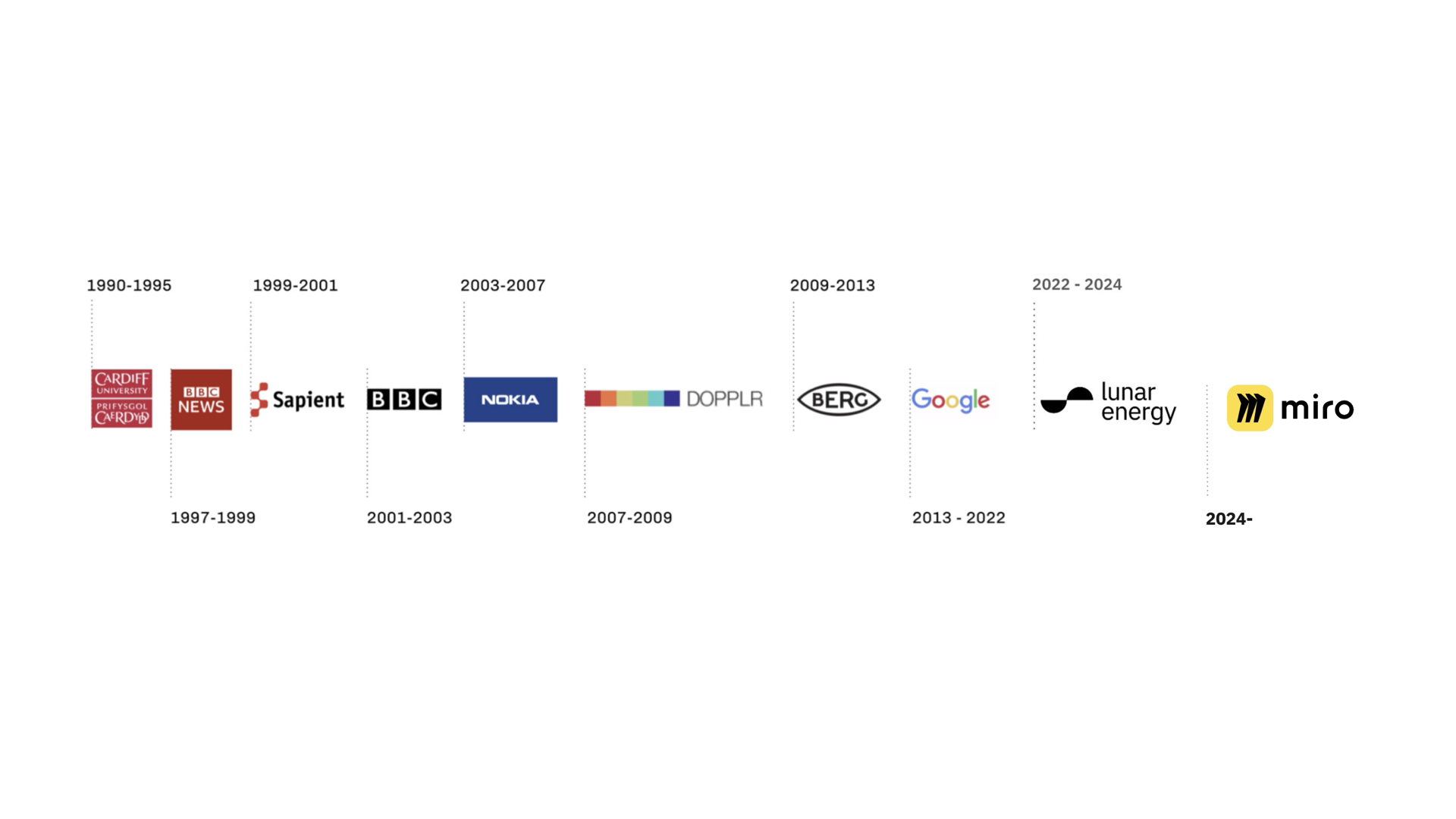
Hi I’m Matt – I’m a designer who studied architecture 30 years ago, then got distracted.

Around 20 years ago I met a bunch of folks in this room, and also started working on connected objects, machine intelligence and other things… Iskander asked me to talk a little bit about that!

I feel like I am in a safe space here, so imagine many of you are like me and have a drawer like this, or even a brain like this… so hopefully this talk is going to have some connections that will be useful one day!

So with that said, back to BERG.

We were messing around with ML, especially machine vision – very early stuff – e.g. this experiment we did in the studio with Matt Biddulph to try and instrument the room, and find patterns of collaboration and space usage.

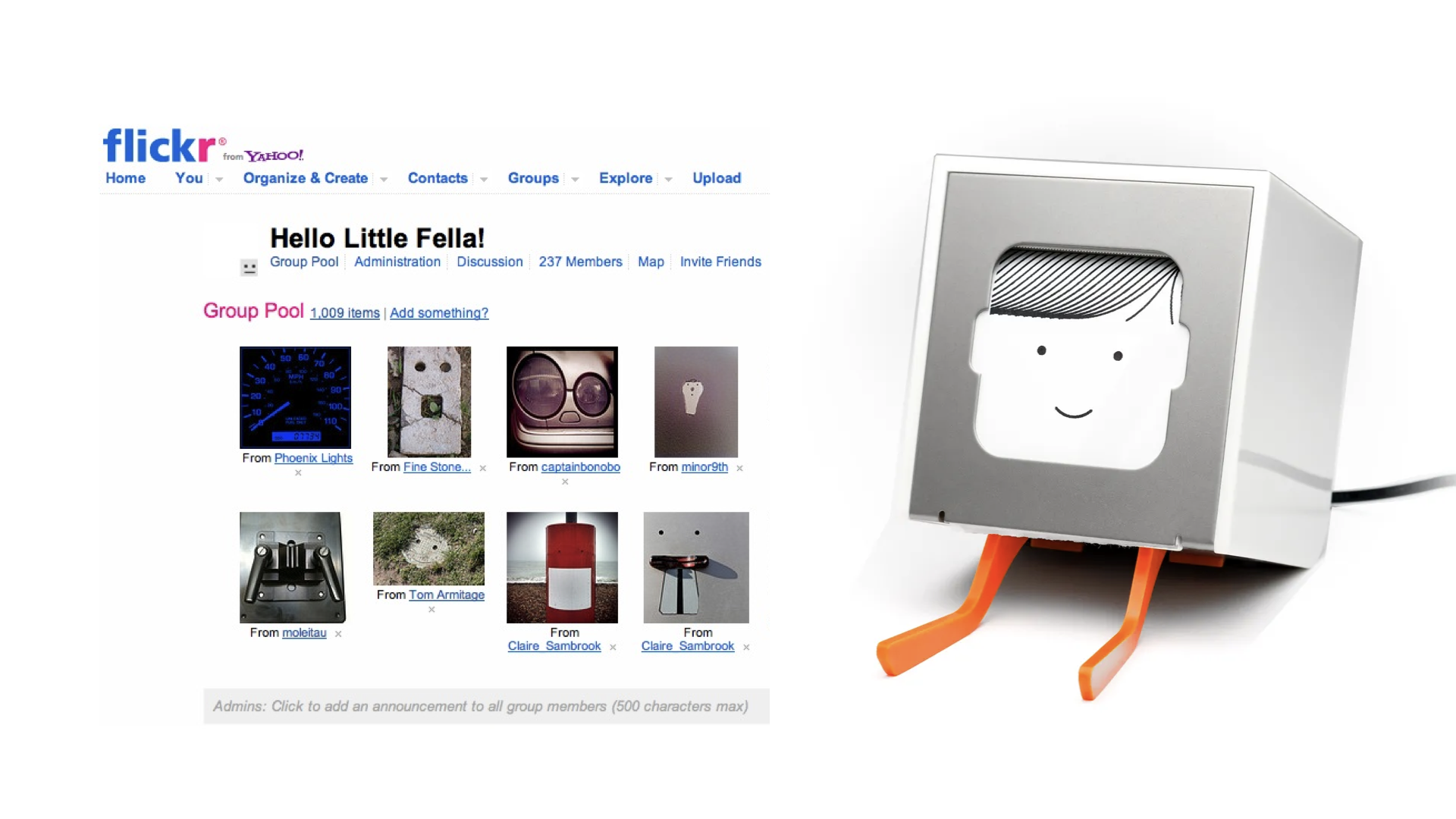
And at BERG we tended to have some recurring themes that we would resize and remix throughout out work.

BASAAP was one.

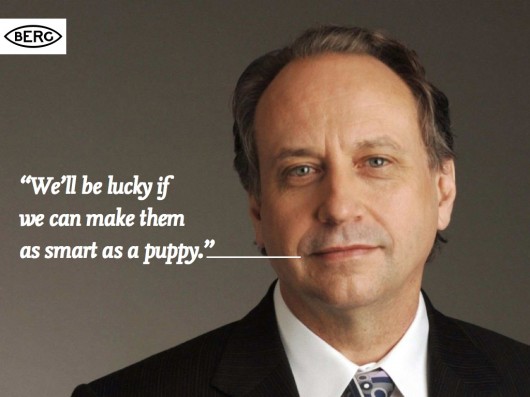
BASAAP is an acronym for Be As Smart As A Puppy – which actually I think first popped into my head while at Nokia a few years earlier.

It alludes to this quote from MIT roboticist and AI curmudgeon Rodney Brooks who said if we get the smartest folks together for 50 years to work on AI we’ll be lucky if we can make it as a smart as a puppy.


I guess back then we thought that puppy-like technologies in our homes sounded great!

We wanted to build those.

Also it felt like all the energy and effort to make technology human was kind of a waste.

We thought maybe you could find more delightful things on the non-human side of the uncanny valley…

And implicit in that I guess was a critique of the mainstream tech drive at the time (around the earliest days of Siri, Google Assistant) around voice interfaces, which was a dominant dream.

A Google VP at the time stated that their goal was to create ‘the star trek computer’.

Our clients really wanted things like this, and we had to point out that voice UIs are great for moving the plot of tv shows along.


I only recently (via the excellent Futurish podcast) learned this term – ‘hyperstition’ – a self-fulfilling idea that becomes real through its own existence (usually in movies or other fictions) e.g. flying cars

And I’d argue we need to be critically aware of them still in our work…

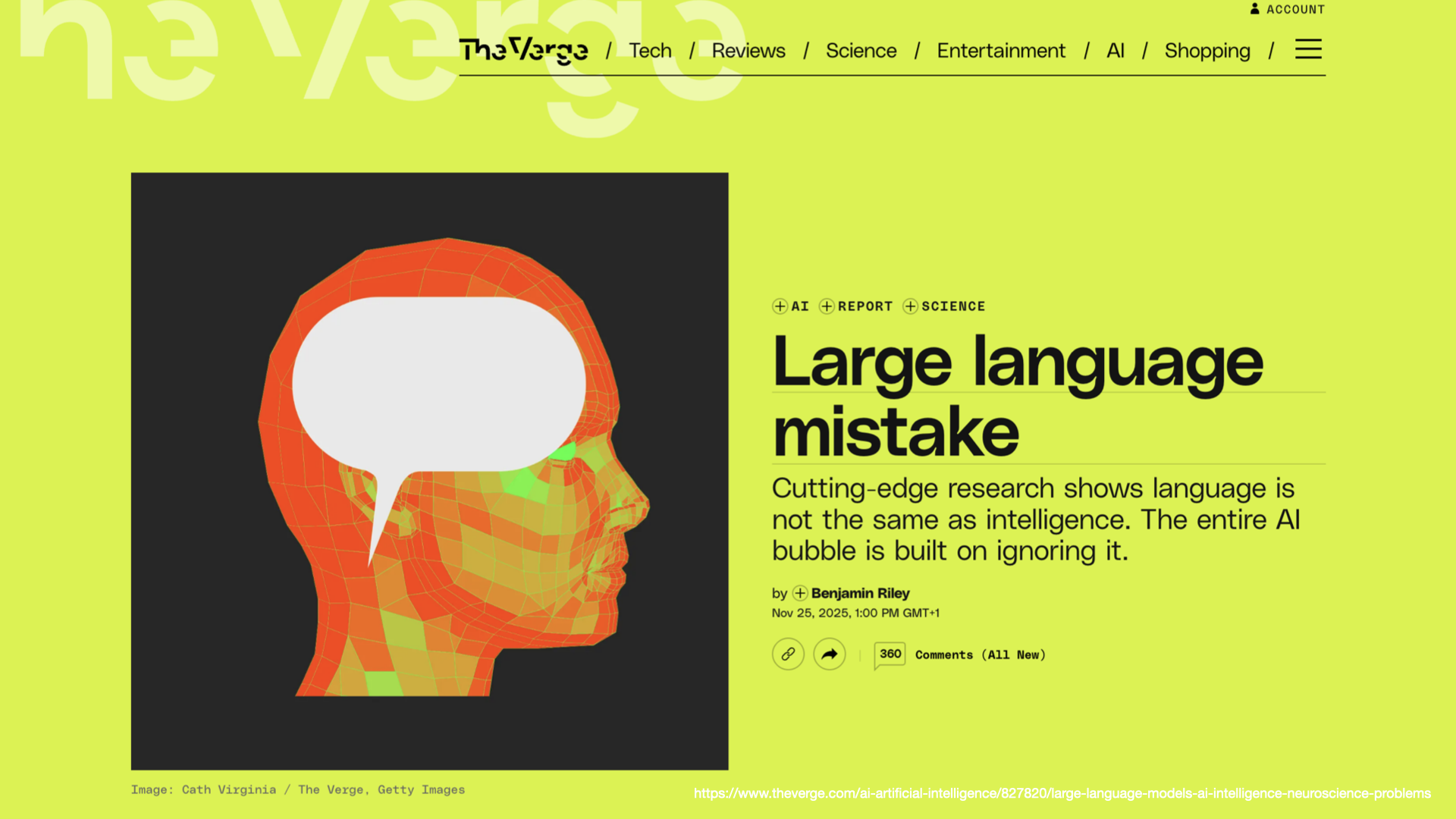
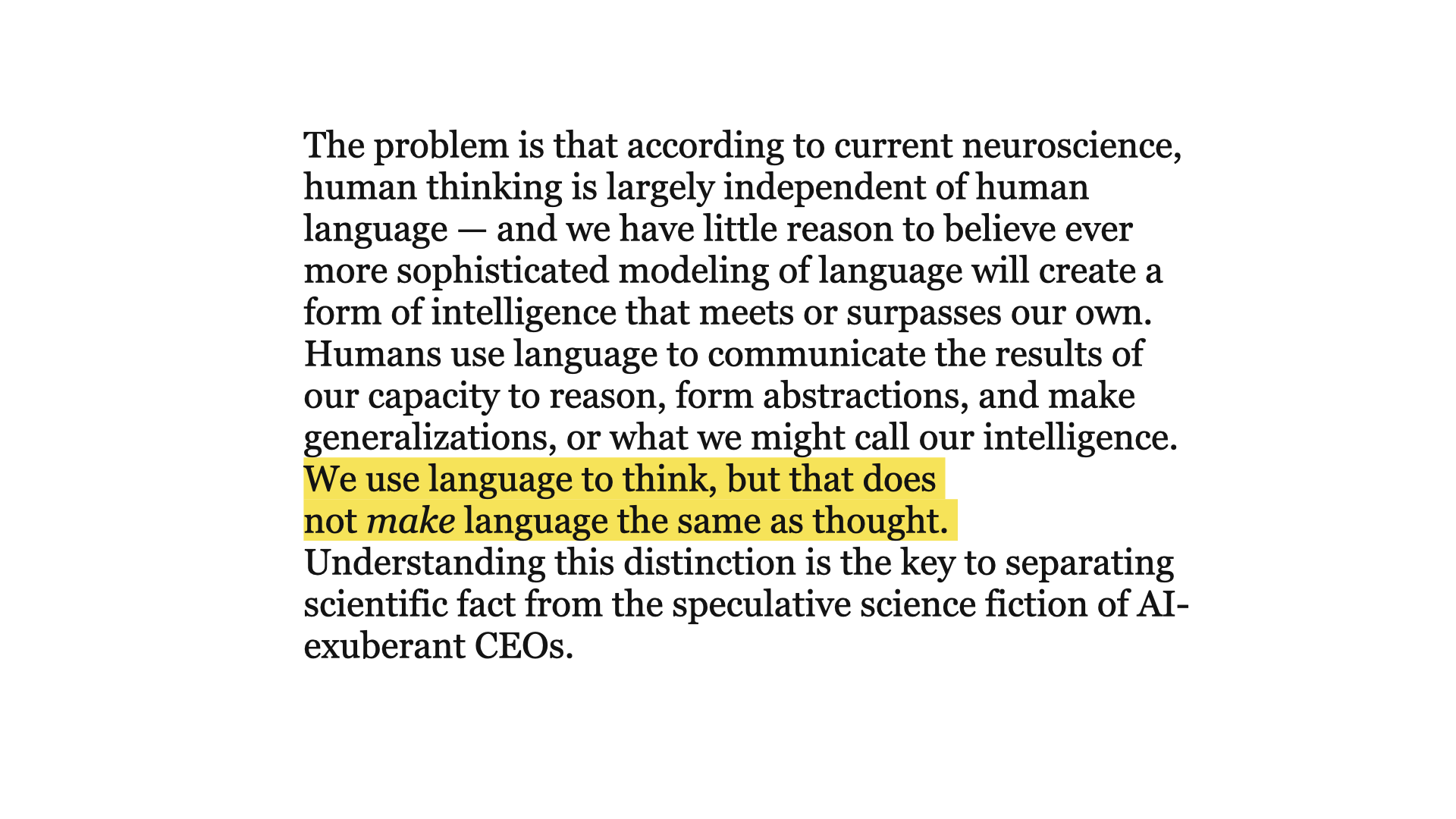
https://www.theverge.com/ai-artificial-intelligence/827820/large-language-models-ai-intelligence-neuroscience-problems

Whatever your position on them, LLMs are in a hyperstitial loop right now of epic proportions.

Disclaimer: I’ve worked on them, I use them. I still try and think critically of them as material

https://www.theverge.com/ai-artificial-intelligence/827820/large-language-models-ai-intelligence-neuroscience-problems

And while it can feel like we have crossed the uncanny valley there, I think we can still look to the BASAAP thought to see if there’s other paths we can take with these technologies.

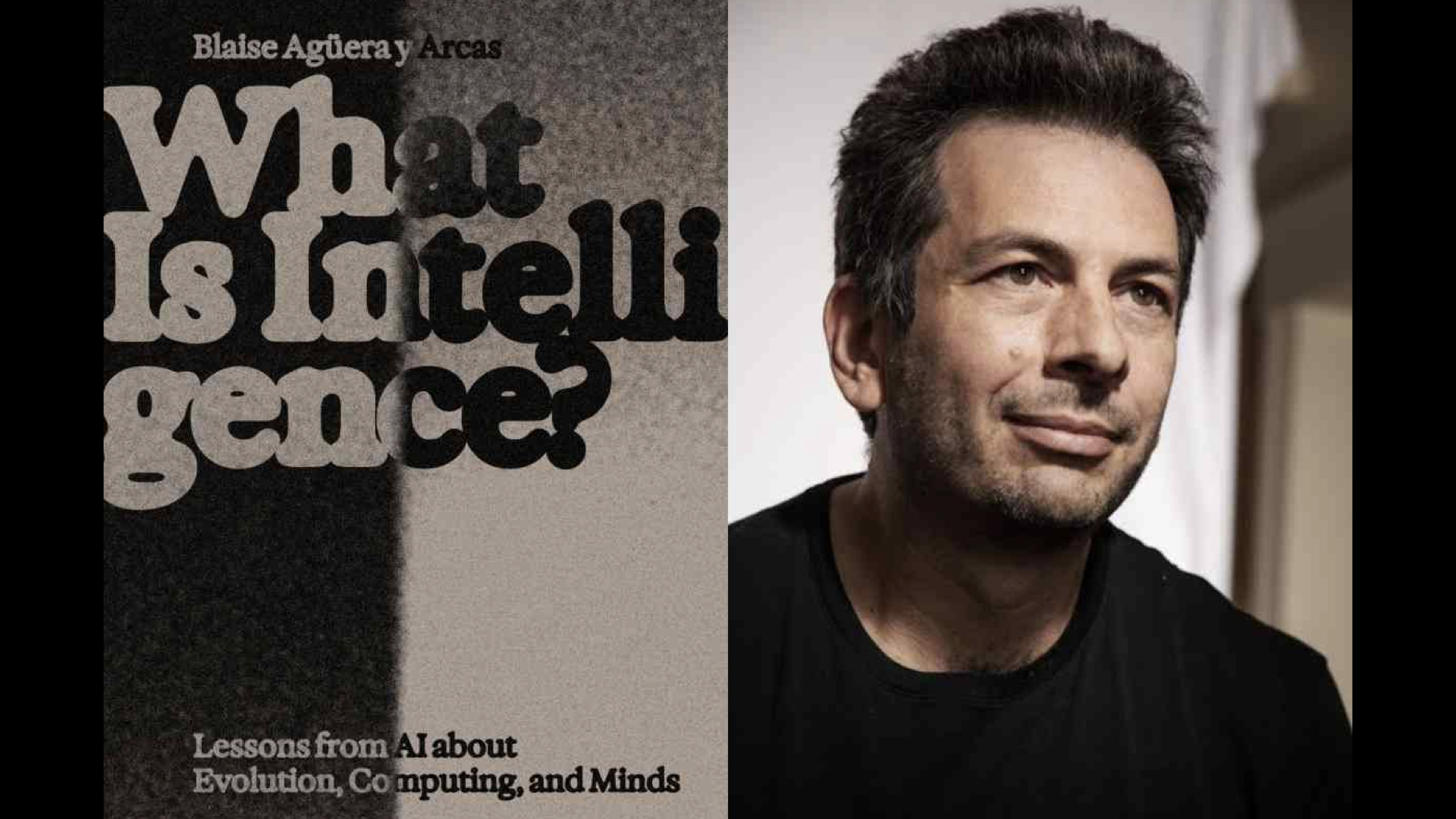
https://whatisintelligence.antikythera.org/

My old boss at Google, Blaise Agüera y Arcas has just published this fascinating book on the evolutionary and computational basis of intelligence.

In it he frames our current moment as the start of a ‘symbiosis’ of machine and human intelligence, much as we can see other systems of natural/artificial intelligences in our past – like farming, cities, economies.

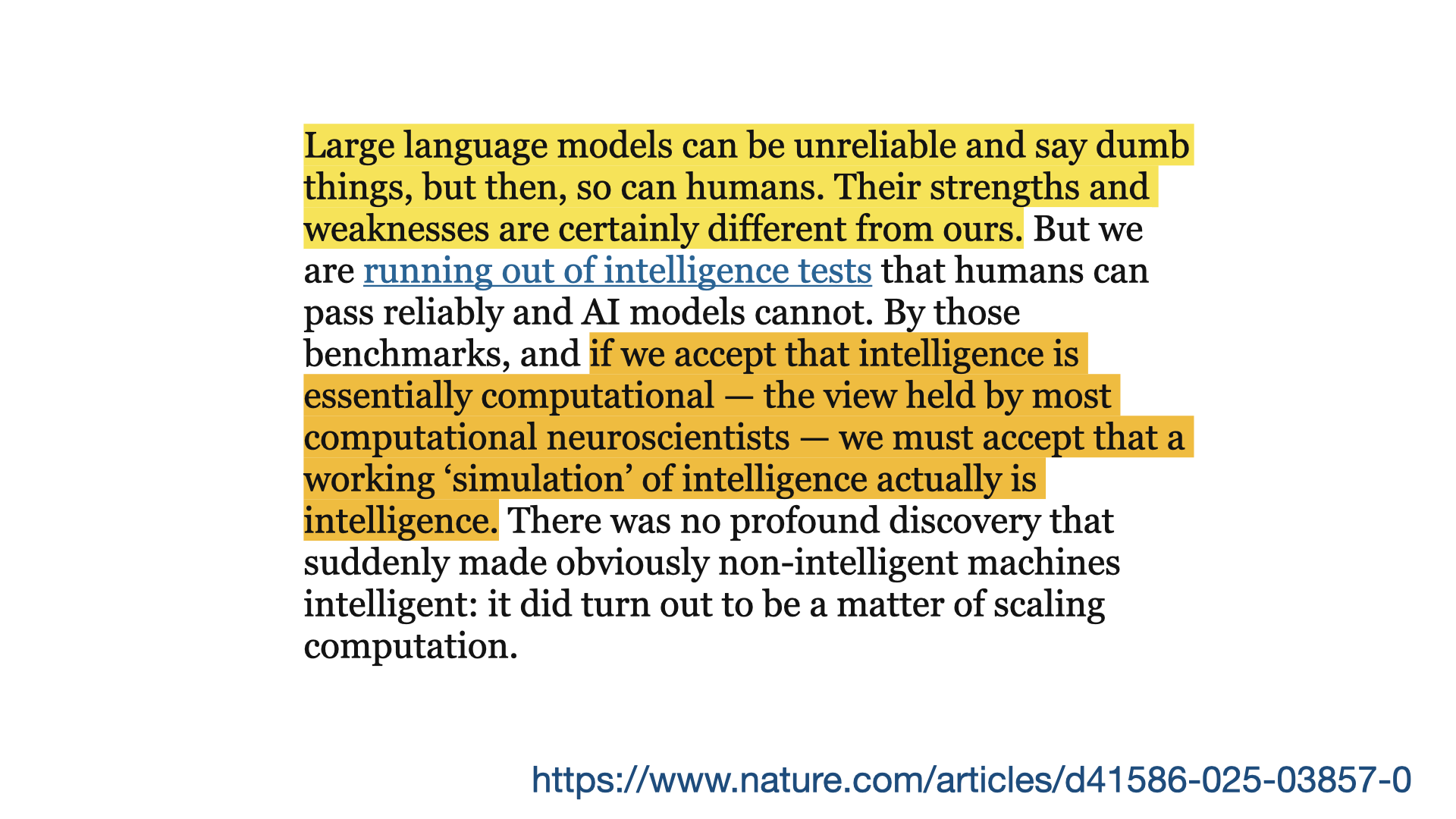
There’s so much in there – but this line from an accompanying essay in Nature brings me back to BASAAP. “Their strengths and weaknesses are certainly different from ours” – so why as designers aren’t we exposing that more honestly?


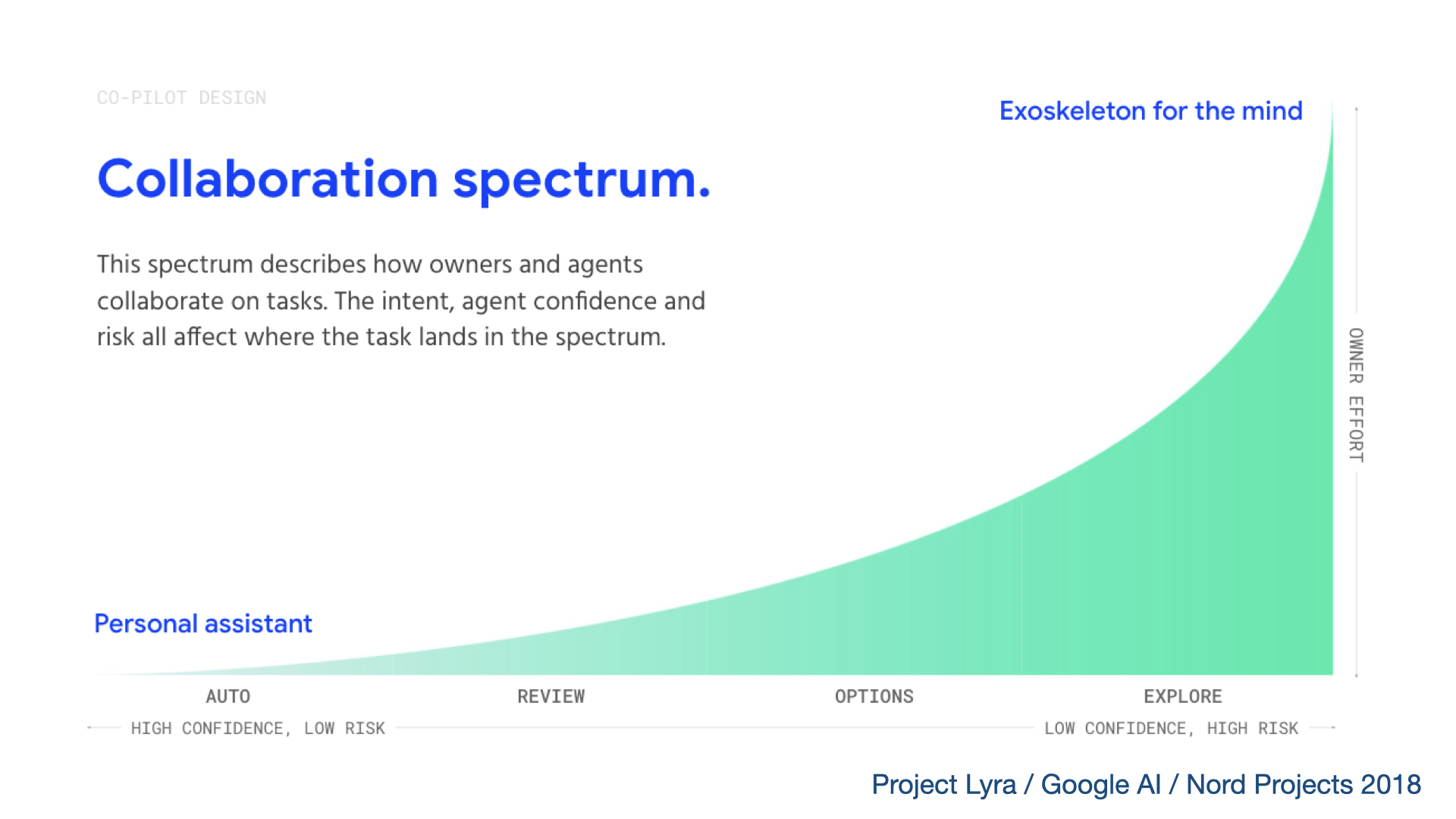
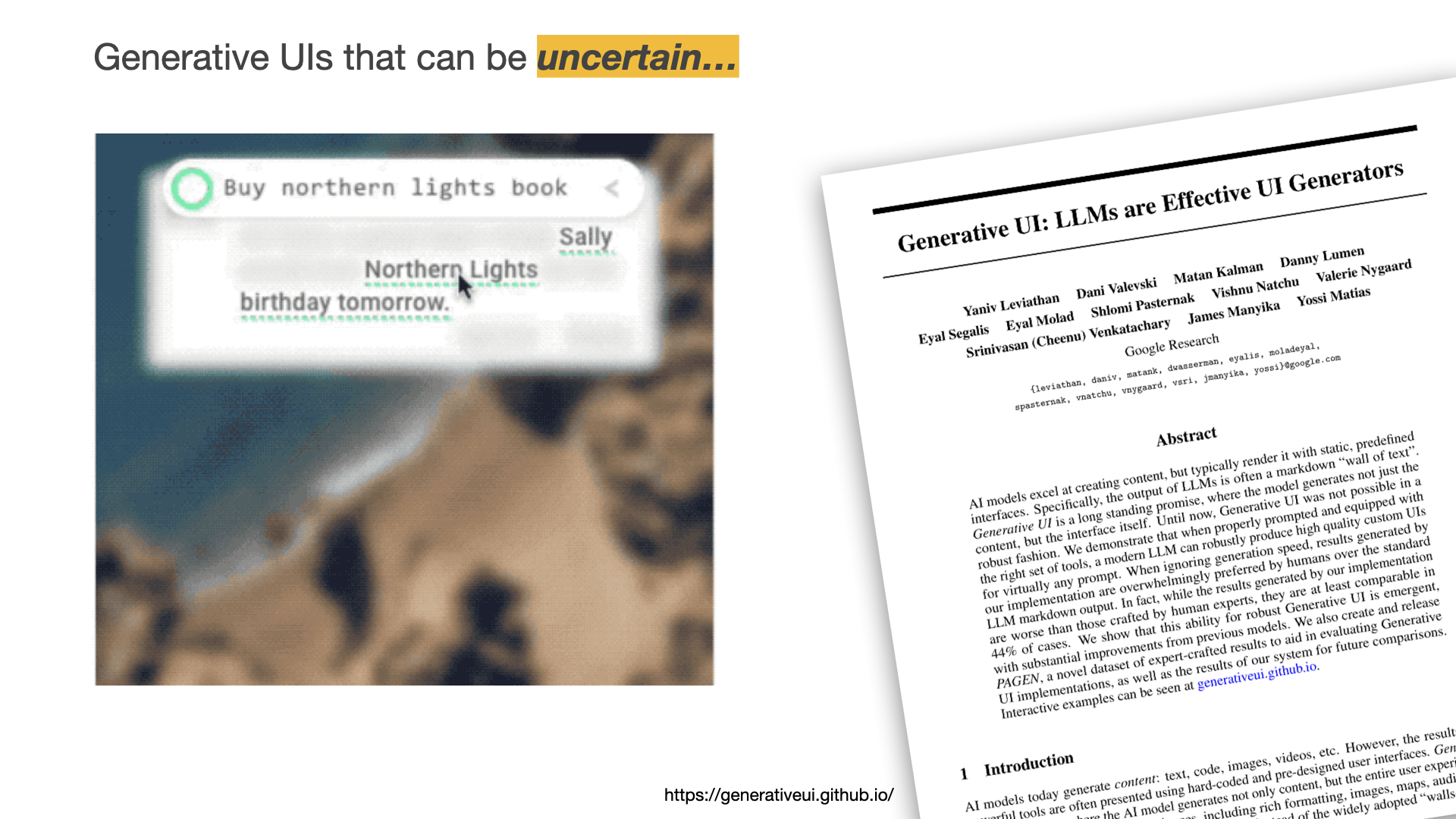
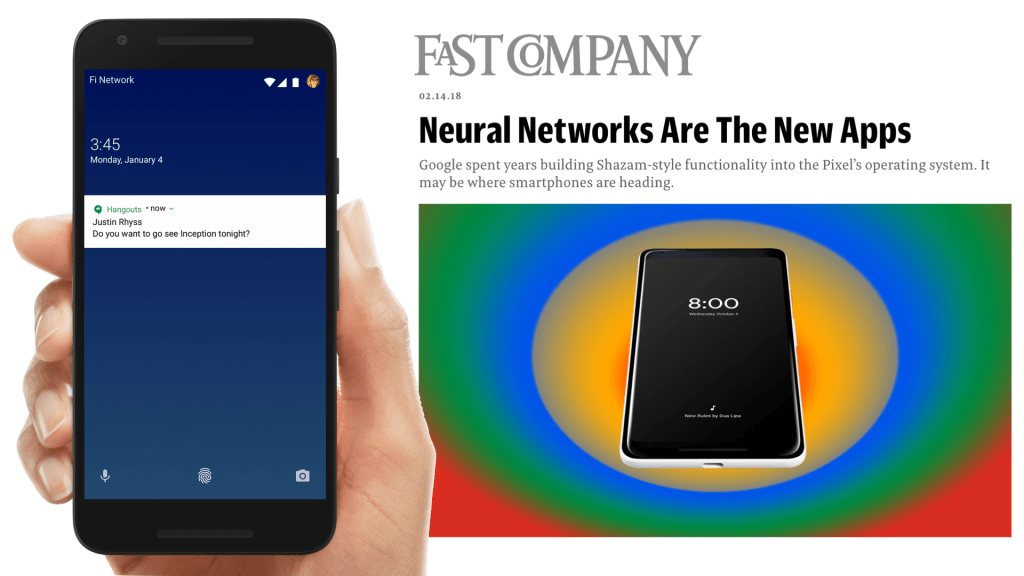
In work I did in Blaise’s group at Google in 2018 we examined some ways to approach this – by explicitly surfacing an AI’s level of confidence in the UX.

Here’s a little mock up of some work with Nord Projects from that time where we imagined dynamic UI that was built by the agent to surface it’s uncertainties to its user – and right up to date – papers published at the launch of Gemini 3 where the promise of generated UI could start to support stuff like that.


And just yesterday this new experimental browser ‘Disco’ was announced by Google Labs – that builds mini-apps based on what it thinks you’re trying to achieve…


But again lets return to that thought about Machine Intelligence having a symbiosis with the human rather than mimicking it…


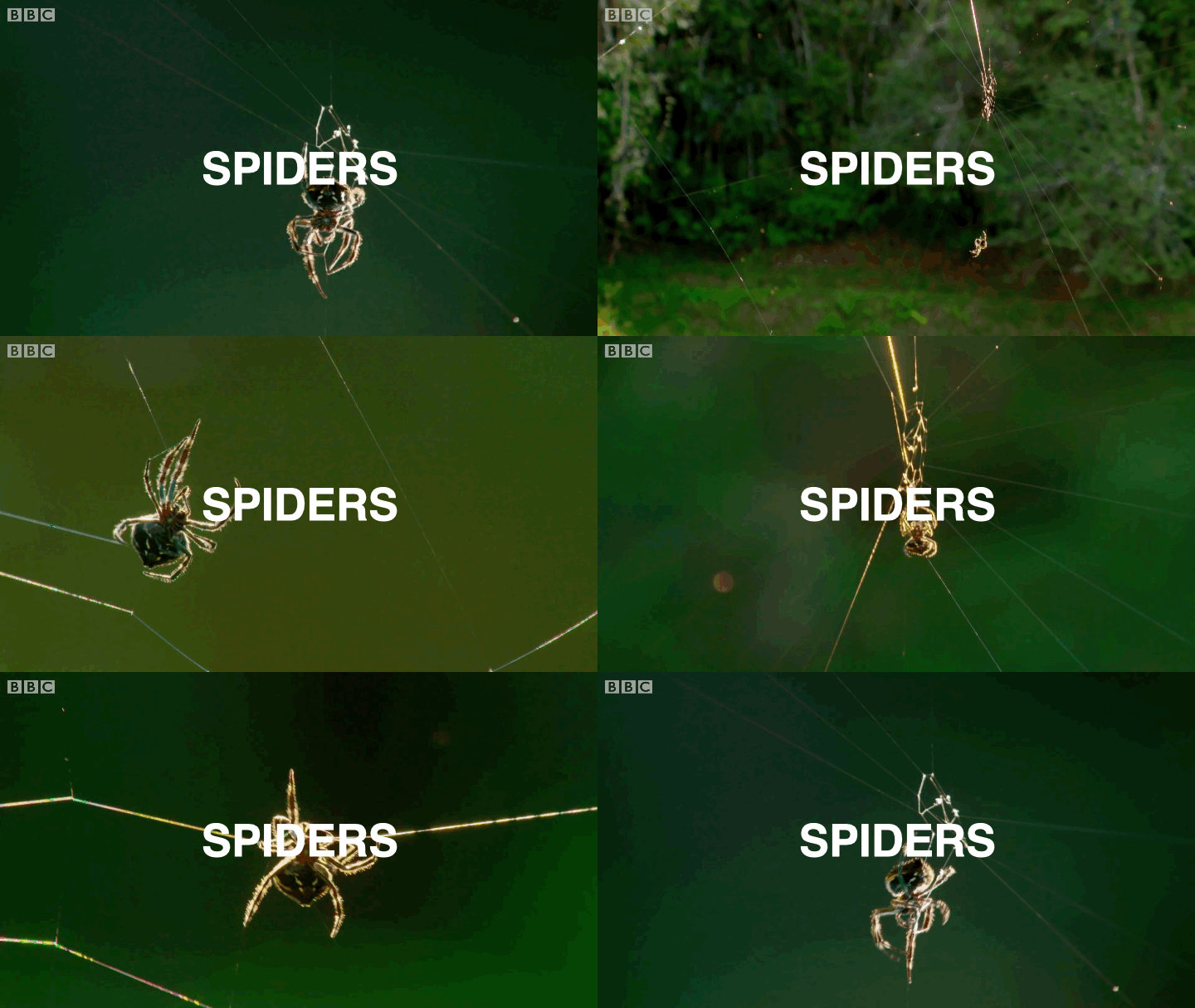
There could be more useful prompts from the non-human side of the uncanny valley… e.g. Spiders

I came across this piece in Quanta https://www.quantamagazine.org/the-thoughts-of-a-spiderweb-20170523/ some years back about cognitive science experiments on spiders revealing that their webs are part of their ‘cognitive equipment’. The last paragraph struck home – ‘cognition to be a property of integrated nonbiological components’

And… of course…

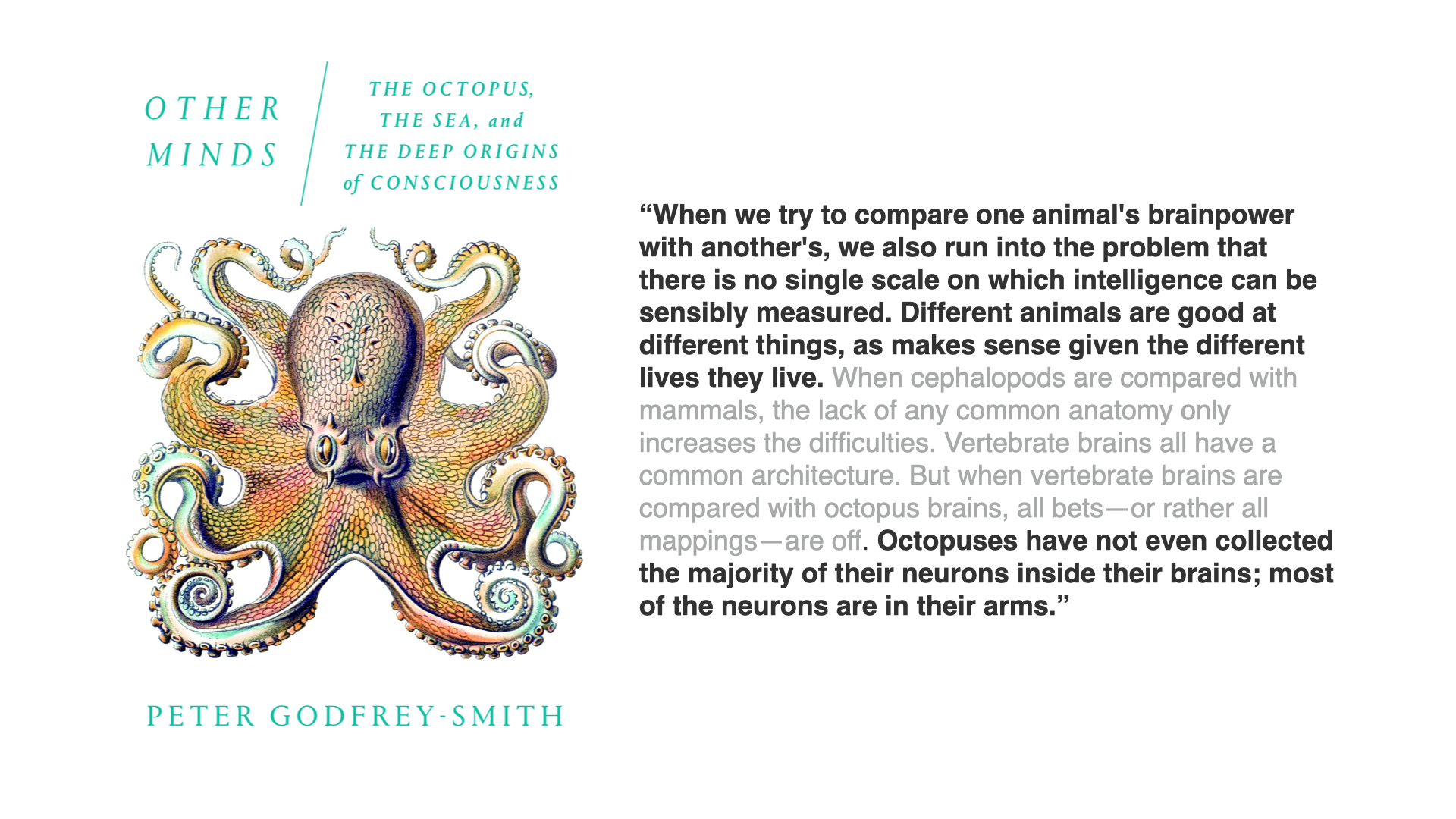
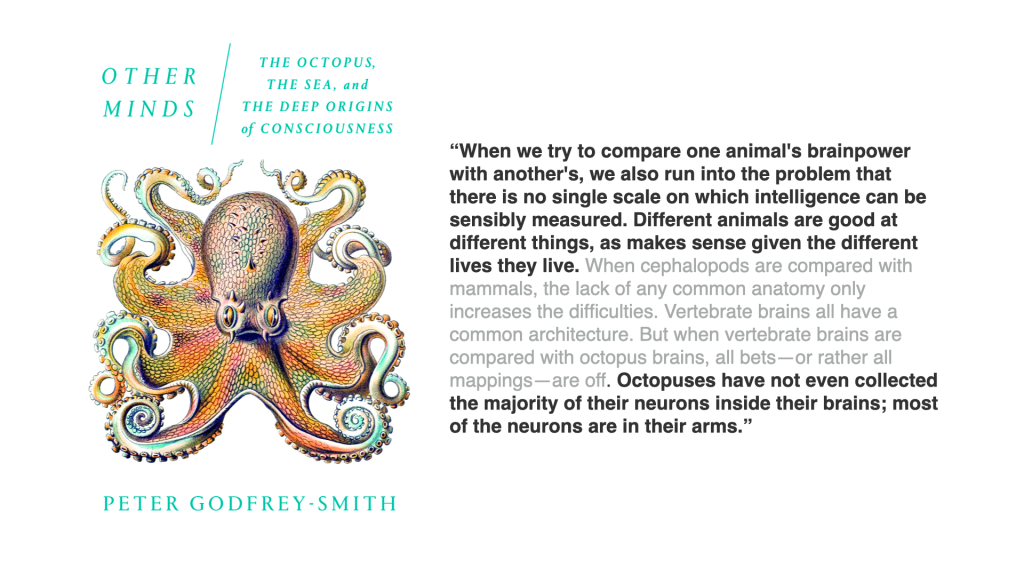
In Peter Godfrey-Smith’s wonderful book he explores different models of cognition and consciousness through the lens of the octopus.

What I find fascinating is the distributed, embodied (rather than centralized) model of cognition they appear to have – with most of their ‘brains’ being in their tentacles…

I have always found this quote from ETH’s Bertrand Meyer inspiring… No need for ‘brains’!!!


“H is for Hawk” is a fantastic memoir of the relationship between someone and their companion species. Helen McDonald writes beautifully about the ‘her that is not her’

(footnote: I experimented with search-and-replace in her book here back in 2016: https://magicalnihilism.com/2016/06/08/h-is-for-hawk-mi-is-for-machine-intelligence/)

This is CavCam and CavStudio – more work by Nord Projects, with Alison Lentz, Alice Moloney and others in Google Research examining how these personalised trained models could become intelligent reactive ‘lenses’ for creative photography.

We could use AI in creating different complimentary ‘umwelts’ for us.


I’m sure many of you are familiar with Thomas Nagel’s 1974 piece – ‘What is it like to be a bat” – well, what if we can know that?

BAAAAT!!!

This ‘more than human’ approach to design is evident in the room and the zeitgeist for some time now.

We saw it beautifully in Ling Tan and Usman Haque’s work and practice this morning, and of course it’s been wonderfully examined in James Bridle’s writing and practice too.

Perhaps surprising is that the tech world is heading there too perhaps.

There’s a growing suspicion among AI researchers – voiced at their big event NeurIPS just a weekor so – that the language model will need to be supplanted or at least complemented by other more embodied and physical approaches, including what are getting categorised as “World Models” – playing in the background is video from Google Deepmind’s announcement of the autumn on this agenda.

Fei-Fei Li (one of the godmothers of the current AI boom) has a recent essay on substack exploring this.

“Spatial Intelligence is the scaffolding upon which our cognition is built. It’s at work when we passively observe or actively seek to create. It drives our reasoning and planning, even on the most abstract topics. And it’s essential to the way we interact—verbally or physically, with our peers or with the environment itself.”

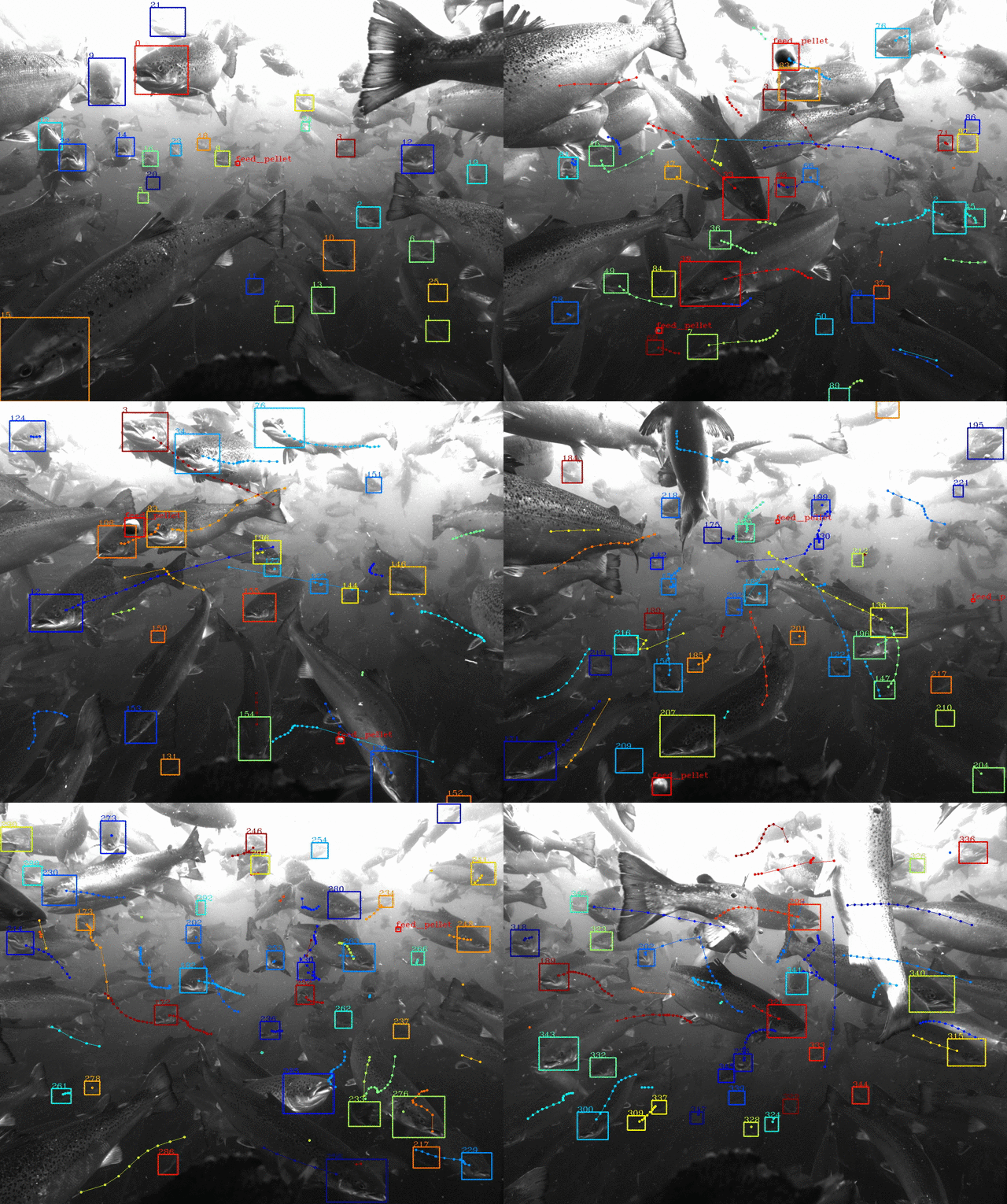
Here are some old friends from Google who have started a company – Archetype AI – looking at physical world AI models that are built up from a multiplicity of real-time sensor data…

As they mention the electrical grid – here’s some work from my time at solar/battery company Lunar Energy in 2022/23 that can illustrate the potential for such approaches.

In Japan, Lunar have a large fleet of batteries controlled by their Lunar AI platform. You can perhaps see in the time-series plot the battery sites ‘anticipating’ the approach of the typhoon and making sure they are charged to provide effective backup to the grid.

Together with my old BERG colleague Tom Armitage some experiments at Lunar to bring these network behaviours to life with sound and data visualisations.

Maybe this is… “What is it like to be a BAT-tery’.

Sorry…


I think we might have had our own little moment of sonic hyperstition there…

So, to wrap up.

This summer I had an experience I have never had before.

I was caught in a wildfire.

I could see it on a map from space, with ML world models detecting it – but also with my eyes, 500m from me.

I got out – driving through the flames.

But it was probably the most terrifying thing that has ever happened to me… I was lucky. I was a tourist. I didn’t have to keep living there.

But as Ling and Usman pointed out – we are in a world now where these types of experiences are going to become more and more common.

And as they said – the only way out is through.

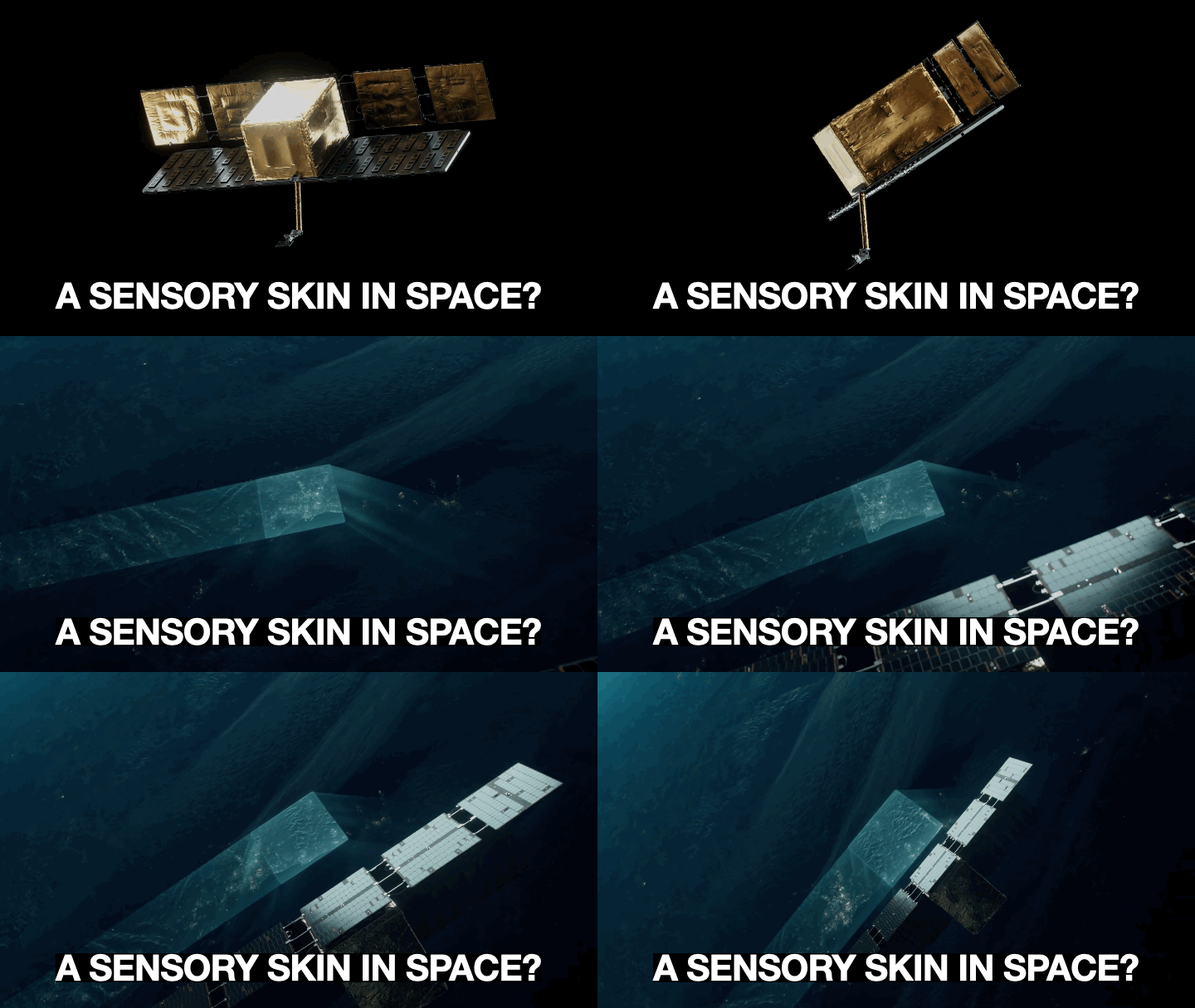
This is an Iceye Gen4 Synthetic Aperture Radar satellite – designed and built in Europe.

Here’s some imagery from this past week they released of how they’ve been helping emergency response to the flooding in SE Asia – e.g. Sri Lanka here with real-time imaging.

But as Ling said this morning – we can know more and more but it might not unlock the regenerative responses we need on its own.

How might we follow their example with these new powerful world modelling technologies?

As well as Ling and Usman’s work, responses like the ‘Resonant Computing’ manifesto (disclosure: I’m a co-signee/supporter) and the ‘planetary sapience’ visions of the Antikythera organisation give me hope we can direct these technologies to resize, remix and regenerate our lives and the living systems of the planet.

The AI-assisted permaculture future depicted in Ruthana Emrys’ “A Half-Built Garden” gives me hope.

The rise of bioregional design as championed by the Future Observatory at the Design Museum in London gives me hope.

And I’ll leave you with the symbiotic nature/AI hope of my friends at Superflux and their project that asks, I guess – “What is it like to be a river?”…

https://superflux.in/index.php/work/nobody-told-me-rivers-dream/#

THANK YOU.

“Magic notebooks, not magic girlfriends”

The take-o-sphere is awash with responses to last week’s WWDC, and the announcement of “Apple Intelligence”.

My old friend and colleague Matt Webb’s is one of my favourites, needless to say – and I’m keen to try it, naturally.

I could bang on about it of course, but I won’t – because I guess I have already.

Of course, the concept is the easy bit.

Having a trillion-dollar corporation actually then make it, especially when it’s counter to their existing business model is another thing.

I’ll just leave this here from about 6 years ago…

BUT!

What I do want to talk about is the iPad calculator announcement that preceded the broader AI news.

As a fan of Bret Victor, this made me very happy.

As a fan of Seymour Papert it made me very happy.

As a fan of Alan Kay and the original vision of the Dynabook is made me very happy.

But moreover – as someone who has never been that excited by the chatbot/voice obsessions of BigTech, it was wonderful to see.

Of course the proof of this pudding will be in the using, but the notion of a real-time magic notebook where the medium is an intelligent canvas responding as an ‘intelligence amplifier‘ is much more exciting to me than most of the currently hyped visions of generative AI.

I was particularly intrigued to see the more diagrammatic example below, which seemed to belong in the conceptual space between Bret Victor’s Dynamicland and Papert’s Mathland.

I recall when I read Papert’s “Mindstorms” (back in 2012 it seems? ) I got retroactively angry about how I had been taught mathematics.

The ideas he advances for learning maths through play, embodiment and experimentation made me sad that I had not had the chance to experience the subject through those lenses, but instead through rote learning leading to my rejection of it until much later in life.

As he says “The kind of mathematics foisted on children in schools is not meaningful, fun, or even very useful.”

Perhaps most famously he writes:

“a computer can be generalized to a view of learning mathematics in “Mathland”; that is to say, in a context which is to learning mathematics what living in France is to learning French.”

Play, embodiment, experimentation – supported by AI – not *done* for you by AI.

I mean, I’m clearly biased.

I’ve long thought the assistant model should be considered harmful. Perhaps the Apple approach announced at WWDC means it might not be the only game in town for much longer.

Back at Google I was pursuing concepts of Personal AI with something called Project Lyra, which perhaps one day I can go into a bit more deeply.

Anyway.

Early on Jess Holbrook turned me onto the work of Professor Andy Clark, and I thought I’d try and get to work with him on this.

My first email to him had the subject line of this blog post: “Magic notebooks, not magic girlfriends” – which I think must have intrigued him enough to respond.

This, in turn, led to the fantastic experience of meeting up with him a few times while he was based in Edinburgh and having him write a series of brilliant pieces (for internal consumption only, sadly) on what truly personal AI might mean through his lens of cognitive science and philosophy.

As a tease here’s an appropriate snippet from one of Professor Clark’s essays:

“The idea here (the practical core of many somewhat exotic debates over the ‘extended mind’) is that considered as thinking systems, we humans already are, and will increasingly become, swirling nested ecologies whose boundaries are somewhat fuzzy and shifting. That’s arguably the human condition as it has been for much of our recent history—at least since the emergence of speech and the collaborative construction of complex external symbolic environments involving text and graphics. But emerging technologies—especially personal AI’s—open up new, potentially ever- more-intimate, ways of being cognitively extended.”

I think that’s what I object to, or at least recoil from in the ‘assistant’ model – we’re abandoning exploring loads of really rich, playful ways in which we already think with technology.

Drawing, model making, acting things out in embodied ways.

Back to Papert’s Mindstorms:

“My interest is in the process of invention of “objects-to-think-with,” objects in which there is an intersection of cultural presence, embedded knowledge, and the possibility for personal identification.”

“…I am interested in stimulating a major change in how things can be. The bottom line for such changes is political. What is happening now is an empirical question. What can happen is a technical question. But what will happen is a political question, depending on social choices.”

The some-what lost futures of Kay, Victor and Papert are now technically realisable.

“what will happen is a political question, depending on social choices.”

The business model is the grid, again.

That is, Apple are toolmakers, at heart – and personal device sellers at the bottom line. They don’t need to maximise attention or capture you as a rent (mostly). That makes personal AI as a ‘thing’ that can be sold much more of viable choice for them of course.

Apple are far freer, well-placed (and of coursse well-resourced) to make “objects-to-think-with, objects in which there is an intersection of cultural presence, embedded knowledge, and the possibility for personal identification.”

The wider strategy of “Apple Intelligence” appears to be just that.

But – my hope is the ‘magic notebook’ stance in the new iPad calculator represents the start of exploration in a wider, richer set of choices in how we interact with AI systems.

Let’s see.

Shaviro on Tchaikovsky’s Corvids and LLMs

Came across Steven Shaviro’s thoughts on the critique of AI implicit in Adrian Tchaikovsky‘s excellent “Children of Memory” which I’d also picked up on – of course being Steven it’s much more eloquent and though-provoking so thought I’d paste it here.

The Corvids deny that they are sentient; the actual situation seems to be that sentience inheres in their combined operations, but does not quite exist in either of their brains taken separately. In certain ways, the Corvids in the novel remind me of current AI inventions such as ChatGPT; they emit sentences that are insightful, and quote bits and fragments of human discourse and culture in ways that are entirely apt; but (as with our current level of AI) it is not certain that they actually “understand” what they are doing and saying (of course this depends in part on how we define understanding). Children of Memory is powerful in the way that it raises questions of this sort — ones that are very much apropos in the actual world in terms of the powers and effects of the latest AI — but rejects simplistic pro- and con- answers alike, and instead shows us the difficulty and range of such questions. At one point the Corvids remark that “we know that we don’t think,” and suggests that other organisms’ self-attribution of sentience is nothing more than “a simulation.” But of course, how can you know you do not think without thinking this? and what is the distinction between a powerful simulation and that which it is simulating? None of these questions have obvious answers; the novel gives a better account of their complexity than the other, more straightforward arguments about them have done. (Which is, as far as I am concerned, another example of the speculative heft of science fiction; the questions are posed in such a manner that they resist philosophical resolution, but continue to resonate in their difficulty).

http://www.shaviro.com/Blog/?p=1866

🐙 Octopii, Very fast, very heavy toddlers made of steel and self-driving tests

Jason points to a great piece on Large Language Models, ChatGPT etc

“Say that A and B, both fluent speakers of English, are independently stranded on two uninhabited islands. They soon discover that previous visitors to these islands have left behind telegraphs and that they can communicate with each other via an underwater cable. A and B start happily typing messages to each other.

Meanwhile, O, a hyperintelligent deep-sea octopus who is unable to visit or observe the two islands, discovers a way to tap into the underwater cable and listen in on A and B’s conversations. O knows nothing about English initially but is very good at detecting statistical patterns. Over time, O learns to predict with great accuracy how B will respond to each of A’s utterances.

Soon, the octopus enters the conversation and starts impersonating B and replying to A. This ruse works for a while, and A believes that O communicates as both she and B do — with meaning and intent. Then one day A calls out: “I’m being attacked by an angry bear. Help me figure out how to defend myself. I’ve got some sticks.” The octopus, impersonating B, fails to help. How could it succeed? The octopus has no referents, no idea what bears or sticks are. No way to give relevant instructions, like to go grab some coconuts and rope and build a catapult. A is in trouble and feels duped. The octopus is exposed as a fraud.”

https://nymag.com/intelligencer/article/ai-artificial-intelligence-chatbots-emily-m-bender.html via Kottke.org

He goes onto talk about his experiences ‘managing’ a semi-self driving car (I think it might be a Volvo, like I used to own?) where you have to be aware that the thing is an incredible heavy, very fast toddler made of steel, with dunning-kruger-ish marketing promises pasted all over the top of it.

You can’t ever forget the self-driver is like a 4-year-old kid mimicking the act of driving and isn’t capable of thinking like a human when it needs to. You forget that and you can die.”

That was absolutely my experience of my previous car too.

It was great for long stretches of motorway (freeway) driving in normal conditions, but if it was raining or things got more twisty/rural (which they do in most of the UK quite quickly), you switched it off sharpish.

I’m renting a tesla (I know, I know) for the first time on my next trip to the states. It was a cheap deal, and it’s an EV, and it’s California so I figure why not. I however will not use autopilot I don’t think, having used semi (level 2? 3?) autonomous driving before.

Perhaps there needs to be a ‘self-driving test’ for the humans about to go into partnership with very fast, very heavy semi-autonomous non-human toddlers before they are allowed on the roads with them…

ReckonsGPT / Call My Bluffbot

This blog has turned into a Tobias Revell reblog/Stan account, so here’s a link to his nice riff on ChatGPT this week.

“LLMs are like being at the pub with friends, it can say things that sound plausible and true enough and no one really needs to check because who cares?”

Tobias Revell – “BOX090: THE TWEET THAT SANK $100BN

Ben Terrett was the first person I heard quoting (indirectly) Mitchell & Webb’s notion of ‘Reckons’ – strongly held opinions that are loosely joined to anything factual or directly experienced.

Send us your reckons – Mitchell & Webb

LLMs are massive reckon machines.

Once upon a BERG times, Matt Webb and myself used to get invited to things like FooCamp (MW still does…) and before hand we camped out in the Sierra Nevada, far away from any network connection.

While there we spent a night amongst the giant redwoods, drinking whisky and concocting “things that sound plausible and true enough and no one really needs to check because who cares”.

It was fun.

We didn’t of course then feed those things back into any kind of mainstream discourse or corpus of writings that would inform a web search…

In my last year at Google I worked a little with LaMDA.

The main thing that learned UX and research colleagues investigating how it might be productised seemed clear on was that we have to remind people that these things are incredibly plausible liars.

Moreover, anyone thinking of using it in a product that people should be incredibly cautious.

That Google was “late to market” with a ChatGPT competitor is a feature not a bug as far as I’m concerned. It shouldn’t be treated as an answer machine.

It’s a reckon machine.

And most people outside of the tech industry hypetariat should worry about that.

And what it means for Google’s mission of “Organising the worlds information and making it universally accessible’ – not that Google might be getting Nokia’d.

The impact of a search engine’s results on societies that treat them as scaffolding are the real problem…

Cory says it better here.

Anyway.

My shallow technoptimism will be called into question if I keep going like this so let’s finish on a stupid idea.

British readers of a certain vintage (mine) might recall a TV show called “Call my bluff – where plausible lying about the meaning of obscure words by charming middlebrow celebrities was rewarded.

Here’s Sir David Attenborough to explain it:

Attenborough on competitive organic LLMs as entertainment

It’s since been kinda remixed into Would I lie to you (featuring David Mitchell…) and if you haven’t watched Bob Mortimer’s epic stories from that show – go, now.

Perhaps – as a public service – the BBC and the Turing Institute could bring Call My Bluff back – using the contemporary UK population’s love of a competitive game show format (The Bake Off, Strictly, Taskmaster) to involve them in a adversarial critical network to root out LLMs’ fibs.

The UK then would have a massive trained model as a national asset, rocketing it back to post-Brexit relevance!

Optometrists, Octopii, Rubber Ducks & Centaurs: my talk at Design for AI, TU Delft, October 2022

I was fortunate to be invited to the wonderful (huge) campus of TU Delft earlier this year to give a talk on “Designing for AI.”

I felt a little bit more of an imposter than usual – as I’d left my role in the field nearly a year ago – but it felt like a nice opportunity to wrap up what I thought I’d learned in the last 6 years at Google Research.

Below is the recording of the talk – and my slides with speaker notes.

I’m very grateful to Phil Van Allen and Wing Man for the invitation and support. Thank you Elisa Giaccardi, Alessandro Bozzon, Dave Murray-Rust and everyone the faculty of industrial design engineering at TU Delft for organising a wonderful event.

The excellent talks of my estimable fellow speakers – Elizabeth Churchill, Caroline Sinders and John can be found on the event site here.


Video of Matt Jones “Designing for AI” talk at TU Delft, October 2022

Slide 1

Hello!

Slide 2

This talk is mainly a bunch of work from my recent past – the last 5/6 years at Google Research. There may be some themes connecting the dots I hope! I’ve tried to frame them in relation to a series of metaphors that have helped me engage with the engineering and computer science at play.

Slide 3

I won’t labour the definition of metaphor or why it’s so important in opening up the space of designing AI, especially as there is a great, whole paper about that by Dave Murray-Rust and colleagues! But I thought I would race through some of the metaphors I’ve encountered and used in my work in the past.

The term AI itself is best seen as a metaphor to be translated. John Giannandrea was my “grand boss” at Google and headed up Google Research when I joined. JG’s advice to me years ago still stands me in good stead for most projects in the space…

But the first metaphor I really want to address is that of the Optometrist.

This image of my friend Phil Gyford (thanks Phil!) shows him experiencing something many of us have done – taking an eye test in one of those wonderful steampunk contraptions where the optometrist asks you to stare through different lenses at a chart, while asking “Is it better like this? Or like this?”

This comes from the ‘optometrist’ algorithm work by colleagues in Google Research working with nuclear fusion researchers. The AI system optimising the fusion experiments presents experimental parameter options to a human scientist, in the mode of a eye testing optometrist ‘better like this, or like this?’

For me to calls to mind this famous scene of human-computer interaction: the photo enhancer in Blade Runner.

It makes the human the ineffable intuitive hero, but perhaps masking some of the uncanny superhuman properties of what the machine is doing.

The AIs are magic black boxes, but so are the humans!

Which has lead me in the past to consider such AI-systems as ‘magic boxes’ in larger service design patterns.

How does the human operator ‘call in’ or address the magic box?

How do teams agree it’s ‘magic box’ time?

I think this work is as important as de-mystifying the boxes!

Lais de Almeida – a past colleague at Google Health and before that Deepmind – has looked at just this in terms of the complex interactions in clinical healthcare settings through the lens of service design.

How does an AI system that can outperform human diagnosis (Ie the retinopathy AI from deep mind shown here) work within the expert human dynamics of the team?

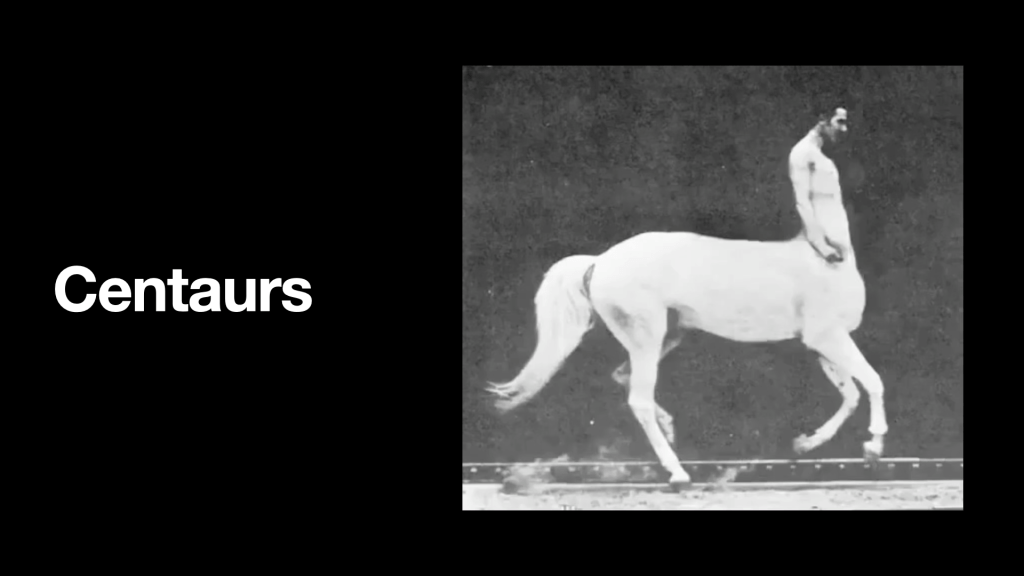
My next metaphor might already be familiar to you – the centaur.

[Certainly I’ve talked about it before…!]

If you haven’t come across it:

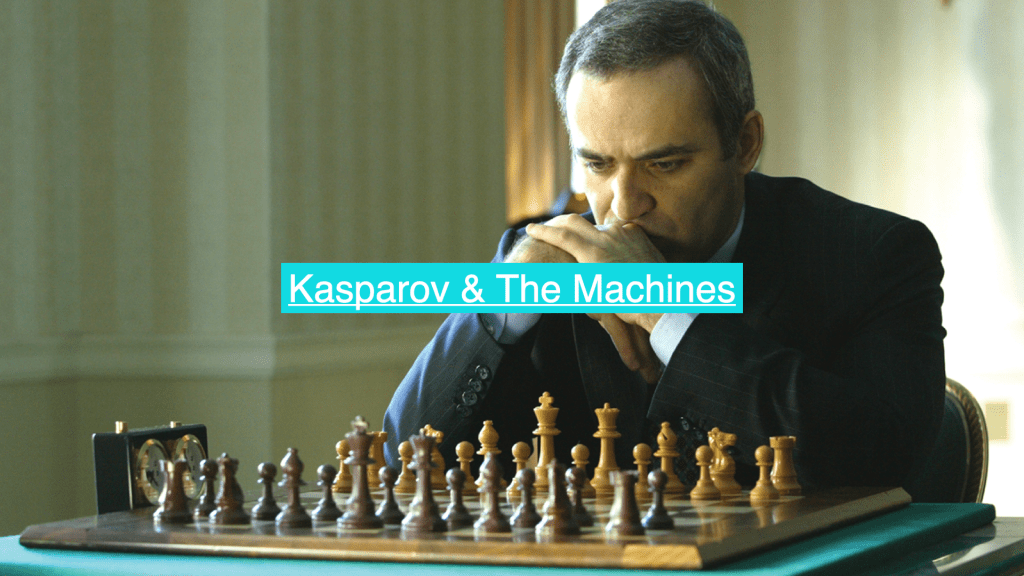
Gary Kasparov famously took on chess-AI Deep Blue and was defeated (narrowly)

He came away from that encounter with an idea for a new form of chess where teams of humans and AIs played against other teams of humans and AIs… dubbed ‘centaur chess’ or ‘advanced chess’

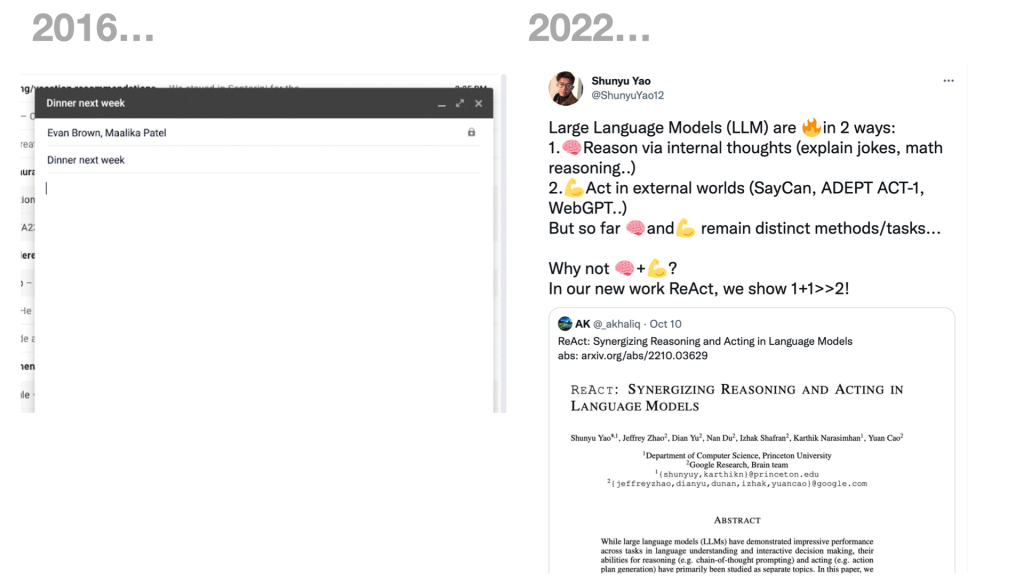
I first started investigating this metaphorical interaction about 2016 – and around those times it manifested in things like Google’s autocomplete in gmail etc – but of course the LLM revolution has taken centaurs into new territory.

This very recent paper for instance looks at the use of LLMs not only in generating text but then coupling that to other models that can “operate other machines” – ie act based on what is generated in the world, and on the world (on your behalf, hopefully)

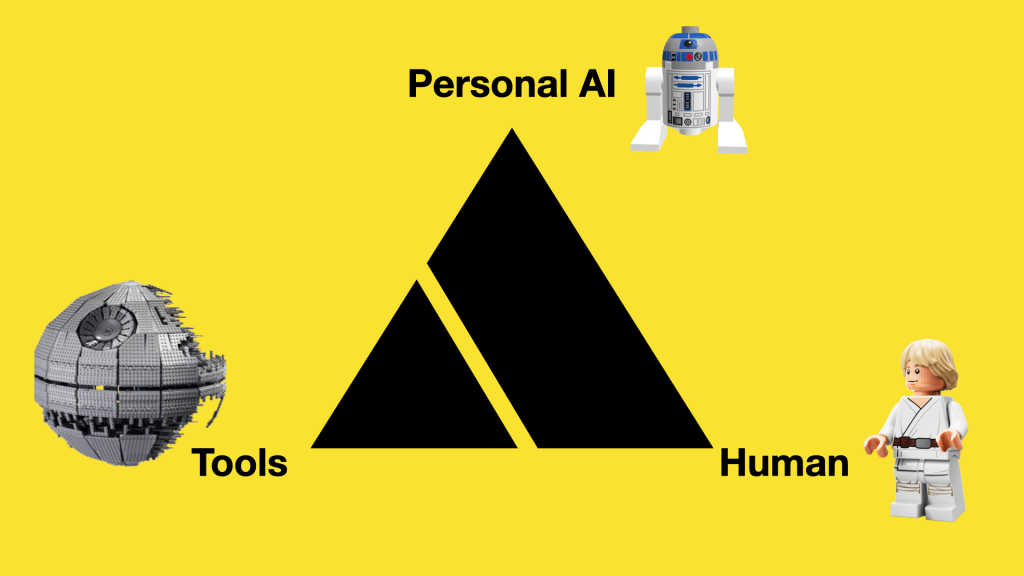
And notion of a Human/AI agent team is something I looked into with colleagues in Google Research’s AIUX team for a while – in numerous projects we did under the banner of “Project Lyra”.

Rather than AI systems that a human interacts with e.g. a cloud based assistant as a service – this would be pairing truly-personal AI agents with human owners to work in tandem with tools/surfaces that they both use/interact with.

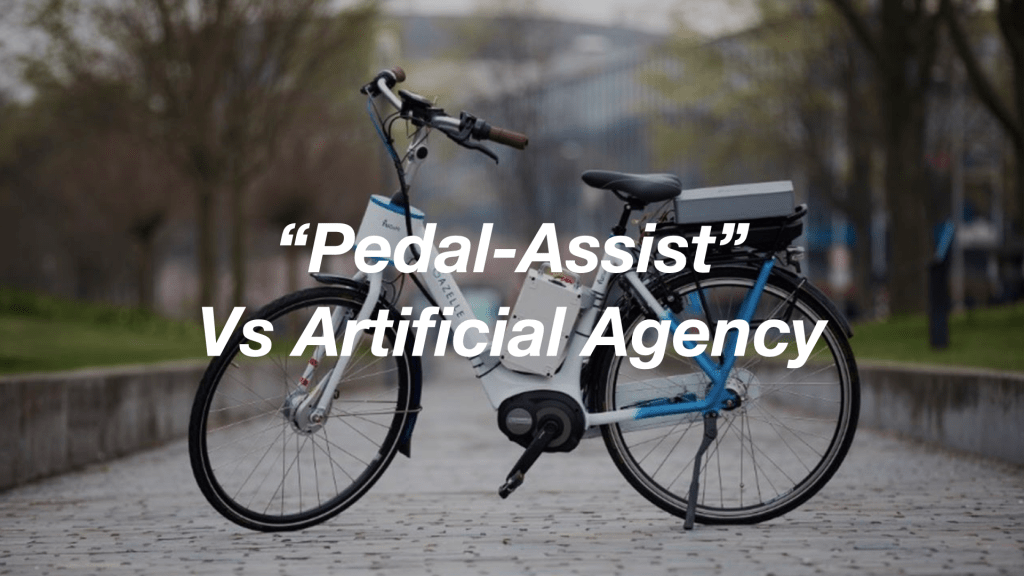
And I think there is something here to engage with in terms of ‘designing the AI we need’ – being conscious of when we make things that feel like ‘pedal-assist’ bikes, amplifying our abilities and reach vs when we give power over to what political scientist David Runciman has described as the real worry. Rather than AI, “AA” – Artificial Agency.

[nb this is interesting on that idea, also]

We worked with london-based design studio Special Projects on how we might ‘unbox’ and train a personal AI, allowing safe, playful practice space for the human and agent where it could learn preferences and boundaries in ‘co-piloting’ experiences.

For this we looked to techniques of teaching and developing ‘mastery’ to adapt into training kits that would come with your personal AI .

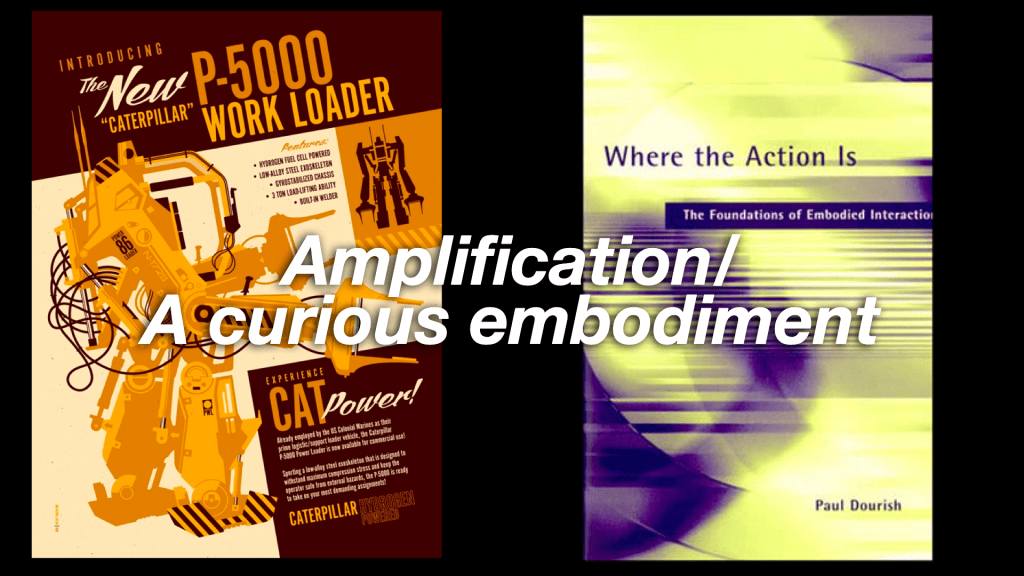
On the ‘pedal-assist’ side of the metaphor, the space of ‘amplification’ I think there is also a question of embodiment in the interaction design and a tool’s “ready-to-hand”-ness. Related to ‘where the action is’ is “where the intelligence is”

In 2016 I was at Google Research, working with a group that was pioneering techniques for on-device AI.

Moving the machine learning models and operations to a device gives great advantages in privacy and performance – but perhaps most notably in energy use.

If you process things ‘where the action is’ rather than firing up a radio to send information back and forth from the cloud, then you save a bunch of battery power…

Clips was a little autonomous camera that has no viewfinder but is trained out of the box to recognise what humans generally like to take pictures of so you can be in the action. The ‘shutter’ button is just that – but also a ‘voting’ button – training the device on what YOU want pictures of.

There is a neural network onboard the Clips initially trained to look for what we think of as ‘great moments’ and capture them.

It had about 3 hours battery life, 120º field of view and can be held, put down on picnic tables, clipped onto backpacks or clothing and is designed so you don’t have to decide to be in the moment or capture it. Crucially – all the photography and processing stays on the device until you decide what to do with it.

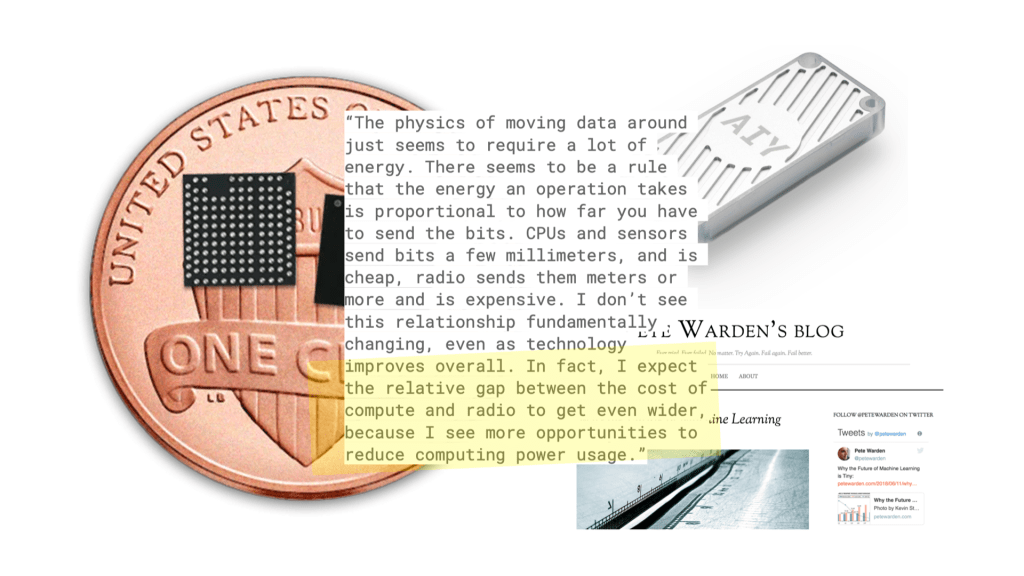
This sort of edge AI is important for performance and privacy – but also energy efficiency.

A mesh of situated “Small models loosely joined” is also a very interesting counter narrative to the current massive-model-in-the-cloud orthodoxy.

This from Pete Warden’s blog highlights the ‘difference that makes a difference’ in the physics of this approach!

And I hope you agree addressing the energy usage/GHG-production performance of our work should be part of the design approach.

Another example from around 2016-2017 – the on-device “now playing” functionality that was built into Pixel phones to quickly identify music using recognisers running purely on the phone. Subsequent pixel releases have since leaned on these approaches with dedicated TPUs for on-device AI becoming selling points (as they have for iOS devices too!)

And as we know ourselves we are not just brains – we are bodies… we have cognition all over our body.

Our first shipping AI on-device felt almost akin to these outposts of ‘thinking’ – small, simple, useful reflexes that we can distribute around our cyborg self.

And I think this approach again is a useful counter narrative that can reveal new opportunities – rather than the centralised cloud AI model, we look to intelligence distributed about ourselves and our environment.

A related technique pioneered by the group I worked in at Google is Federated Learning – allowing distributed devices to train privately to their context, but then aggregating that learning to share and improve the models for all while preserving privacy.

This once-semiheretical approach has become widespread practice in the industry since, not just at Google.

My next metaphor builds further on this thought of distributed intelligence – the wonderful octopus!

I have always found this quote from ETH’s Bertrand Meyer inspiring… what if it’s all just knees! No ‘brains’ as such!!!

In Peter Godfrey-Smith’s recent book he explores different models of cognition and consciousness through the lens of the octopus.

What I find fascinating is the distributed, embodied (rather than centralized) model of cognition they appear to have – with most of their ‘brains’ being in their tentacles…

And moving to fiction, specifically SF – this wonderful book by Adrian Tchaikovsky depicts an advanced-race of spacefaring octopi that have three minds that work in concert in each individual. “Three semi-autonomous but interdependent components, an “arm-driven undermind (their Reach, as opposed to the Crown of their central brain or the Guise of their skin)”

I want to focus on the that idea of ‘guise’ from Tchaikovsky’s book – how we might show what a learned system is ‘thinking’ on the surface of interaction.

We worked with Been Kim and Emily Reif in Google research who were investigating interpretability in modest using a technique called Tensor concept activation vectors or TCAVs – allowing subjectivities like ‘adventurousness’ to be trained into a personalised model and then drawn onto a dynamic control surface for search – a constantly reacting ‘guise’ skin that allows a kind of ‘2-player’ game between the human and their agent searching a space together.

We built this prototype in 2018 with Nord Projects.

This is CavCam and CavStudio – more work using TCAVS by Nord Projects again, with Alison Lentz, Alice Moloney and others in Google Research examining how these personalised trained models could become reactive ‘lenses’ for creative photography.

There are some lovely UI touches in this from Nord Projects also: for instance the outline of the shutter button glowing with differing intensity based on the AI confidence.

Finally – the Rubber Duck metaphor!

You may have heard the term ‘rubber duck debugging’? Whereby your solve your problems or escape creative blocks by explaining out-loud to a rubber duck – or in our case in this work from 2020 and my then team in Google Research (AIUX) an AI agent.

We did this through the early stages of covid where we felt keenly the lack of informal dialog in the studio leading to breakthroughs. Could we have LLM-powered agents on hand to help make up for that?

And I think that ‘social’ context for agents in assisting creative work is what’s being highlighted here by the founder of MidJourney, David Holz. They deliberated placed their generative system in the social context of discord to avoid the ‘blank canvas’ problem (as well as supercharge their adoption) [reads quote]

But this latest much-discussed revolution in LLMs and generative AI is still very text based.

What happens if we take the interactions from magic words to magic canvases?

Or better yet multiplayer magic canvases?

There’s lots of exciting work here – and I’d point you (with some bias) towards an old intern colleague of ours – Gerard Serra – working at a startup in Barcelona called “Fermat

So finally – as I said I don’t work at this as my day job any more!

I work for a company called Lunar Energy that has a mission of electrifying homes, and moving us from dependency on fossil fuels to renewable energy.

We make solar battery systems but also AI software that controls and connects battery systems – to optimise them based on what is happening in context.

For example this recent (September 2022) typhoon warning in Japan where we have a large fleet of batteries controlled by our Gridshare platform.

You can perhaps see in the time-series plot the battery sites ‘anticipating’ the approach of the typhoon and making sure they are charged to provide effective backup to the grid.

And I’m biased of course – but think most of all this is the AI we need to be designing, that helps us at planetary scale – which is why I’m very interested by the recent announcement of the https://antikythera.xyz/ program and where that might also lead institutions like TU Delft for this next crucial decade toward the goals of 2030.

Partner / Tool / Canvas: UI for AI Image Generators

“Howl’s Moving Castle, with Solar Panels” – using Stable Diffusion / DreamStudio LIte

Like a lot of folks, I’ve been messing about with the various AI image generators as they open up.

While at Google I got to play with language model work quite a bit, and we worked on a series of projects looking at AI tools as ‘thought partners’ – but mainly in the space of language with some multimodal components.

As a result perhaps – the things I find myself curious about are not so much the models or the outputs – but the interfaces to these generator systems and the way they might inspire different creative processes.

For instance – Midjourney operates through a discord chat interface – reinforcing perhaps the notion that there is a personage at the other end crafting these things and sending them back to you in a chat. I found a turn-taking dynamic underlines play and iteration – creating an initially addictive experience despite the clunkyness of the UI. It feels like an infinite game. You’re also exposed (whether you like it or not…) to what others are producing – and the prompts they are using to do so.

Dall-e and Stable Diffusion via Dreamstudio have more of a ‘traditional’ tool UI, with a canvas where the prompt is rendered, that the user can tweak with various settings and sliders. It feels (to me) less open-ended – but more tunable, more open to ‘mastery’ as a useful tool.

All three to varying extents resurface prompts and output from fellow users – creating a ‘view-source’ loop for newbies and dilettantes like me.

Gerard Serra – who we were lucky to host as an intern while I was at Google AIUX – has been working on perhaps another possibility for ‘co-working with AI’.

While this is back in the realm of LLMs and language rather than image generation, I am a fan of the approach: creating a shared canvas that humans and AI co-work on. How might this extend to image generator UI?

Speaking my brains about future brains this year

Got some fun speaking gigs lined up, mainly going to be talking (somewhat obliquely) about my work at Google AI over the last few years and why we need to make centaurs not butlers.

June

August

November

Then I’ll probably shut up again for a few years.